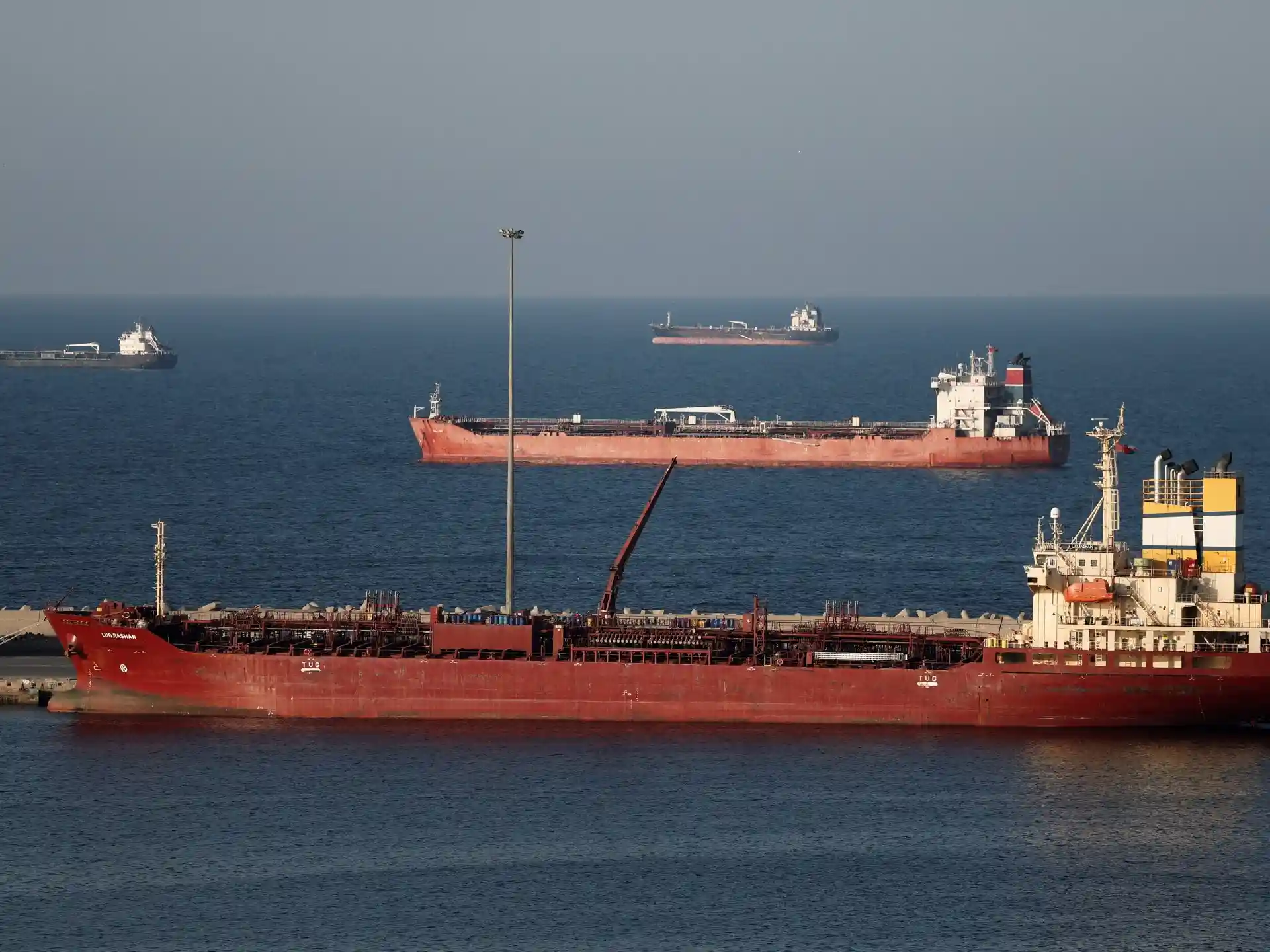
European countries are refusing Trump's demand to help secure the Strait of Hormuz. They're clearly reluctant to get pulled into the escalating US-Israeli conflict with Iran, which has already spiked oil prices and sparked attacks across the region.
Europe Resists Trump's Call
President Trump explicitly called on key allies, including the United Kingdom, China, France, Japan, and South Korea, to dispatch warships to the Strait of Hormuz. He warned that a failure to help clear the vital shipping lane, effectively blockaded by Iran, would be "very bad for the future of Nato." The US press secretary, Karoline Leavitt, echoed this sentiment, stating that allied countries "are benefiting greatly" from the US-Israel war on Iran and should do more to reopen the strait. Leavitt also expressed the president's wish that the UK "had stepped up sooner and quicker."
But Washington's European allies have pushed back. UK Prime Minister Keir Starmer has publicly stated the UK "will not be drawn into the wider war." Germany's government spokesman declared the conflict with Iran "has nothing to do with Nato." German Defense Minister Boris Pistorius seemed to dismiss the idea that Europe's "modest navies" could make a difference, emphatically stating, "This is not our war. We have not started it."
Former chief of the defense staff, Gen Nick Carter, articulated the core of the European resistance, telling the BBC that Nato was established as a "defensive alliance." He added, "It was not an alliance that was designed for one of the allies to go on a war of choice and then oblige everybody else to follow." This stance highlights the deep divisions within the alliance regarding the conflict, particularly given Trump's history of criticizing and challenging Nato members.
Iran's Blockade Drives Oil Prices Up
Iran has maintained that the Strait of Hormuz remains open for all vessels except those belonging to the United States, Israel, and their direct allies. Iranian Foreign Minister Abbas Araghchi reiterated this position, though earlier on March 2, Ebrahim Jabari, a senior adviser to the commander-in-chief of Iran’s Islamic Revolutionary Guard Corps (IRGC), had announced the strait was "closed" and threatened to "set those ships ablaze" if they attempted passage.
The strait handles about one-fifth of global oil shipments—it's that important. The blockade has sent global oil prices soaring, with Brent crude, the international benchmark, jumping more than 40 percent from its pre-war price of about $65 a barrel. On Monday, Brent crude was trading at $105.70 a barrel. The price spike shows what happens when you disrupt a waterway this crucial to global energy—it threatens economies everywhere.
Araghchi confirmed that Tehran had been "approached by a number of countries" seeking safe passage for their vessels. He noted that the decision rested with Iran's military and that some vessels from "different countries" had been allowed through, without providing specific details at the time.
Navigating the Blockade and Regional Tensions
But Iran's letting some countries through anyway. A Pakistani-flagged Aframax tanker named Karachi successfully sailed out of the Gulf through the Strait of Hormuz on Sunday, according to Bloomberg News. Tehran publicly thanked Pakistan for its "solidarity" amid the ongoing US-Israeli attacks.
India also secured passage for some of its vessels. On Saturday, Iran's ambassador to India, Mohammad Fathali, confirmed that Indian ships had been allowed through. New Delhi later reported that two Indian-flagged tankers carrying liquefied petroleum gas bound for western Indian ports had safely transited the strait early Sunday. Turkish Transport and Infrastructure Minister Abdulkadir Uraloglu also announced that one Turkish-owned ship received permission and passed through the strait after waiting near Iran, though 14 other Turkish-owned vessels remained in the area.
Meanwhile, China, a major consumer of Middle Eastern oil and a country with friendly relations with Iran, is reportedly in talks with Tehran to secure safe passage for its crude oil and Qatari liquefied natural gas carriers. Reuters reported on March 5 that China is unhappy with the shipping paralysis and is pressing Iran for a resolution.
The fighting keeps spreading. A drone attack ignited a fire at an industrial oil facility in the UAE's Fujairah on Monday. Earlier today, the UAE was struck by six ballistic missiles and 21 drones, according to its defense ministry. Iranian drone attacks also temporarily shut down Dubai airport and hit a key oil facility in the UAE. Saudi Arabia reported intercepting three drones over its capital, Riyadh, this morning, though it did not specify their origin.
Israel's military has launched a wide array of strikes on Iranian cities, including Tehran, Shiraz, and Tabriz. The Israeli army also confirmed "limited ground operations" against Hezbollah in southern Lebanon. Israeli strikes in Lebanon have killed 850 people since March 2, hitting homes and civilian areas after Hezbollah fired rockets first. Debris from a shot-down projectile scattered across cities near Tel Aviv—Shoham, Rishon LeZion, Lod, Ness Ziona—but no one was hurt.
Press Secretary Karoline Leavitt emphasized that the Iranian regime's ballistic missile capability posed a direct and imminent threat to European allies, reiterating the White House's view that President Trump was "absolutely right to call on these countries to do more to help the United States to reopen the strait of Hormuz."