Oil prices climbed past $110 a barrel this week, a sharp jump not seen in some time. That's because the conflict in the Middle East just took a serious turn, with Israel reportedly striking Iran’s biggest gas field. And Iran isn't taking it lightly.
Escalation Hits Energy Heartlands
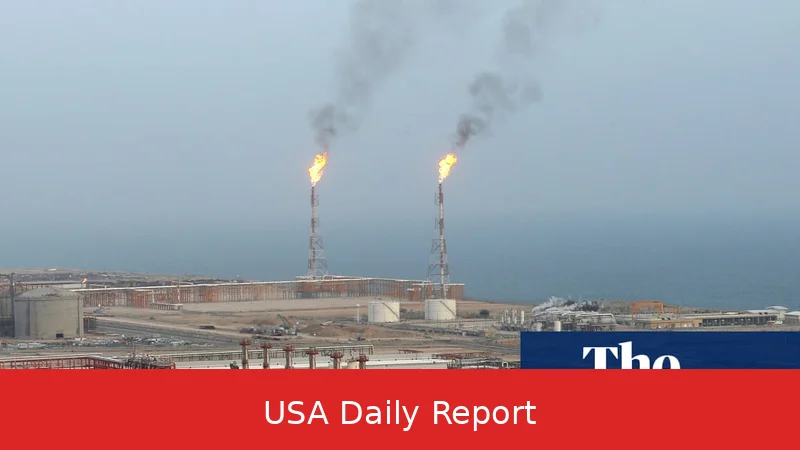
Israeli missiles hit Iran's massive South Pars gas field, according to state media reports from Tehran. It's the first time Iran's fossil fuel production has been directly targeted since the war began. The South Pars field isn't just big; it holds the world's largest gas reserves, shared right there with Qatar.
This attack marks a key escalation. Up until now, both the US and Israel had mostly avoided hitting Iran's oil and gas sector. That strategy helped keep a lid on global oil prices, even with other regional disruptions.
But that's all changed now. Israeli media widely reported the strike, saying it had US consent.
Pasalar, the governor of Asaluyeh in southern Iran, called the move “political suicide.” He told Iranian state media that the "attack on South Pars, a vital economic artery for Iran, would be met with a response that would make the perpetrators regret their actions." The South Pars field, a key part of Iran's economy, accounts for roughly 40% of the country's total gas production and a big portion of its export revenue. Its joint development with Qatar in the Persian Gulf's North Dome field has historically been a point of complex cooperation and competition, making the strike a direct hit on a shared, critical resource in one of the world's most sensitive energy hubs.
This direct targeting represents a profound shift in the conflict's dynamics. For months, the conflict between Israel and Iran had largely been characterized by indirect skirmishes, cyberattacks, and proxy confrontations, often avoiding direct hits on core economic infrastructure. The strategic calculus behind this previous restraint was clear: avoid pushing the region into an all-out war and prevent a catastrophic spike in global energy prices. Previous attacks, such as those on Saudi Aramco facilities or tanker shipping in the Gulf, while disruptive, were often attributed to non-state actors or remained ambiguous. This incident, however, carries explicit attribution from both Israeli and Iranian sources, signaling a new, more dangerous phase. Analysts at the Eurasia Group highlighted the rare nature of this strike, stating, "By crossing the threshold of direct economic infrastructure targeting, Israel has dramatically raised the stakes, almost guaranteeing a symmetrical or asymmetrical response from Tehran that will reverberate far beyond the Middle East."
Regional Repercussions and Global Market Fears
Tehran's immediate response has been a mix of condemnation and veiled threats. While specific details of retaliation remain unconfirmed, Iranian officials have historically leveraged a range of options, from activating its vast network of regional proxies, including Hezbollah in Lebanon and various militias in Iraq and Syria, to direct naval action in the Strait of Hormuz, through which approximately 20% of the world's total petroleum liquids consumption flows.
A direct attack on shipping lanes or neighboring Gulf energy facilities, such as those in Saudi Arabia or the UAE, would send immediate shockwaves through global commodity markets, potentially pushing oil prices to rare levels and triggering a wider military confrontation.
The proximity of the South Pars field to Qatar, a key U.S. Ally and a major global LNG exporter, also complicates the regional security landscape. Any disruption or perceived threat to the shared gas field could draw Qatar, which shares the massive gas reservoir, into the conflict's periphery. This incident has also heightened security alerts across other Gulf Cooperation Council (GCC) states, which rely heavily on oil and gas exports and are acutely vulnerable to regional instability. Energy companies operating in the region are already reviewing contingency plans, with insurance premiums for shipping in the Persian Gulf expected to surge, adding further costs to global supply chains. International bodies, including the United Nations and several European Union member states, have issued statements urging de-escalation and caution, fearing a spiral that could destabilize the global economy.
The question now for global markets isn't just if Iran will retaliate, but how severely — and what that will mean for an already volatile energy supply. The direct targeting of Iran's primary gas infrastructure marks a dangerous new chapter in the Middle East conflict, pushing the region closer to a full-scale war with potentially devastating consequences for global energy security and economic stability. This world watches anxiously for Tehran's next move, bracing for the fallout of an rare escalation.