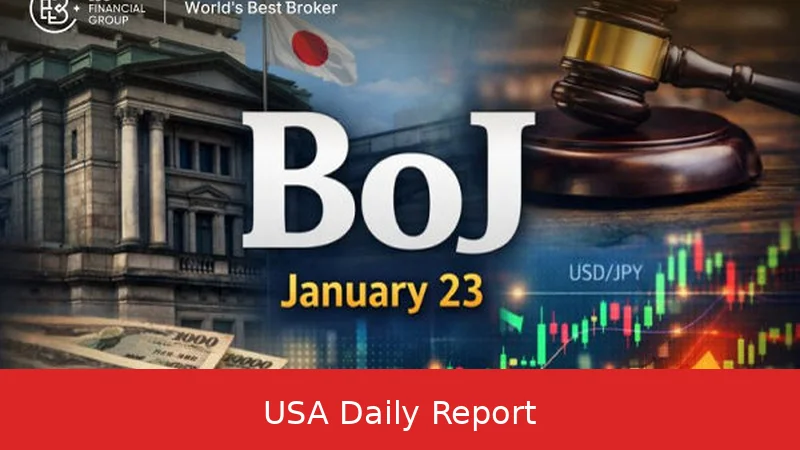
The Japanese yen has been on a tough run lately. Just last week, the dollar nearly hit 159.45 yen, a level not seen in a long time. Now, with the Bank of Japan’s crucial policy meeting set for January 23, 2026, many hedge funds are gearing up for a potentially big play. They're betting the central bank might finally deliver a signal strong enough to give the yen a much-needed lift, even if it doesn't hike rates right away.
The Yen’s Stubborn Weakness
The BoJ did make a pretty big move last month. It raised its overnight policy rate to around 0.75%. That's a massive shift for Japan, a country that stuck with ultra-loose monetary policy and negative rates for years. You’d think a rate hike would automatically boost a currency, right? But the yen hasn't really gotten stronger. In fact, it's stayed stubbornly weak against the dollar, hovering around 158.18 yen after hitting those highs.
And Not just the currency. Japanese government bond yields have surged too. Long-dated bonds, in particular, have climbed into record territory recently. For instance, the 40-year JGB yield reached about 4.215%. Higher yields usually make a country's bonds more attractive, which can then support its currency. But here, the yen's still struggling to find its footing.
Understanding the “Hawkish Hold”
So, what exactly does a “hawkish hold” mean in central banking terms? It's when a central bank decides to keep interest rates steady for the moment, but it signals that a rate hike is more likely to happen in the near future. Not just about words; it's about shifting market expectations.
For the BoJ, a signal like this usually shows up in three key places. First, traders will be looking very closely at the wording on inflation and wages. They want to see if the BoJ describes price gains as “durable” – meaning they're expected to last – rather than just being “cost-push.” Cost-push inflation, often driven by external factors like energy prices, is usually seen as temporary.
A durable inflation view suggests the BoJ believes underlying demand is strong enough to sustain price increases, making future hikes more probable.
Second, the tone of the BoJ’s outlook report matters a lot. If the central bank revises its inflation and growth forecasts higher, that's a clear hint. It tells the market the BoJ sees a stronger economy and more persistent price pressures, which would justify tighter policy down the line. Third, the market will scrutinize the BoJ’s “reaction function.” This means understanding what specific economic conditions would trigger the next rate hike, and just as important, how soon the BoJ believes those conditions could be met. A clear path or a shorter timeline for meeting those conditions would be a hawkish signal.
More Than Just Japan’s Rates
Here's where it gets interesting. The yen's movement isn't solely dictated by the BoJ's actions. Even after Japan raised rates to 0.75%, the currency stayed weak. That's because the market isn't just asking, “Did the BoJ hike?” They're asking, “Will the BoJ Continue to hike aggressively?” If the answer isn't a strong yes, the yen won't get much lasting support.
There's also a big global “rate gap” story at play. If U.S. Bond yields are climbing at the same time, the incentive to borrow yen – which still has relatively low rates – and invest that money in higher-yielding U.S. Assets remains strong. This is a classic “carry trade.” A global bond sell-off has pushed U.S. Yields higher, which, along with Japan's own actions, may limit support for the yen. It's a constant tug-of-war between domestic policy and international investment flows.
On top of that, politics is adding another layer of uncertainty. Prime Minister Sanae Takaichi called a snap election for February 8, 2026. Markets are now debating what her fiscal plans could mean for Japan’s already massive national debt. Any plans suggesting increased spending without clear funding could raise concerns about the country’s risk premium, potentially pushing JGB yields even higher. That's a big deal.
The Bet on a Short Squeeze
Right now, the market is pretty much priced for a BoJ hold on January 23. This means if the central bank actually delivers a genuinely hawkish hold – giving strong guidance that accelerates the expected path of future hikes – it could force a sharp reaction. Traders would have to quickly re-price the timing and terminal level of Japan's hiking cycle.
There's been a renewed build-up of speculative bets Against the yen. These are known as yen shorts, where traders profit if the yen falls. If the BoJ signals less tolerance for a weak yen, or indicates a higher policy path for rates, these short positions could get caught in a “squeeze.” A squeeze happens when too many traders are betting the same way, and a sudden shift forces them all to reverse their positions quickly. In this case, they’d rush to buy yen to cover their bets, which would send the currency soaring. It's a high-risk, high-reward scenario for hedge funds positioned for such a move.
The BoJ’s policy guideline sits around 0.75%, with the overnight call rate averaging about 0.728%. The 10-year JGB yield is around 2.34%. These numbers are what traders are watching to confirm money-market conditions align with guidance. But the real game-changer will be any hint of a faster, more aggressive tightening cycle from the BoJ itself.
All eyes will be on BoJ Governor Kazuo Ueda's words and the central bank's official statements this week, as markets try to figure out if this is finally the inflection point for the long-suffering Japanese yen.