
Diesel hit $5 a gallon in parts of Texas last week. That hasn't happened since 2008. The surge, a direct result of escalating conflict in the Middle East, shows just how fragile the global economy is right now. And a close ally of former President Donald Trump warns the US simply isn't strong enough to handle a full-blown war with Iran.
Escalating Tensions and Market Jitters
Donald Trump isn't backing down. He's made it clear he's not ready to cut a deal to end the US-Israeli attacks on Iran. Tehran, he thinks, wants to negotiate, but the terms aren't good enough yet. So, the fight continues.
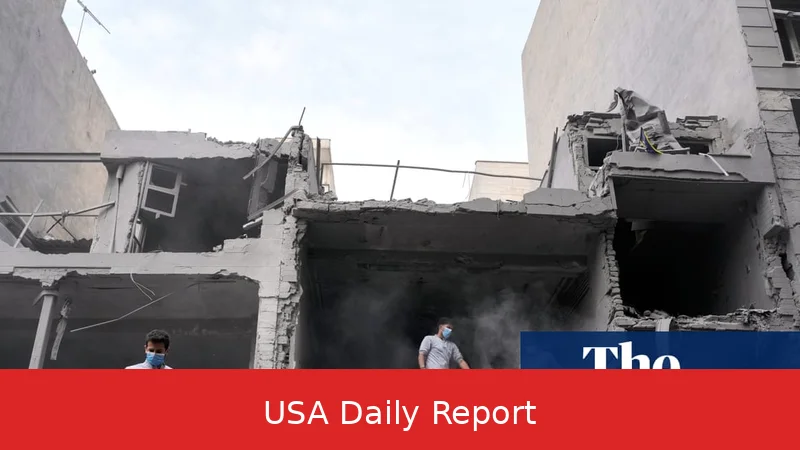
This stance comes as Iran ramps up missile and drone strikes against Gulf nations and Israel. US and Israeli warplanes are hitting Iran hard, too. On Friday, US warplanes targeted military spots on Kharg Island, home to Iran's main oil export facility. Trump even suggested bombing it again, "just for fun."
But Iranian Foreign Minister Abbas Araghchi disputes this. "We have never asked for a ceasefire," he told CBS's Face the Nation. "We are ready to defend ourselves for as long as it takes." It's a war of words, yes, but also a literal war, and it's sending fuel prices soaring globally. The conflict has thrown the entire Middle East into chaos, messing up air travel and choking off oil exports.
The Strait of Hormuz — A Global Chokepoint
The big problem is the Strait of Hormuz. It's virtually closed. This narrow waterway usually handles about a fifth of the world's oil and gas supplies. Its closure means a major disruption to global energy markets.
More than 600 ships are already stuck in the Red Sea — they can't get through.

Reopening the Strait through military force alone won't be easy. Experts say Iran's ability to hit or harass shipping with missiles, drones, or small boats makes it incredibly difficult. Trump has called for other countries' warships to step up and protect tankers. But Iran's new supreme leader, Mojtaba Khamenei, has vowed to keep the Strait shut. Trump, for his part, questions if Khamenei is even alive, let alone in control. Khamenei, 56, was injured in the initial strike that killed his father and predecessor on February 28, but Iran says the injuries were minor.
The ripple effect of this closure is massive. Global supply chains, already strained, are facing new pressure. Businesses dependent on timely energy shipments or international trade routes are seeing costs jump. Consumers will feel it at the pump, of course, but also in higher prices for just about everything that needs to be transported.
Iran's Allies and Retaliation Risks
Hang on though — Iran can't count on its supposed allies. Russia and China, despite their "strategic partnerships" with Tehran, have offered only muted criticism of the US-led strikes. They haven't pledged military or civilian support. China's Foreign Minister Wang Yi condemned the attacks, calling the assassination of Iran's Supreme Leader Ali Khamenei "unacceptable." Russia's foreign ministry said the "acts of aggression" violated international law. But that's where it stops. Both nations called for a ceasefire and diplomatic talks.
Gabriel Wildau, a managing director at Teneo specializing in China, said Beijing's statement was "strongly condemnatory, but beyond this rhetoric I don't see China's government taking concrete action to support Tehran." Preserving détente with the US is a major priority for China's leadership. Trump and Chinese leader Xi Jinping are still expected to meet later this month. Ahmed Aboudouh, a fellow at Chatham House, thinks Beijing might seek concessions on issues like Taiwan or trade in exchange for its watered-down stance on Iran.
An account linked to Chinese state media, Niutanqin, even wrote that "Iran has no real ally," arguing nations prioritize their own interests. This lack of robust external support could influence Iran's next moves.
But Iran isn't helpless. Even if weakened, its regime has substantial firepower. It could inflict damage on American interests and allies, disrupt the global economy, and start a long conflict. Joseph Votel, a retired four-star Army general who oversaw US forces in the Middle East during Trump's first term, warns that Iran might try to "regionalize" the conflict. That means going beyond just targeting Israel or US bases. One possibility, Votel says, is that Iran could target oil refineries in Persian Gulf states. That would drag "everybody into this and turn this into a much more protracted conflict."
What Trump sees as "limited" military options — targeting nuclear and missile sites — might not be seen that way by Iran. Especially if Iranian leaders think their survival is at stake. The US and Iran are still supposed to hold diplomatic talks soon, with US envoy Steve Witkoff leading the charge. Witkoff, along with Jared Kushner, has set "red lines": zero enrichment and returning nuclear material. Trump himself, Witkoff noted, is curious why Iran hasn't "capitulated" under the pressure.
Related Articles
- Bank of Canada Likely to Hold at 2.25% After 40% Oil Surge
- Fed signals patience, projects one cut in 2026
- UAE Leaves OPEC — Saudi Arabia Picks Up the Slack
The Israeli military has already announced new strikes in western Iran, after Iran's Revolutionary Guards vowed to pursue and kill Israeli Prime Minister Benjamin Netanyahu. "We still have thousands of targets in Iran," an Israeli official said, "and we're identifying new targets every day."
This article was created with AI assistance.


