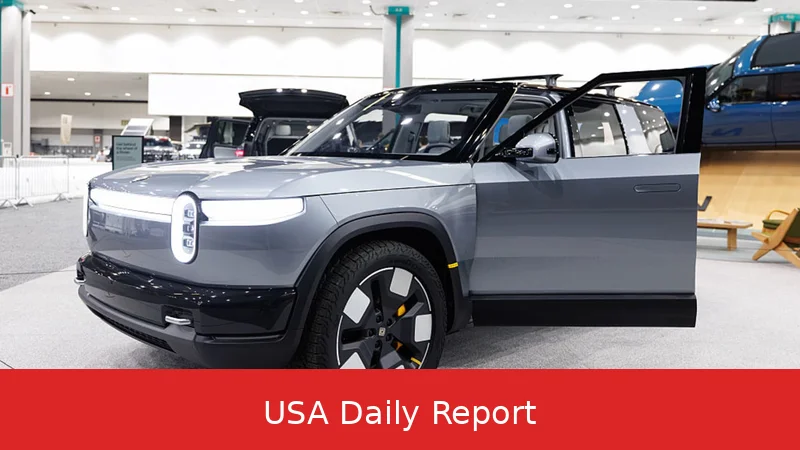
Uber is making a bold move into the future of transportation, pledging up to $1.25 billion to Rivian Automotive. The goal: a fleet of 50,000 fully autonomous electric robotaxis rolling out across the U.S., Canada, and Europe by the end of the decade.
Massive Investment Backing Rivian’s Robotaxi Ambitions
Uber’s commitment to Rivian signals a big bet on self-driving electric vehicles. The ride-hailing giant plans to purchase 10,000 autonomous versions of Rivian’s upcoming R2 electric SUV, with options to add as many as 40,000 more starting in 2030. The initial $300 million tranche is expected soon, pending regulatory green light.
Rivian’s stock responded sharply to the news, climbing more than 10% in early trading. Uber’s shares, meanwhile, showed little movement.
From Concept to Cities: Robotaxis Hit the Streets in 2028
The two companies plan to debut the R2 robotaxis in San Francisco and Miami by 2028. After that, the rollout will expand to 25 cities across North America and Europe through 2031. Uber’s platform will be the exclusive marketplace for these vehicles, either directly or through fleet partners.
This timeline is ambitious. Previous robotaxi ventures have stumbled, missing deadlines and falling short of expectations.
But By combining Rivian's autonomous tech with its ride-hailing network, Uber may have a smoother road ahead.
Rivian’s R2: The Electric SUV Poised for Autonomy
Rivian unveiled the R2 midsize electric SUV at the 2025 Los Angeles Auto Show. The vehicle is designed from the ground up to support fully autonomous driving.
Pricing starts at $53,990 for the Premium trim, with the Performance model hitting $57,990, both set to arrive this spring and later in 2026 respectively.
CEO RJ Scaringe expressed optimism about the partnership and Rivian’s autonomy tech, mentioning the company’s advanced data and perception platforms. The R2’s integration of vehicle design, software, and manufacturing under one roof sets Rivian apart in the crowded EV space.
Uber’s Robotaxi Strategy: Multiple Partnerships
Uber isn’t putting all its eggs in one basket. Alongside Rivian, it has deals with Lucid Motors to deploy up to 20,000 EVs powered by Nuro’s self-driving software. It also collaborates with Alphabet’s Waymo to bring Waymo robotaxis to cities like Atlanta and Austin via its app.
The Rivian deal complements Uber’s recent announcement at Nvidia’s GTC event, where Uber revealed plans to launch a fleet of Level 4 autonomous vehicles in Los Angeles and San Francisco in 2027, using Nvidia’s hardware and software. Unlike that Nvidia-powered fleet, the Rivian R2 robotaxis will rely solely on Rivian’s own autonomous system.
What the Deal Means for Rivian’s Future
The guaranteed sale of at least 10,000 R2 robotaxis, along with up to $1.25 billion in investments, provides Rivian with a much-needed boost as it ramps up production. The company has struggled to reach profitability amid supply chain challenges and production delays.
Scaling production of the R2 is key for Rivian’s long-term financial health. The Uber deal offers a steady revenue stream and helps offset the risks tied to launching a new model. It also positions Rivian as a serious contender in the autonomous vehicle market, which investors value highly.
Still, hurdles remain. Delivering 50,000 robotaxis by 2031 means overcoming regulatory, technological, and logistical challenges. Autonomous driving is a tough nut to crack, and many firms have fallen short despite heavy investments.
Uber is betting big on autonomous vehicles to change urban transportation. Rivian must now deliver on its promises of EV innovation and self-driving technology at a large scale.
The initial rollout in 2028 will be a key test for both companies. If successful, it could mark a major step toward mainstream autonomous ride-hailing, turning what once seemed futuristic into everyday reality.