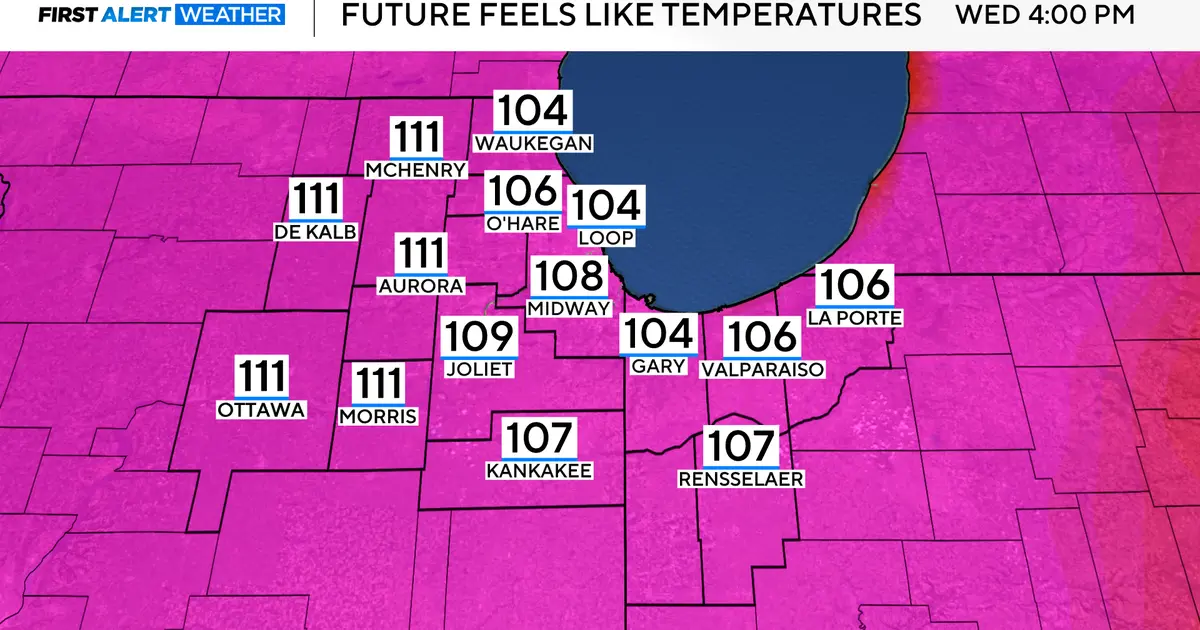
The Chicago metropolitan area and its surrounding suburbs are under an Extreme Heat Watch for Wednesday and Thursday, as forecasters predict dangerously high heat index values while the Southwest braces for potentially record-breaking early season temperatures.
Chicago Prepares for Dangerous Heat
The National Weather Service issued the Extreme Heat Watch for the entire Chicago area, effective from Wednesday at 10 a.m. through 7 p.m. Thursday. This watch impacts numerous Illinois counties, including Booke, Cook, DeKalb, DuPage, Grundy, Kane, Kendall, Kankakee, LaSalle Lake, McHenry, and Will.
Forecasters with the CBS First Alert Weather team expect extreme humidity combined with high temperatures to create dangerously hot conditions. The heat index, which measures how hot it feels when humidity is factored in, could climb to between 105 and 115 degrees during this period. Such conditions pose a significant risk of heat-related illnesses for anyone spending time outdoors or without access to adequate cooling.
The Chicago Office of Emergency Management and Communications (OEMC) is working closely with the National Weather Service to monitor conditions. They plan to take necessary actions to ensure public safety. Chicago and Cook County have dozens of cooling centers ready to open their doors during the heat wave. These centers provide a vital resource for residents who don't have reliable access to air conditioning, offering a place to cool down and escape the intense heat.
Officials are also urging the public to check on neighbors, especially elderly individuals or those with pre-existing health complications. Taking a few minutes to ensure everyone stays safe can make a critical difference during extreme heat events.
Recognizing and Treating Heat Illnesses
Extreme heat, particularly when coupled with high humidity, significantly increases the risk of both heat exhaustion and heatstroke. It's easy for the body to become overheated and dehydrated in these conditions, making it crucial to stay hydrated by drinking plenty of water.
Heat exhaustion represents a milder form of heat illness and can develop after several days of heat exposure if fluid replacement is inadequate or unbalanced. Symptoms of heat exhaustion include a headache, nausea, dizziness, general weakness, irritability, intense thirst, and heavy sweating. A person might also experience a high body temperature and decreased urine output.
If you or someone you know shows signs of heat exhaustion, immediate action is necessary. Move the person to a cool indoor space or into the shade right away. Give them liquids to drink and remove any unnecessary clothing, including shoes and socks. Use cold water or a cold compress on their head, face, and neck to help cool them down, and encourage frequent sips of cold water. The Centers for Disease Control and Prevention (CDC) advises calling 911 or taking the person to an urgent care clinic or emergency room for further treatment if symptoms persist or worsen.
Heatstroke, however, is a much more serious illness. It occurs when the body loses its ability to regulate its own temperature and vital functions. If not treated quickly, heatstroke can lead to permanent disability or even death. Symptoms of heatstroke are severe and demand immediate medical attention. These include confusion, altered mental status, slurred speech, skin that is hot and dry or, conversely, profuse sweating. The person will have a very high body temperature and may lose consciousness. The CDC emphasizes that delaying treatment for heatstroke can quickly become fatal.
If you are with someone experiencing heatstroke, call 911 immediately and stay with them until help arrives. Move them to a shaded, cool area and remove their outer clothing. Then, work to cool them down as quickly as possible using cold water or, if available, an ice bath. Wet their skin or place cold, wet clothes on their skin, or soak their clothing with cool water.
Southwest Bakes as East Cools
While the Midwest prepares for a brief but intense heatwave, the Southwestern U.S. is bracing for a more prolonged period of potentially record-breaking heat for this time of year. High temperatures across a vast stretch from California through Colorado are expected to climb 10 to 20 degrees above average, starting Thursday.
A large ridge of high pressure will build over the West Coast, persisting into next week, driving these soaring temperatures. Cities like Las Vegas and Phoenix, which typically see temperatures in the low-to-mid 70s during this season, are now forecast to experience highs in the 90s throughout the upcoming weekend and into early next week. Heat Advisories are already in effect across coastal Southern California, including Los Angeles, extending through Friday.
Portions of Arizona could even see triple-digit temperatures as early as Tuesday or Wednesday next week. Phoenix, for instance, might reach 100 degrees on Tuesday. If this occurs, it would mark the earliest 100-degree day on record for the city, breaking a previous record set in March 1988. Across much of the Southwest, high temperatures could run a staggering 20 to 30 degrees above average by Tuesday of next week, with record highs becoming more widespread and expanding into parts of Nevada and Colorado.
In contrast, the East Coast is experiencing a return to cooler conditions after several days of unseasonably warm weather. Cooler air moved into the region Thursday morning, with temperatures continuing to fall throughout the day. Along with the cooler air, some lingering moisture may move up the East Coast, potentially creating a brief window for snow showers, particularly across the Mid-Atlantic and any elevated locations. While some accumulation is possible, any snow that reaches the ground is largely unlikely to stick due to the recent warmth. After Thursday, temperatures across the East are expected to settle back closer to seasonal averages, with no immediate signs of another major burst of spring warmth returning soon.
Related Articles
- Titans Release Cornerback L'Jarius Sneed, Freeing Up Significant Cap Space
- Major Shifts in Disability Benefits and Veterans' Evaluations Reshape Federal Support Systems
- Berlin bounces back: Night trains return, wildlife wanders, and history gets rewritten
The Southwest, however, is set to remain well above average through the end of March, with long-range temperature outlooks from the Climate Prediction Center maintaining above-average temperatures across much of the West through the first week of April.