Finnish smart ring maker Oura just launched its Ring 4 in India, stepping into a nascent market already seeing fierce competition from local brands like Ultrahuman and Noise. The move brings Oura's premium health tracking device and its subscription model to a country where smart rings remain a niche product.
Oura Takes on a New Market
Oura's entry marks a big moment for India's smart ring scene. The company's Ring 4 will sell for ₹28,900 (about $313) to ₹39,900 (around $432), plus a monthly ₹599 (about $6) membership. That's pretty close to what US customers pay — $349 for the ring and a $5.99 monthly fee. This pricing positions Oura directly against established local players.
Ultrahuman, for example, offers its Ring Air for ₹28,499 (around $308) and its newer Ring Pro for ₹42,990 (about $465). So, Oura isn't trying to undercut anyone on price. They're clearly aiming for the higher end of the market, hoping their brand and features will justify the cost, even with local alternatives available.
The Indian Smart Ring Landscape
Here's the thing: India's smart ring market isn't huge. Shipments actually dropped 30.6% in 2025 compared to the year before. And average selling prices fell too, down 8.7% to $159.7. That's largely because more low-cost brands are entering the country.
IDC, a market research firm, says smart rings are still a niche item in India. Limited public awareness and relatively high prices — even with cheaper options around — have held things back. Vikas Sharma, a senior market analyst at IDC, points out that the segment had some early buzz as a new tech trend. But that initial growth hasn't lasted. Most vendors, he says, focus their marketing efforts on bigger markets, leaving India somewhat underserved. Plus, there isn't a broad ecosystem yet to really drive awareness and innovation, which means growth has been pretty slow. Last year, Ultrahuman led the pack with a 30.4% market share. Gabit came in second, holding 18.3%.
Premium Positioning and Health Insights
Oura isn't just selling another gadget; it's pushing the Ring 4 as a premium health device. It combines solid hardware with a subscription service, promising personalized data on sleep, daily activity, and recovery. This approach really sets Oura apart from many local competitors, who mostly battle it out over price. The company believes its focus on detailed health insights will resonate with a segment of Indian consumers.
Worth noting: Oura also released a study on sleep patterns in India, based on data from October 2024 to September 2025. It found that Indian users in Oura's global dataset sleep an average of 6 hours and 28 minutes nightly. That's about 40 minutes less than people in the longest-sleeping countries. The study also showed Indians get the lowest amount of Rapid Eye Movement (REM) and deep sleep globally, losing over an hour of REM sleep each week compared to the average. This data could help Oura market its sleep-tracking features directly to a population that seems to be struggling with rest.
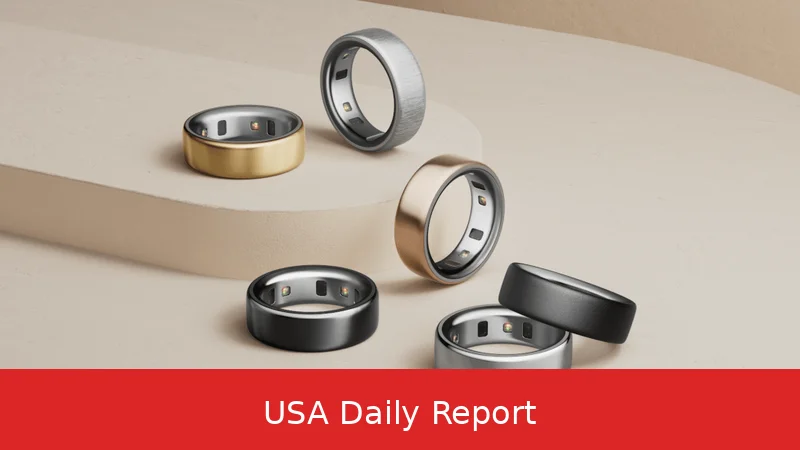
The Ring 4 itself is made of titanium, comes in 12 sizes and six colors — including Black, Silver, and Gold. It's designed for comfort, even while sleeping, and tracks over 50 health metrics through its Oura App. You can buy it at Croma stores and on Amazon starting March 18.
Global Rivalry and Future Outlook
The competition between Oura and Ultrahuman isn't new, and it's not just happening in India. The Finnish company actually sued Ultrahuman in the U.S., which affected sales of Ultrahuman's Ring Air there. Ultrahuman, based in Bengaluru, says it redesigned its new Ring Pro to avoid Oura's patents. It even submitted the Ring Pro to U.S. Customs and Border Protection to make sure it could be imported legally.
So, this Indian market entry is part of a bigger, global rivalry. It's a fight for market share, but also for technological edge and patent protection. How this international legal battle influences their strategies in India will be interesting to watch. And whether Oura's premium, subscription-based model can overcome the price sensitivity in India's still-developing smart ring market remains a key question.
IDC data shows the Indian smart ring market saw its average selling price drop to $159.7 in 2025, even as Oura enters with a product starting at over $300.