Brent crude oil prices surged to $119 a barrel on Thursday, driven by attacks on key Middle Eastern energy facilities. But the rally faltered later in the day amid reassurances from U.S. Leadership, leaving markets jittery as geopolitical risks escalate.
Energy Prices Spike on Regional Conflict
Oil and natural gas prices surged sharply amid renewed violence in the Middle East. Early Thursday, Brent crude briefly touched $119 a barrel, a level not seen in years, before retreating below $110. European natural gas futures more than doubled, jumping as much as 35% as Qatar reported significant damage to its Ras Laffan liquefied natural gas plant following Iranian strikes.
The attacks also targeted a Saudi refinery along the Red Sea and two Kuwaiti oil refineries, intensifying fears of a broader energy crisis. These facilities are critical to global supply, and disruptions sent shockwaves through commodity markets.
Still, later comments from U.S. President Donald Trump helped ease some immediate panic. Trump ruled out deploying troops to the region and said he advised Israeli Prime Minister Benjamin Netanyahu against striking Iranian oil and gas sites, even as Israel recently hit installations tied to Iran's South Pars gas field.
Stock Market Reacts to Rising Risks and Fed Signals
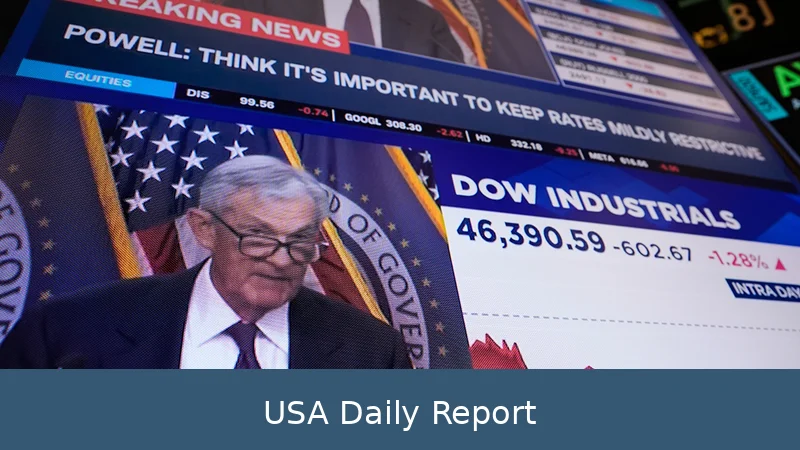
U.S. Stocks retreated for a second day as investors digested the geopolitical turmoil and Federal Reserve Chair Jerome Powell’s remarks dampening hopes for interest rate cuts this year.
The Dow Jones Industrial Average fell 0.4%, with the S&P 500 and Nasdaq Composite both dropping 0.3% by the close.
Bond markets showed mixed signals. The 10-year Treasury yield dipped slightly to 4.26%, while the 2-year yield nudged up to 3.80%, hitting a seven-month high earlier in the session. This divergence reflects uncertainty about economic growth amid rising geopolitical tensions and a still-tight monetary policy environment.
Defense Spending Set to Surge Amid Iran Conflict
The Pentagon is seeking an additional $200 billion in funding related to the escalating war with Iran, a senior administration official revealed. This request comes on top of the extra defense funding approved last year as part of President Trump’s tax cuts.
Stocks of defense contractors are expected to rise in the coming days as the U.S. Ramps up military support for its allies in the region. The scale of the funding request shows the administration's commitment to countering Iranian influence, but it also makes people wonder about the strain on the federal budget.
U.S. Approves Massive Arms Sales to Arab Allies
Amid the conflict, the U.S. Has greenlit roughly $23 billion in arms sales to Arab partners, though the exact breakdown remains unclear. Official disclosures to Congress detail at least $16 billion in deals targeting Gulf states seriously affected by the war with Iran.
Key contracts include $8 billion worth of missile defense and radar systems for Kuwait and over $8 billion in air defense equipment for the United Arab Emirates, including drones, missiles, and munitions for F-16 fighter jets. Jordan is set to receive $70.5 million in aircraft and munitions support.
These sales add to prior large packages, including Patriot missile systems for Saudi Arabia and helicopter and vehicle deliveries to Israel. The surge in military exports reflects an urgent effort to strengthen regional defenses against Iranian threats and potential spillovers from the conflict.
Israel Claims Significant Strikes Against Iranian Capabilities
Israeli Prime Minister Benjamin Netanyahu claimed that Iran’s ability to enrich uranium and produce ballistic missiles has been severely curtailed. He credited the U.S.-led campaign for targeting senior Iranian leaders and critical infrastructure, including underground nuclear sites and missile arrays.
Netanyahu sought to distance Israel from accusations of dragging the U.S. Into war, emphasizing decades of Iranian threats against America. He praised President Trump’s leadership in the conflict, framing it as vital to global security.
Despite the tactical successes, the prolonged air campaign also highlights the challenges of degrading Iran’s capabilities without escalating the conflict further. Israel’s air superiority over western Iran remains intact, but the risk of retaliation and wider regional instability looms large.
As Brent crude prices oscillate amid attacks and political maneuvers, markets face growing uncertainty. The massive military spending and arms deals signal deeper entanglement in the Middle East, with no clear end in sight.