Three stories have surfaced recently: miners trapped in a South African gold mine facing starvation, a norovirus outbreak on a Caribbean cruise ship, and a UK government push to get young people into jobs.
Trapped Miners Face Unthinkable Choices
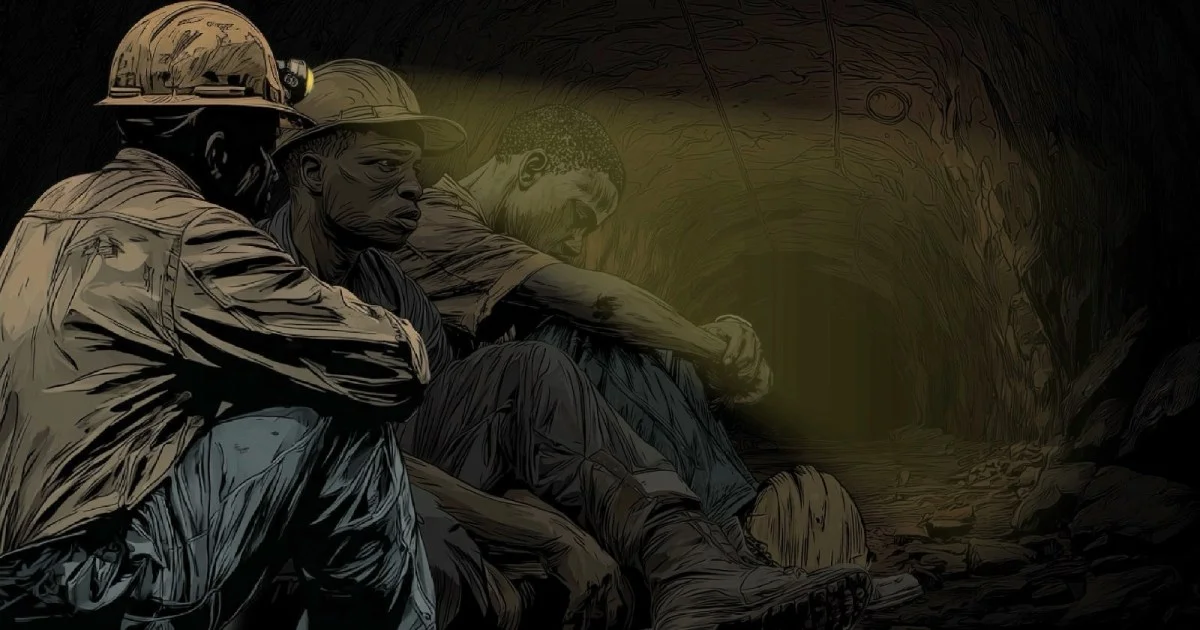
Deep beneath the surface of a South African gold mine, men faced a desperate struggle for survival, with some resorting to cannibalism to stay alive. Patrick, one of the trapped miners, recounted the grim ordeal after making his way to Shaft 11 in November, a hollowed-out area about 1,300 meters underground. He had sought refuge there, hoping to find food, as men in Shaft 10 were trying to survive on a meager diet of salt and toothpaste mixed with water collected from the rock face.
During his journey, Patrick witnessed the horror firsthand. He saw a body hanging from steel girders, a miner who had fallen to his death while attempting to escape. In Shaft 11, the situation quickly deteriorated. Rescues were too slow, and vital supplies like food and water were scarce. The men grew weaker, subsisting only on stagnant water oozing from the rock. Over a two-day period, seven individuals died.
The despair was suffocating. One miner, his eyes filled with terror, confided in Patrick that he intended to throw himself down the deeper, water-filled shaft. Patrick pleaded with him, urging him to cling to faith and the hope of returning to their families. The man did not jump, but his profound hopelessness deeply affected Patrick. Despite his own belief in survival, the atmosphere of starvation and death in Shaft 11 became unbearable.
On December 22, Patrick decided to attempt the perilous climb back to Shaft 10, a dangerous but necessary step for survival. As he entered a passageway, a voice emerged from the darkness, offering meat for sale. Patrick soon found men cooking over a fire. He reported this to the leaders in Shaft 11, who investigated. They discovered the meat was human flesh, taken from the bodies of miners who had died trying to climb out.
The leaders were horrified but found themselves unable to punish the men. Starvation had pushed them to something unthinkable. Patrick, while surprised by the lack of punishment, also understood the desperate circumstances. What he found made him desperate to get out. He returned to Shaft 10 and began his ascent. After a three-day, one-kilometer climb, cutting his arms on sharp steel, Patrick emerged into the blinding sunlight on Christmas Day, December 25.
Norovirus Strikes Caribbean Cruise Ship
At the same time, the Star Princess cruise ship in the Caribbean was dealing with its own crisis. More than 150 people were sickened by an outbreak of norovirus, the Centers for Disease Control and Prevention (CDC) confirmed this week. The virus sickened 153 people: 104 passengers and 49 crew.
The Star Princess, a vessel featuring a clear dome over its concert venue and 30 bars and restaurants, was on a one-week voyage that concluded last Sunday. Those affected experienced symptoms including diarrhea and vomiting. Princess Cruises responded by cleaning the ship multiple times, isolating sick passengers and crew, and working with the CDC to stop the spread.
The CDC's Vessel Sanitation Program was alerted to the outbreak on Wednesday and dispatched personnel to investigate the ship. Norovirus causes more diarrhea and vomiting outbreaks in the US than any other virus. You can catch it from touching infected people, eating contaminated food, or touching dirty surfaces. The CDC says wash your hands often and disinfect surfaces to avoid getting sick.
The Star Princess docked in Fort Lauderdale on Sunday and set sail again that evening for the Bahamas. Matthew McConaughey and his wife Camila christened the ship in November after its first voyage from Europe.
UK Offers Incentives for Youth Employment
The UK government is paying businesses to hire young unemployed people. Companies get £3,000 for each person aged 18-24 they hire who's been job hunting for at least six months. This initiative aims to tackle youth unemployment and support economic recovery.
Small and medium businesses also get extra money. They'll receive £2,000 for every apprentice they hire. The scheme aims to create jobs for young people, especially those who've been unemployed for months.
The goal is to get businesses to hire and train young workers who need a break.