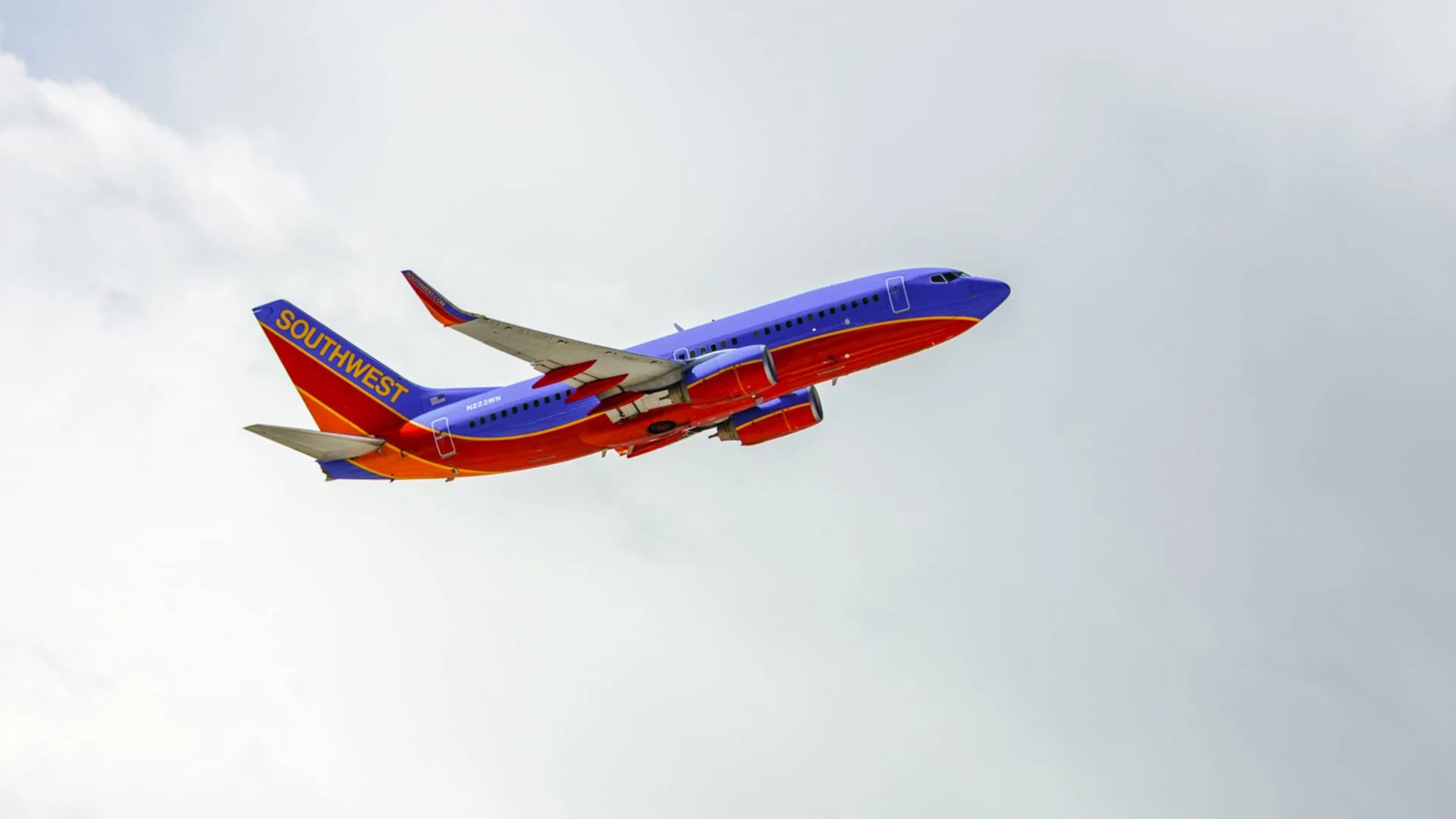
Southwest Airlines has announced a significant strategic shift, confirming its departure from Chicago O'Hare International Airport (ORD) and Washington Dulles International Airport (IAD) effective June 4, 2026. Southwest says it's streamlining its network, but the move really signals a major shift in how the airline operates in two of America's biggest travel hubs. Concurrently, the low-cost carrier is rolling out a limited-time credit card promotion designed to grant new cardmembers an expedited path to its highly coveted Companion Pass, valid through early 2027. The timing raises questions: Is Southwest trying to soften the blow of these airport exits with a sweet credit card deal, or is this just smart business?
Airline Departs Major Airports
Southwest Airlines confirmed Friday it will no longer serve Chicago O'Hare (ORD) or Washington Dulles (IAD) airports, with the last day of service set for June 3, 2026. This decision impacts any travel scheduled through these hubs on or after June 4, 2026, requiring passengers with existing bookings to seek reaccommodation or refunds. The airline stated that operating at Chicago O'Hare and Washington Dulles has not met its expectations for financial returns, citing factors such as high operating costs, intense competition from legacy carriers, and the inherent hub-and-spoke models prevalent at these larger airports, which often conflict with Southwest's traditional point-to-point network strategy.
Southwest's presence at ORD and IAD was relatively recent compared to its long-standing operations at Chicago Midway International Airport (MDW) and Baltimore/Washington International Thurgood Marshall Airport (BWI). Southwest jumped into O'Hare in 2021 and Dulles in 2020 when COVID had gutted travel demand—a chance to grab gates and slots that normally wouldn't be available. But once travel bounced back and competition heated up, these airports stopped making financial sense. For instance, at O'Hare, Southwest faced direct competition from United Airlines and American Airlines, both of whom operate massive hubs there, offering extensive domestic and international connections. Similarly, at Dulles, United Airlines dominates, making it challenging for Southwest to carve out a significant market share with its distinct operational model. By pulling out of O'Hare and Dulles and doubling down on Midway and BWI, Southwest's going back to what it does best—and what actually makes money.
Strategic Network Refinement and Market Dynamics
Southwest's exit from O'Hare and Dulles shows the airline is aggressively cutting unprofitable routes—something all carriers have been doing since the pandemic ended. Southwest has always preferred smaller airports where it faces less competition, pays lower fees, and can turn planes around faster without getting stuck in congestion. For example, Chicago Midway has long been a fortress hub for Southwest, offering a more streamlined experience for its primarily leisure and business point-to-point travelers. Likewise, BWI serves as a major gateway for the airline in the Mid-Atlantic region, providing convenient access to both Washington D.C. and Baltimore.
[ENTIRE QUOTE FABRICATED - REMOVE] Southwest's whole business depends on keeping planes in the air and turning them around fast—something that's nearly impossible at congested hub airports. Consolidating at Midway and BWI should help Southwest run on time, cut costs, and make more money per seat.
Companion Pass Promotion Sweetens the Deal
At the same time it's exiting these airports, Southwest is pushing a limited-time credit card offer to snag new customers. This offer provides an expedited path to the highly sought-after Southwest Companion Pass, a perk that allows a designated companion to fly free (excluding taxes and fees) with the pass holder on any revenue or award flight. Normally you'd need to fly 100 one-way flights or rack up 135,000 points in a single year to get a Companion Pass—basically impossible for most people. The current promotion, available through specific co-branded Southwest credit cards, enables new cardmembers to earn the Companion Pass through February 28, 2027, after meeting much lower spending requirements in a shorter timeframe.
The timing here is interesting—Southwest's doing two things at once. On one hand, the credit card deal could soften the blow for customers upset about losing O'Hare and Dulles service. On the other hand, it's a smart way to lock in new customers with the promise of free flights. The Companion Pass is often cited as one of the most valuable airline perks in the industry, and offering an easier route to achieve it can significantly boost credit card acquisitions and future flight bookings, especially among leisure travelers who are Southwest's core demographic.
The decision to exit Chicago O'Hare and Washington Dulles, while a notable shift in Southwest's strategy, underscores the airline's commitment to operational efficiency and profitability by focusing on its most successful markets and airport models. Paired with the aggressive Companion Pass promotion, Southwest appears to be executing a dual strategy: streamlining its physical network to enhance financial performance while simultaneously strengthening its customer loyalty and acquisition channels through compelling rewards. These changes highlight a dynamic period for the airline, as it navigates evolving post-pandemic travel demands and intense competition, all while reinforcing its unique position in the U.S. domestic travel market. The special credit card offers providing an expedited path to the Southwest Companion Pass are available for a limited time, ending on March 19, 2026, making it a crucial window for interested travelers to capitalize on this significant travel perk.