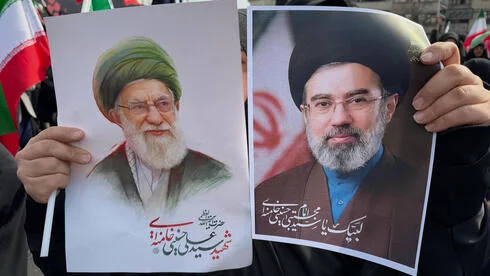
Mojtaba Khamenei, son of Iran's late Supreme Leader Ayatollah Ali Khamenei, was secretly flown to Moscow aboard a Russian military aircraft for urgent medical treatment after reportedly sustaining serious injuries in early strikes of the recent conflict, according to a Kuwaiti newspaper, even as US intelligence previously indicated his father opposed his succession plans.
Allegations of a Secret Airlift and Critical Injuries
Kuwait's Al-Jarida newspaper reported that Mojtaba Khamenei was secretly evacuated to Russia for surgery after being wounded during the opening airstrikes against Iran on February 28. Citing a senior source close to the Iranian leadership, the report claimed Russian President Vladimir Putin personally offered to host and treat Khamenei. The Feb. 28 strikes marked a major escalation—direct attacks, not proxy warfare.
The alleged transfer became necessary because ongoing Israeli and US attacks made it difficult for Mojtaba Khamenei to receive adequate treatment inside Iran. He reportedly underwent a successful operation in Moscow and is now recovering at a private hospital located within one of the Russian president's residences. One report even suggested he lost a leg in the attacks.
If true, the airlift shows how badly Iran's leadership was hit. It suggests Moscow and Tehran are deeply aligned—so much so Putin's offering medical care to Iran's top brass. Using Russian military planes for this isn't routine—it signals something major. The evacuation, if real, shows how close Russia and Iran have gotten, especially against the West. They work together in Syria and both hate US power. But Putin stepping in personally for Mojtaba? That's unusual. Analysts say this isn't charity—it's Putin buying leverage with Iran as both face sanctions. Using a military plane instead of commercial flights screams urgency and secrecy—and raises red flags for both countries' security.
If Mojtaba really needed Moscow's hospitals, what does that say about Iran's ability to handle a crisis? Iran claims it's self-sufficient, but apparently couldn't treat its own leader's injuries. It exposes cracks at the top—Iran's emergency systems aren't ready for this. It also casts a shadow over the official narrative put forth by Tehran regarding its leadership's well-being.
US Intelligence Undermined Succession Hopes
These reports surface amidst a backdrop of long-standing doubts about Mojtaba Khamenei's suitability for leadership, particularly from his own father. US intelligence officials informed President Donald Trump and a small circle of senior advisers that Ayatollah Ali Khamenei had opposed the possibility of his son succeeding him, according to sources familiar with the matter who spoke to CBS.
The intelligence assessment, shared after the elder Khamenei's killing, indicated the late Supreme Leader harbored concerns about Mojtaba's capability and believed him unfit to lead. US officials also gathered intelligence suggesting the elder Khamenei was aware of what were described as 'questionable financial dealings' or 'corrupt practices' associated with his son's inner circle. The Supreme Leader, who held the ultimate authority in Iran's complex political-religious system, reportedly harbored deep concerns about Mojtaba's suitability, particularly his perceived lack of the necessary religious credentials, public charisma, and widespread support among the clerical establishment.
His father was president and close to Khomeini. Mojtaba? He's basically a bureaucrat. He ran his dad's office and money—useful, but that doesn't teach you theology or how to manage Iran's competing power centers. The Assembly of Experts—88 clerics—picks the next Supreme Leader. But the old leader's blessing (or curse) carries huge weight. If his father really opposed him, that's a massive problem—the Assembly might pick someone else with better credentials and real support.
Mojtaba Khamenei's Path to Influence and Obstacles
Mojtaba Khamenei, often referred to as 'Agha Mojtaba,' has long been considered an influential, albeit shadowy, figure behind the scenes of Iranian power. He gained significant prominence during the 2009 Green Movement protests, where he was accused by some opposition figures of playing a key role in suppressing dissent, leveraging his influence within the Basij militia and the Islamic Revolutionary Guard Corps (IRGC). This involvement, while solidifying his image as a staunch loyalist to the system, also tarnished his public image among segments of the population and potentially alienated more reform-minded clerics.
His perceived lack of a strong independent religious base, a crucial requirement for the Supreme Leader who must command the respect of Shiite seminaries, has always been a significant hurdle. Unlike many other potential successors, such as Ebrahim Raisi (before his death) or Sadegh Larijani, Mojtaba has not achieved the rank of Grand Ayatollah (marja' taqlid), which provides the spiritual authority necessary to lead the Shiite world. This deficiency, coupled with the reported concerns of his late father and the allegations of financial impropriety, paints a complex picture of a powerful insider facing formidable institutional and personal barriers to the nation's highest office.
The ongoing uncertainty surrounding Mojtaba Khamenei's true condition and whereabouts continues to fuel intense speculation about the stability of Iran's leadership and its immediate future. These reports, if substantiated, not only underscore the profound vulnerabilities faced by Iran's highest echelons during a period of intense regional conflict but also reveal the intricate and often opaque power struggles within the Islamic Republic. As both international intelligence agencies and state media narratives present conflicting accounts, the fate of Mojtaba Khamenei remains a critical barometer for understanding the internal dynamics and external alliances shaping Iran's post-Ayatollah Ali Khamenei era.