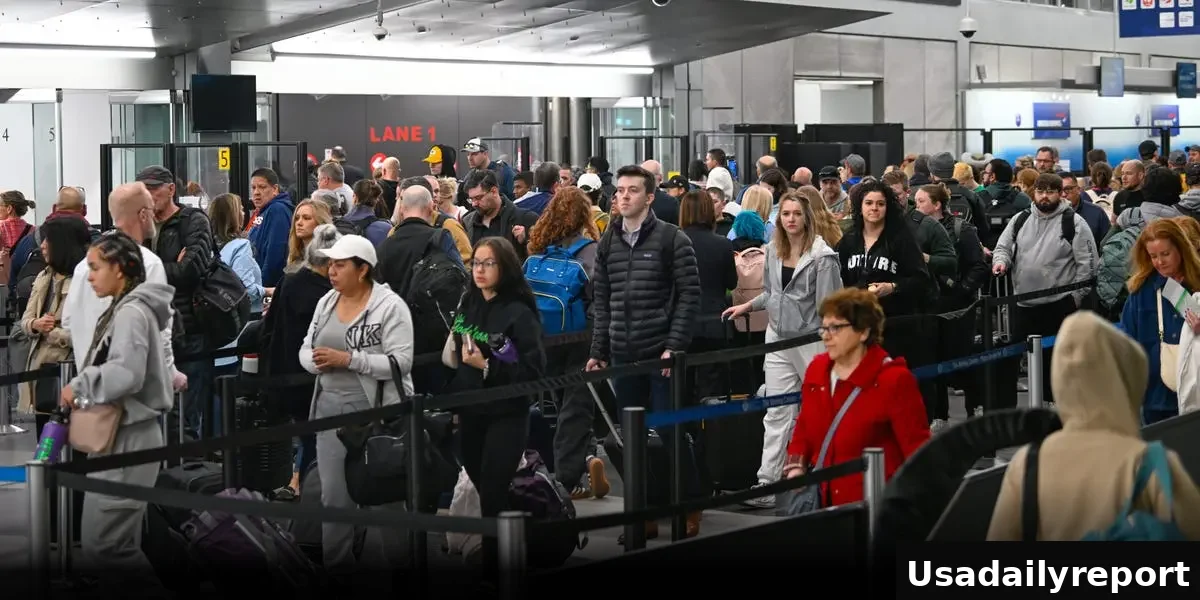
Travelers flying out of John F. Kennedy International Airport faced security wait times around 30 minutes early Tuesday, part of a broader national trend of longer lines as a partial government shutdown leaves Transportation Security Administration agents unpaid during the busy spring break season.
Unpaid Agents Fuel Nationwide Delays
The partial government shutdown has left the Department of Homeland Security and its Transportation Security Administration unfunded for a month. This financial impasse means TSA agents have been working without pay, causing significant strain on the agency's operations.
Hundreds of TSA officers have already quit. More than 300 agents have resigned since the shutdown began, and others have taken unscheduled time off. This staffing shortage directly impacts the agency's ability to process the daily volume of travelers efficiently, especially as the spring break travel season reaches its peak.
The TSA publicly called on Congress to resolve the funding dispute. "3+ hour TSA lines for travelers. 300+ TSA officers who have quit. A $0 paycheck for those continuing to serve. Enough is enough," the agency posted on X last Saturday. Airline executives echoed this sentiment.
A group of airline CEOs, including leaders from Delta, United, American, and JetBlue, sent a letter to Congress on Saturday. They urged lawmakers to find a solution, stating, "Americans — who live in your districts and home states — are tired of long lines at airports, travel delays, and flight cancellations caused by shutdown after shutdown." The current period is particularly busy, with a record-breaking 171 million passengers expected to fly during spring break.
Varied Wait Times Across Major Hubs
By early Tuesday morning, security lines at several major airports remained lengthy, though some had seen improvements since the weekend. In the New York area, both JFK and Newark Liberty International Airport reported wait times of about 30 minutes at some checkpoints.
The nation's busiest airport, Hartsfield-Jackson Atlanta International, experienced lines as long as 90 minutes at some domestic security checkpoints early Tuesday. Over the weekend, Atlanta had seen waits up to two hours. On Monday, the airport encouraged travelers to allow at least three hours before their flights, also citing significant delays and cancellations due to a major storm.
Other airports showed varying situations. Dallas-Fort Worth saw checkpoint waits ranging from a brief two minutes to over 20 minutes. Austin-Bergstrom International Airport was one of the worst-affected over the weekend, partly due to the influx of travelers for the SXSW festival. Its social media channels continued to post updates showing long lines in the terminal on Tuesday morning.
Not all airports faced extreme delays. Seattle-Tacoma International Airport, for instance, reported normal wait times across its checkpoints. Los Angeles International Airport also saw quick lines, with wait times as short as two minutes on Friday. In Philadelphia, TSA temporarily closed Terminal C at Philadelphia International Airport due to low staffing, reassigning officers to other checkpoints to speed up lines, a strategy that appeared to be working as other terminals reported normal wait times.
Tools for Navigating Airport Security
With wait times all over the map, travelers should plan ahead. Airports want passengers showing up three hours early—even for domestic flights. This advice also extends to those with TSA PreCheck, despite their typically shorter wait times.
Travelers can check current and estimated future wait times using the free MyTSA mobile app. You can search by airport name, code, or city to get real-time data. The app covers over 300 airports, including every one of the FAA's Core 30 busiest hubs. You can save favorite airports and let the app use your location to find nearby ones.
The app lets you check estimated wait times for specific dates and times by combining real-time data with historical patterns. Many individual airport websites also provide real-time security line data. Airport websites break down wait times by terminal, which is way more useful than the app's airport-wide numbers.
TSA PreCheck typically offers significantly shorter security lines, with the vast majority of passengers waiting less than 10 minutes nationwide. But the shutdown's staffing crisis has hit PreCheck hard. Some airports are shutting down their dedicated PreCheck lanes. When that happens, PreCheck members should show their ticket in the regular line and ask for expedited screening. The MyTSA app indicates when PreCheck lanes are unavailable at a specific airport.
Until Congress funds the government and TSA agents get paid again, airport chaos will keep shifting—so check wait times before you head to the airport.