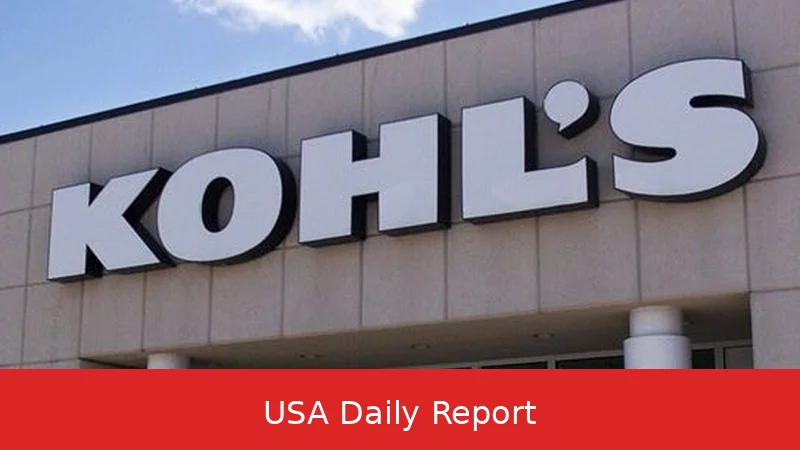
A Kohl's department store in Sault Ste. Marie, Michigan, served its last customers on March 14, marking another closure for the retailer as it navigates a challenging economic environment and a shifting consumer landscape.
Michigan Store Shuts Doors
The Kohl's branch in the Cascade Crossing shopping center, near the Canadian border in Michigan's Upper Peninsula, officially closed its doors after a massive clearance sale. Christopher Herbert, the store manager, shared the news on social media in late January, expressing a sense of gratitude for the community's support and regret over the closure. This specific location, while serving a relatively isolated community, had faced increasing competition from online retailers and cross-border shopping options, particularly as consumer habits shifted dramatically post-pandemic. For residents of Sault Ste. Marie, the closure means the loss of a key apparel and home goods retailer, potentially forcing them to travel significant distances to larger cities or rely solely on e-commerce for similar offerings. The economic impact extends to the loss of local jobs, affecting both full-time and part-time employees who had been integral to the store's operations. But this closure isn't unique—it's part of Kohl's bigger struggle with inflation, shifting consumer confidence, and tough competition.
Broader Retail Strategy and Financial Performance
Kohl's has been undergoing a significant transformation, moving away from its traditional big-box department store model to embrace a more agile, omnichannel approach. This involves substantial investments in its e-commerce platform, supply chain modernization, and the expansion of smaller-format stores designed for convenience and localized appeal. Kohl's has also partnered with Sephora to add beauty shops to stores, hoping to pull in younger shoppers and boost traffic. Some categories are growing, but it's not enough to overcome the bigger problems hitting department stores. Recent financial reports indicate a mixed performance, with comparable sales often declining or remaining flat, even as the company strives to manage inventory levels and operational costs more efficiently. For the fiscal year ending February 3, 2024, Kohl's reported a net sales decrease of 2.7% year-over-year, underscoring the ongoing challenges in achieving consistent growth. The company's stock performance has also reflected investor skepticism, often trading below historical highs as the market weighs the efficacy and speed of its turnaround efforts against the backdrop of a highly dynamic retail market.
Department stores used to work because they offered everything in one place for middle-class shoppers. But Amazon, specialty shops, fast-fashion brands, and discount chains have chipped away at that model for 20 years. Shoppers want to move between online and stores easily, get personalized deals, and pay less—or they'll go elsewhere. Kohl's, like many of its peers, is grappling with the legacy costs of large physical footprints and the need to differentiate itself in an increasingly crowded marketplace.
Impact and Expert Perspectives
Retail analysts see store closures as painful but necessary—they help companies cut costs and dump money-losing locations. 'These closures are less about failure and more about strategic optimization,' explains Sarah Jenkins, a retail industry consultant. 'Kohl's is reallocating resources to stores with higher traffic potential and greater profitability, as well as investing heavily in their digital channels. It's a painful but often essential move to ensure long-term viability in a market that no longer supports sprawling retail footprints everywhere.' The Sault Ste. Marie closure, for instance, might be attributed to factors such as declining local population, changing demographics, or simply not meeting specific profitability metrics set by corporate. Still, local communities pay a real price. When an anchor store closes, nearby shops lose customers and the whole shopping area dies. Cities struggle to find new uses for these massive empty buildings, and they can stay vacant for years.
Kohl's core customers—middle and lower-income families—are squeezed financially, which explains a lot about why the company is shifting strategy. Kohl's sells to middle-income families, but inflation on groceries and rent means they have less money left for clothes and home stuff. So Kohl's needs to focus on value, convenience, and making shopping easier if it wants to keep these customers. Loyalty programs, personalized deals, and Sephora are all bets that Kohl's can stay relevant to middle-income shoppers despite economic headwinds.
Kohl's leadership insists these investments and changes are necessary for survival, even though their core customers are broke. These strategic realignments, including targeted store closures, are part of a broader effort to create a more efficient, digitally integrated, and customer-centric retail experience that can withstand future market volatilities and secure a sustainable future for the brand in the evolving retail landscape.