Illinois voters will cast ballots in the state's 2026 primary election on Tuesday, March 17, choosing nominees for a full slate of offices including governor, U.S. Senate, and U.S. House, with polls opening at 6 a.m. and closing at 7 p.m. statewide.
Key Statewide Races Take Center Stage
The 2026 primary election is shaping up to be a significant contest for Illinois, marked by the retirement of long-serving incumbents and the emergence of national political storylines. Voters will decide on candidates for governor, a coveted U.S. Senate seat, multiple U.S. House districts, state legislative positions, and various local offices.
One of the most watched races is the Democratic primary to succeed U.S. Senator Dick Durbin, who is retiring after five terms. Durbin's departure opens up a seat that has seen minimal turnover, with only one other person holding it in over four decades. The Democratic field includes U.S. Representatives Robin Kelly and Raja Krishnamoorthi, alongside Lieutenant Governor Juliana Stratton. Stratton has secured the endorsement of Democratic Governor J.B. Pritzker, positioning her as a favored candidate by the state's Democratic establishment. She champions a progressive platform, advocating for policies like Medicare for All and a $25 minimum wage. Krishnamoorthi, a member of the New Democrat Coalition, has mounted a strong challenge, leveraging a significant fundraising advantage, with about $6.6 million in the bank by the end of February, much of it transferred from his U.S. House campaign account. This financial edge has allowed him to compete effectively against Stratton, who has drawn support from national progressive figures such as Senators Elizabeth Warren and Tammy Baldwin. The contest has also seen substantial outside spending, with Fairshake, a prominent cryptocurrency Super PAC, reportedly spending over $5 million on ads targeting Stratton's campaign. Congresswoman Kelly has also garnered endorsements, including from New Jersey Senator Cory Booker and former Chicago Mayor Lori Lightfoot. Senator Durbin has notably refrained from endorsing any candidate in the primary.
On the Republican side for the U.S. Senate, the field includes former state Republican Party chair Don Tracy, Chicago-based antitrust enforcement attorney Jeannie Evans, and former Polish American Congress president Casey Chlebek. Tracy leads the Republican fundraising efforts, holding about $1.8 million by late February. He has also received endorsements from former Illinois Senator Mark Kirk and all three Republican members of the Illinois congressional delegation.
The gubernatorial race presents a different dynamic. Governor J.B. Pritzker is running unopposed for renomination in the Democratic primary, with his new running mate, Christian Mitchell, a former state representative. Pritzker's increasing national profile, especially with speculation about the 2028 Democratic presidential race, highlights the significance of his position. In the Republican primary, four candidates are vying for the chance to challenge Pritzker in November. This group includes former state Senator Darren Bailey, who previously lost to Pritzker in the 2022 governor's race. Bailey has maintained a sizable polling advantage over other Republican contenders like real-estate developer Rick Heidner and Ted Dabrowski, former president of conservative research organization Wirepoints. Aaron Del Mar, chair of the Cook County Republican Party, is Bailey's running mate.
Beyond the top statewide races, several U.S. House primaries are also drawing attention. The Senate bids of Kelly and Krishnamoorthi, coupled with the retirements of long-serving Democratic U.S. Representatives Danny Davis and Jan Schakowsky, have created crowded fields. Notably, former Democratic Congressman Jesse Jackson Jr. is attempting a political comeback in the 2nd Congressional District, seeking to replace Kelly, who took his seat in 2013 following his conviction in a campaign fraud case. Jesse Jackson Jr. is the son of the late civil rights leader Rev. Jesse Jackson.
Historically, Illinois's largest counties, particularly Cook County, play a critical role in primary outcomes. Eight of the ten Democratic Senate candidates hail from Chicago or its surrounding Cook County suburbs, potentially diluting any individual hometown advantage in the region. The winners of Democratic statewide primaries often hold a strong position heading into the general election, as Democrats have consistently won key statewide general elections with over 55% of the vote in recent cycles.
Voting Logistics for Primary Day
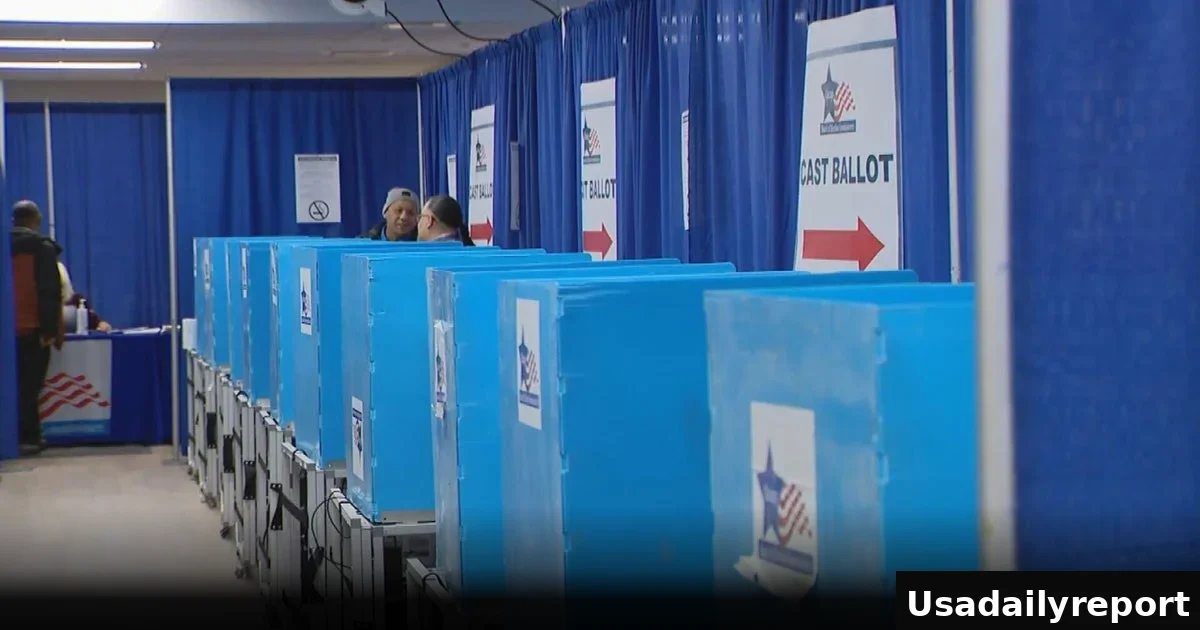
For those planning to vote in person on primary day, polls across Illinois will open promptly at 6 a.m. and close at 7 p.m. This uniform schedule applies statewide for both primary and general elections. Hundreds of polling places are operating across the state, and voters can find their specific location by visiting the Illinois State Board of Elections website and entering their address.
Illinois offers on-site voter registration, allowing eligible residents to register at any polling place through primary day. To register, individuals must provide two valid forms of identification, such as a driver's license or state ID. Seventeen-year-olds who will turn 18 by the November Election Day are also eligible to vote in both the primary and general elections and can register at the polls.
For voters who requested a mail-in ballot but haven't yet sent it, many polling places provide secure drop boxes. These drop boxes offer a convenient way to ensure ballots are submitted and counted on time. A comprehensive list of these drop box locations is available through election authorities.
Early voting has already concluded, having begun in some counties on February 5 and becoming available statewide by March. Early voting sites closed on March 16. While polls close at 7 p.m., anyone still in line at that time will be allowed to cast their ballot. Election officials emphasize that voters should not feel rushed; as long as they remain in line, their vote will be counted. Evening hours often see increased voter traffic as people head to the polls after work, so budgeting extra time may be wise, though historically, major delays haven't been common in Illinois.
The Road Ahead and Early Indicators
Results from the primary elections will begin to be reported shortly after polls close at 7 p.m. While some races feature uncontested candidates, leading to quick final results, others with multiple contenders may require more time before a winner can be projected. The reporting of results includes all ballots cast, whether through early voting, mail-in voting, or in-person on primary day.
Ahead of primary day, election officials reported robust participation through early voting and mail-in ballots. The Chicago Board of Elections indicated that as of Sunday, March 15, more than 160,000 early or mail-in votes had already been cast or received. This figure surpassed the early voting numbers from the previous two midterm election cycles, suggesting strong engagement from the electorate even before primary day itself.
The high volume of early and mail-in votes suggests a politically engaged electorate, setting the stage for potentially dynamic outcomes as results begin to trickle in after 7 p.m.