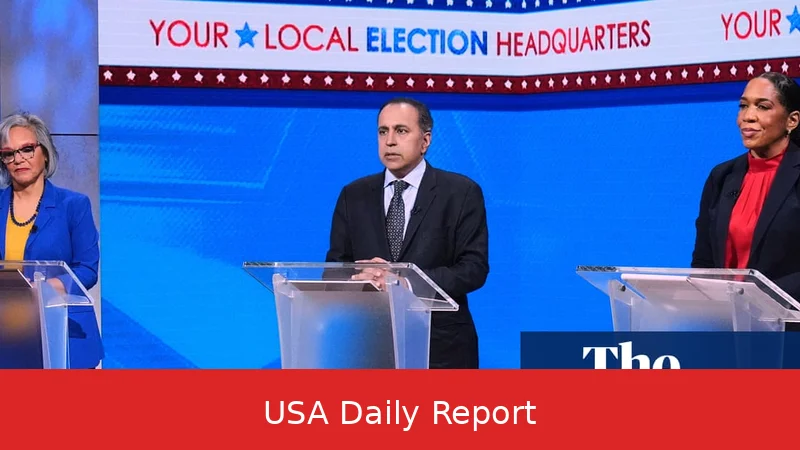
Millions of dollars from pro-Israel groups, including those linked to the American Israel Public Affairs Committee (AIPAC), are pouring into Illinois Democratic primary races set for Tuesday, March 17, as candidates vie for an open U.S. Senate seat and several competitive congressional districts.
Outside Spending Dominates Campaigns
The influx of cash underscores a broader effort by pro-Israel organizations to assert influence in Democratic primaries across the nation. This spending comes as support for Israel among U.S. Democrats has reached a historic low, particularly in the wake of the ongoing conflict in Gaza.
AIPAC and its affiliated donors have funneled at least $13.7 million into Illinois primaries, according to an investigation by Chicago's public radio station WBEZ. This figure includes funds directed through various political action committees (PACs), some operating under generic names, which often share vendors with the main pro-Israel lobby group. These tactics, critics say, aim to obscure the source of the funding.
Usamah Andrabi, a spokesperson for the progressive group Justice Democrats, highlighted the strategy. He stated that AIPAC uses “covert shell” groups because it recognizes the unpopularity of Israel among many voters, especially after the extensive media coverage of the conflict in Gaza. AIPAC’s election arm, the United Democracy Project (UDP), notably avoids any mention of Israel in its name.
“AIPAC has become such a toxic force in the Democratic Party that voters now, when they see a candidate backed by AIPAC, they reject them simply for that support,” Andrabi told Al Jazeera. Other so-called dark-money groups, which aren't required to disclose their funders until after the vote, have also endorsed the same candidates favored by AIPAC.
Senate Race Draws Significant Funds
The retirement of longtime Senator Dick Durbin has opened a highly competitive 10-way Democratic primary for his U.S. Senate seat. The field includes two sitting U.S. Representatives, Raja Krishnamoorthi and Robin Kelly, alongside Lieutenant Governor Juliana Stratton.
Representative Krishnamoorthi, a moderate Democrat and member of the House’s centrist New Democrat Coalition, has emerged as the leading fundraiser in the race, pulling in over $30 million. This makes him the second-highest fundraiser among federal candidates this cycle. Questions have arisen about some of Krishnamoorthi’s donors, who reportedly include Trump supporters, individuals aligned with India’s nationalist movement, and an executive from the AI company Palantir, according to the Chicago Tribune.
Lieutenant Governor Stratton, a progressive, has gained momentum in recent weeks. Her campaign received a significant boost from an infusion of cash from Governor JB Pritzker to Illinois Future Pac, which is running pro-Stratton advertisements. Stratton has served as lieutenant governor since 2019.
In a strategic move, the Indian American Impact Fund, a PAC supporting Krishnamoorthi, is reportedly running ads that boost Representative Kelly. Analysts see this as an effort to blunt Stratton’s growing appeal. Kelly has represented the second congressional district since 2013.
Heated Battles for House Seats
The departure of sitting representatives for higher office or retirement has also created several open congressional seats, many of which are in reliably Democratic-leaning districts. This means the primary winners are highly likely to secure victory in the November general election, potentially leading to long careers in Congress, much like Durbin’s tenure of over 29 years.
One of the most closely watched contests is for the open seat vacated by retiring Congresswoman Jan Schakowsky in the north Chicago suburbs. Here, 26-year-old progressive activist Kat Abughazaleh, known for her strong online presence and open condemnation of Israel’s war on Gaza as a genocide, is facing off against several candidates.
Her main opponents include Daniel Biss, the mayor of Evanston, and State Senator Laura Fine. Biss, whose family has deep ties to Israel and the Holocaust, has been critical of some Israeli policies and enjoys support from the liberal Zionist group J Street. Fine is generally seen as the pro-Israel candidate in the contest.
Pro-Israel groups, including those linked to AIPAC, initially targeted Biss in an effort to bolster Fine’s campaign. But following what some perceived as a miscalculation in a recent New Jersey race, where attacks on a centrist candidate inadvertently helped a progressive win, these groups have shifted their focus to Abughazaleh in recent days. AIPAC, through its shell PACs like the United Democracy Project, is projected to spend upwards of $20 million in Chicago-area House races alone.
A National Reflection
The dynamics playing out in Illinois mirror a growing national trend within the Democratic Party. Candidates across the country are facing increasing scrutiny over their stances on Israel and any donations received from AIPAC-linked organizations. From Minnesota to Mississippi, political operatives report that questions about the group are common on the campaign trail and at town halls.
As Israeli Prime Minister Benjamin Netanyahu’s government continues its war in Gaza, many Democrats, even those who traditionally support Israel, have expressed discomfort and feel out of sync with current Israeli policies. This shift has led to concerns among some Israel backers that support for the country is becoming increasingly partisan.
Daniel Biss, the Evanston mayor, sees his own race as a crucial test. The grandson of Holocaust survivors, Biss grew up with dual Israeli-American citizenship and has family members who served in the Israeli reserves after the October 7, 2023, attacks. He believes AIPAC is heavily investing in his opponent because he advocates for “justice, dignity and self-determination for the Palestinian people” from a position that cannot be easily dismissed as illegitimate. He hopes to demonstrate that candidates can successfully challenge AIPAC’s influence.
The rising scrutiny of AIPAC and the substantial spending in these Illinois primaries highlight a significant moment for the Democratic Party, as it grapples with evolving views on Israel amid ongoing regional conflicts.