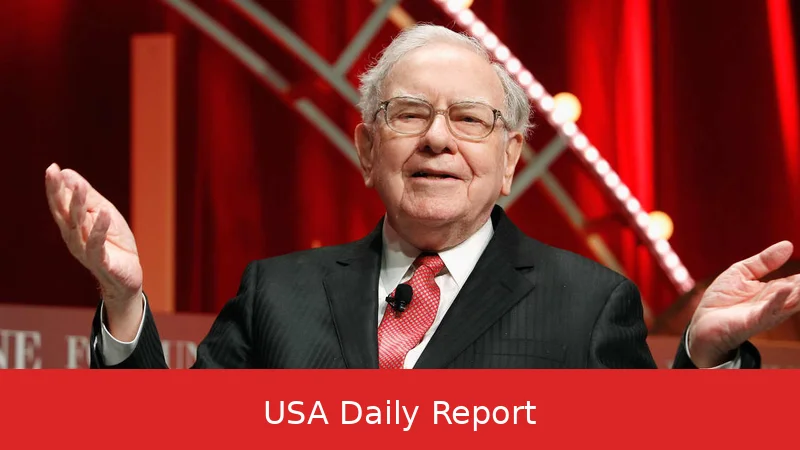
Whispers of a $2 billion "Iran oil windfall" for Warren Buffett's Berkshire Hathaway sent ripples through markets this week. But don't picture clandestine deals or direct investments in Tehran. The reality is far more subtle, a classic Buffett play that's paying off big as global supply chains buckle under the weight of Mideast conflict.
The Macroeconomic Masterclass
This isn't about direct Iranian assets. Not at all. Instead, it's a masterclass in macroeconomic positioning, where Buffett's long-term accumulation of American energy majors — particularly Occidental Petroleum and Chevron — has delivered a massive return. He's been buying these companies for years.
The core of this story isn't some secret pact. It's a classic Buffett strategy: hold productive assets that benefit from systemic inefficiency. As tensions between the United States and Iran have heated up, the Strait of Hormuz — the world's most critical maritime chokepoint for crude oil — has faced serious threats. This narrow passage, just two miles wide at points, is vital for global energy shipments.
That volatility triggered a sharp spike in energy prices. Brent crude hit peaks near $119 a barrel earlier this month, though it's settled a bit since.
For Berkshire Hathaway, which had quietly built huge positions in major energy producers long before the current geopolitical crisis even started, this price surge has effectively transformed stagnant equity holdings into a multi-billion-dollar profit engine.
The $2 billion figure cited in recent financial media comes largely from the sudden revaluation of Berkshire's energy portfolio. It's a direct consequence of that conflict-driven price hike. Buffett's strategy has always focused on the physical economy. Unlike many investors chasing tech stocks, Berkshire significantly expanded its stake in Occidental Petroleum (OXY) and Chevron (CVX) throughout 2025 and early 2026. This wasn't a gamble on war, but a long-term bet on energy security and the undeniable truth that global demand for oil remains tethered to the physical infrastructure of production.
Key pillars of this energy position include a massive stake in Occidental Petroleum. Berkshire's holdings grew to nearly 29% of the company. Analysts saw this move as a long-term hedge against both inflation and geopolitical supply shocks. Plus, a huge position in Chevron acts as a secondary stabilizer, giving Berkshire exposure to international integrated energy markets that tend to thrive when global supply chains face disruption.
Why Oil Still Reigns Supreme
The rising U.S.-Iran tensions intensified after the Trump administration targeted Iran's Kharg Island terminal, which handles nearly 90% of the nation's oil exports. Iran responded by threatening to mine the Strait of Hormuz. And on Saturday, the U.S. President declined Iran's offer to negotiate a ceasefire, hinting at more strikes. This signals a potential escalation.
Shark Tank star Kevin O'Leary warned the market about the broader impact of The situation. "Oil is the only commodity used in every single sector of every economy. Even our adversaries need it," he posted on X. He's right — think about it: manufacturing, transportation, heating, plastics. It's everywhere.
O'Leary also took aim at alternative energy efforts. He said billions spent on wind and solar haven't proven reliable under real-world pressures. "It didn't work," he wrote. The Canadian businessman predicted a global shift toward hydrocarbon-friendly policies would likely follow the crisis. Expect more governments to prioritize traditional energy sources, he thinks.
Analyst Samo Burja reinforced this idea in his own post. He noted oil's structural importance, saying it underpins manufacturing, transportation, and global production. It's the foundational fuel for almost everything we do.
The Broader Economic Ripple
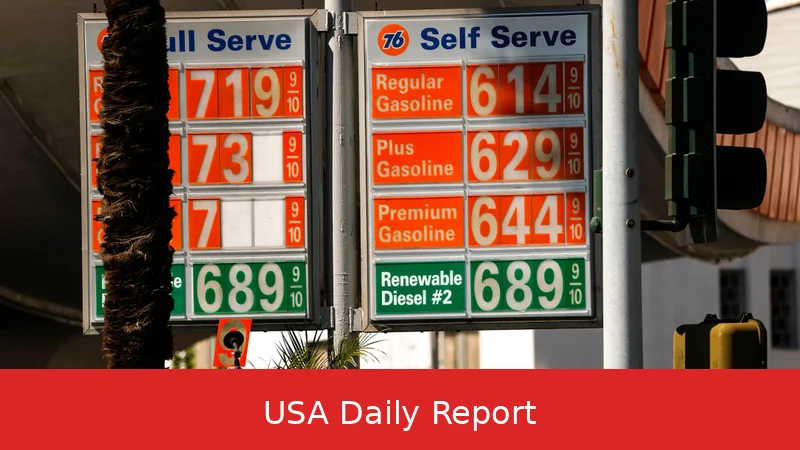
Hang on though — the price of oil doesn't just affect big investors like Buffett. It hits everyone. In a recent Fox News appearance, O'Leary cautioned that if oil prices stay above $90–$100 for more than 90 days, gasoline could easily surpass $3 per gallon. He called energy the "granddaddy issue" heading into the U.S. Midterm elections. That's a big deal for household budgets and consumer confidence.
Earlier, O'Leary had noted that without geopolitical tensions, crude would probably trade between $55–$70 per barrel. That's a level, he said, where "the economy works just fine." But those days seem a distant memory now. Every time a barrel of oil costs more, those costs get passed along, from shipping goods to fueling commutes. It's a ripple effect that touches every corner of the economy.
Sure, the $2 billion windfall for Berkshire Hathaway isn't a direct investment in Iran, That's a sharp reminder of how interconnected global markets are. Geopolitical tensions, no matter how far away, can send shockwaves that reshape investment portfolios and impact everyday prices at the pump.
Still, as long as geopolitical flashpoints like the Strait of Hormuz remain volatile, the world's reliance on oil will keep investors like Buffett well-positioned for these kinds of indirect, but massive, payouts.