The U.S. Securities and Exchange Commission just unveiled its first-ever definitions for what crypto assets count as securities, marking a major pivot for the agency. This new guidance, released Tuesday, aims to end years of confusion in the digital asset market.
New Clarity from SEC Chairman Atkins
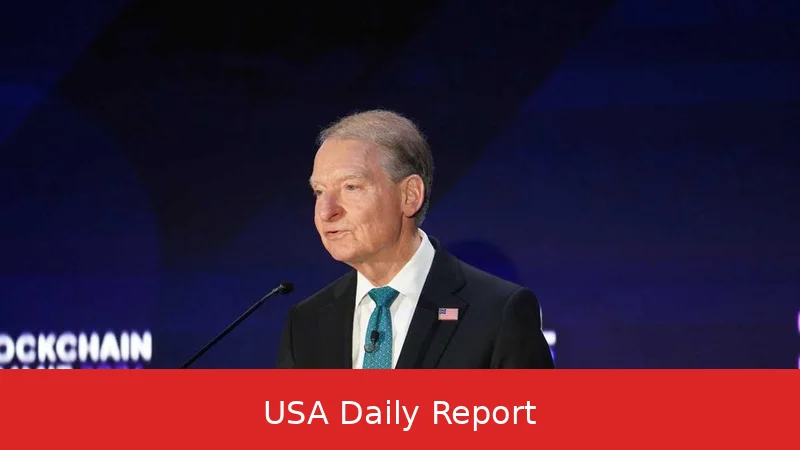
SEC Chairman Paul Atkins, appointed by former President Donald Trump with a pro-crypto mandate, delivered on a long-standing promise for clearer rules. He announced the new interpretive guidance alongside the Commodity Futures Trading Commission (CFTC), days after the two agencies agreed to work closely on regulating the sector. What's surprising here is how direct Atkins was.
“After more than a decade of uncertainty, this interpretation will provide market participants with a clear understanding of how the Commission treats crypto assets under federal securities laws," Atkins stated. This move stands in stark contrast to his predecessor, Democratic appointee Gary Gensler, who avoided tailored policies for crypto. Gensler's reluctance left a big gap in regulatory certainty for the world's most important market.
Atkins didn't mince words at the Digital Chamber's DC Blockchain Summit. He said the new "token taxonomy" takes a firm stance Gensler's agency wouldn't: "Most crypto assets aren't themselves securities." The guidance outlines four distinct categories of crypto tokens.
Only one of these — digital securities, which are essentially traditional securities using new technology — will remain subject to securities laws. This means the SEC is returning to its core job: protecting investors in securities transactions.
And those investment contracts that are securities? They don't have to keep that status forever, Atkins noted. "We're not the securities and everything commission anymore," he declared to applause from the crypto crowd. The SEC plans to kick off a formal rulemaking process in the next week or two, which will include an "innovation exemption" for crypto firms. That proposal could be more than 400 pages long.
Wall Street Embraces Tokenization, Taps Crypto Partners
While the SEC clarifies its stance, major players on Wall Street are already making big moves into digital assets. Nasdaq and Intercontinental Exchange (ICE), which owns the New York Stock Exchange, are working to put the massive $126 trillion equity market onto blockchains.
But they're not doing it alone; they're leaning on crypto exchanges to get there.
Nasdaq is building a framework so publicly listed companies can issue blockchain-based versions of their shares. These tokenized stocks would still carry traditional ownership rights and governance. To distribute them globally, Nasdaq is partnering with Payward, the parent company of crypto exchange Kraken. This offering could go live as early as the first half of 2027.
Meanwhile, ICE recently made a strategic investment in crypto exchange OKX, valuing it at $25 billion. This deal includes plans for new tokenized stocks and crypto futures. It also lets ICE tap into OKX's huge 120 million user base. These deals point to a bigger shift in how financial markets might work. Stocks, bonds, and funds have long traded on separate systems with limited hours. Blockchain technology promises a unified, always-on marketplace.
Antoine Scalia, CEO of Cryptio, a crypto accounting and compliance platform, calls this the "everything exchange." It's a marketplace where all asset classes trade on the same infrastructure. "For a very long time, it was just crypto people pushing the narrative that traditional finance and crypto would merge," Scalia said. "Now we see the major exchanges moving." This shift got a boost from a January SEC Staff Statement on Tokenized Securities, which finally confirmed that tokenized equities have the same legal weight as their paper versions. This gives Wall Street incumbents the green light to jump into the market.
T. Rowe Price Dives into Broad Crypto ETF
Traditional asset managers aren't sitting on the sidelines either. T. Rowe Price, a firm managing $1.8 trillion in assets, has filed to include a wide array of digital assets in its new exchange-traded fund (ETF). The amended S-1 registration statement with the SEC details the Price Active Crypto ETF, which aims to give investors actively managed exposure to digital assets.
The updated filing, submitted Monday, expands on the company’s original October application. It lists a long lineup of cryptocurrencies the fund could invest in, including major players like bitcoin and ether, but also meme coins such as dogecoin and shiba inu. Other potential holdings include solana, XRP, ADA, avalanche, litecoin, polkadot, hedera, bitcoin cash, chainlink, stellar lumen, and SUI. That's a pretty big universe.
The fund won't hold all these assets at once. Under normal circumstances, it plans to maintain between five and fifteen crypto assets, using an active management strategy. The goal is to beat the FTSE US Listed Crypto Index by rebalancing the portfolio based on fundamentals, valuation, and market momentum. Anchorage Digital Bank N.A. Will safeguard the fund's digital tokens as its custodian.
For now, the fund will use a cash subscription and redemption model, meaning investors use cash to create or redeem ETF shares. The filing notes That could change to allow in-kind transactions later. What's more, the fund might even get into staking, where token holders lock up assets to help secure a network in exchange for rewards. T. Rowe Price said staking could be pursued, depending on risk, tax treatment, and regulatory guidance. This move by the 87-year-old firm shows just how much the digital asset market is maturing, joining a growing list of crypto investment vehicles for traditional brokerage accounts.
The active approach of T. Rowe Price's ETF could set it apart from the spot bitcoin ETFs launched in 2024, giving managers more flexibility as crypto markets keep evolving.