A catastrophic explosion at the U.S. Steel coke production factory in Clairton, Pennsylvania, on August 11, 2025, killed two workers and injured 11 others, sparking federal investigations and multiple lawsuits, while separate incidents in Iraq and Ohio also drew attention for their explosive nature.
Tragedy Strikes Pennsylvania Coke Plant
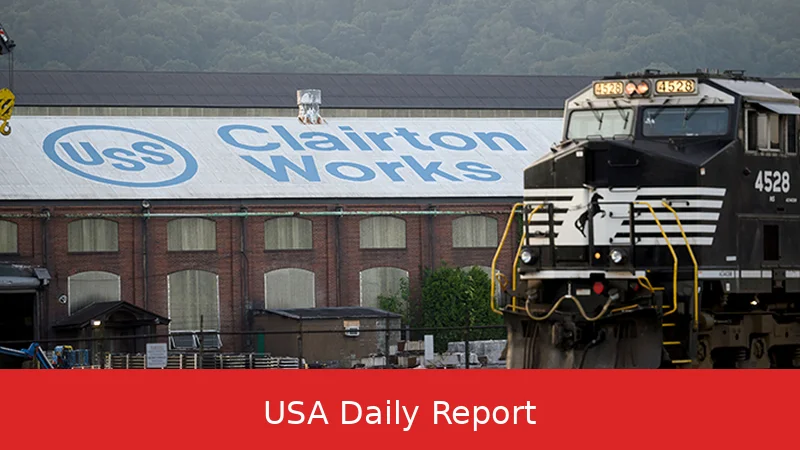
Just weeks after Nippon Steel closed its $14.9 billion deal for U.S. Steel, an explosion tore through the Clairton plant. Emergency responders faced a massive undertaking, with 20 EMS agencies, 14 local fire departments, and 15 ambulances rushing to the scene. Rescuers spent hours sifting through the severe damage, ultimately locating the bodies of the two deceased workers.
The Clairton facility stands as the largest coke producer in the United States. Coke is made by heating coal to about 2000 degrees Fahrenheit in specialized ovens—it's essential for steelmaking. In blast furnaces, it acts as both fuel and a chemical reducing agent that turns iron ore into molten iron.
But the plant has a documented history of safety and environmental issues. Clairton's air quality is consistently ranked among Pennsylvania's worst, a persistent headache for both residents and regulators. This isn't the first time the facility has seen disaster; a smaller explosion in 2009 killed a contract worker, and a fire in 2018 injured 14 employees.
Investigations, Lawsuits and Industry Reform
Federal investigators moved fast to probe the 2025 explosion. The U.S. Chemical Safety and Hazard Investigation Board is leading the probe. Sylvia Johnson, a board member, emphasized the need for change. “Tragedies like this must lead to change,” Johnson said after the event. “Our investigation will identify not just what went wrong but what must be done to ensure workers across this country are protected from similar hazards.”
Investigators are scrutinizing not only the immediate cause of the blast but also the plant’s overall safety practices, spanning decades under U.S. Steel’s ownership and now under Nippon Steel’s liability. Neither U.S. Steel nor Nippon Steel has commented on the ongoing investigations or the incident.
The explosion has triggered safety fines and wrongful death lawsuits. Relatives of the two workers killed have filed suits, alleging that U.S. Steel, and by extension Nippon Steel, failed to properly maintain gas valves, which reportedly malfunctioned and caused the explosion. More injury claims and emotional distress suits could follow from the injured workers and their families.
Nippon Steel is now stuck with a massive problem. The company must not only repair the extensively damaged Clairton plant but also undertake substantial upgrades. Insurance claims from an accident this big typically drag on for years. The acquisition, initially valued at $14.9 billion, now comes with unforeseen liabilities and costs for the new owner, forcing Nippon Steel to pay far more for the plant than it initially anticipated.
Some in the industry hope this disaster finally pushes for real changes in how plants like this are run, checked on, and insured. This shows why heavy industry needs better risk management and tighter safety rules.
Explosions Reported Elsewhere
Other explosions made news that same period. On March 16, 2026, reports emerged of an explosion near the U.S. Embassy in Baghdad. Details were thin on what happened or why. The event occurred on the same day President Donald Trump told reporters he believed he could have the “honor of taking Cuba,” as the communist-run island’s electricity grid suffered its first nationwide collapse since the U.S. effectively cut off its oil supply.
The following day, March 17, 2026, residents across Northeast Ohio reported hearing a massive boom. Calls flooded newsrooms and social media accounts as far west as Elyria and as far east as Perry. The National Weather Service Cleveland (NWS) later suggested the widespread sound was likely caused by a meteor. The NWS cited the latest GLM imagery as indicating the boom resulted from a meteor event.
The full fallout from Clairton—new regulations, Nippon Steel's costs, everything—is still being sorted out in courts and investigations.