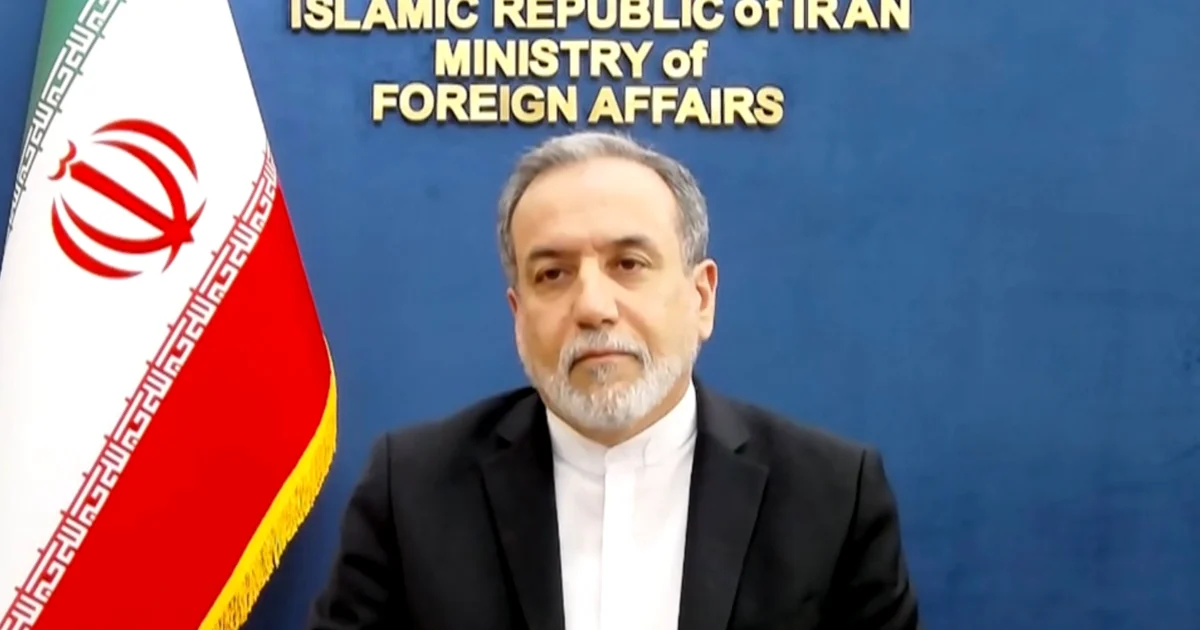
Iranian Foreign Minister Abbas Araghchi declared his country won't seek a ceasefire or negotiations with the United States, telling CBS News' Margaret Brennan on "Face the Nation" Sunday that Iran is prepared to defend itself "as long as it takes" against what he termed an "illegal war" initiated by President Trump.
Iran Won't Back Down
Appearing on the March 15, 2026, broadcast, Foreign Minister Araghchi directly addressed President Trump's recent comments, where the President stated he wasn't ready for a deal with Iran because the terms were insufficient. Trump's administration had also suggested the ongoing conflict could persist for another three and a half weeks. But Araghchi was unequivocal, stating Iran had never asked for a ceasefire, nor had it sought negotiations.
"We are ready to defend ourselves as long as it takes," Araghchi asserted to Brennan. He added that Iran would continue its self-defense until President Trump recognized the war as "illegal" and "with no victory." The Foreign Minister went further, accusing President Trump of engaging in the conflict for personal amusement, referencing a comment he attributed to Trump about sinking ships and targeting places for "fun." He also cited a "Secretary of War" statement about "no mercy," which Araghchi labeled a "war crime."
Brennan challenged Araghchi's position, suggesting the conflict represented a "war of survival" for the Iranian government and asking if negotiation, either directly or through a third party, wasn't necessary. Araghchi dismissed this notion. "It's not a war of survival," he countered, insisting Iran remained "stable and strong enough" and was merely defending its people from "this act of aggression."
Why Iran Doesn't Trust American Talks
Araghchi expressed profound skepticism about the value of engaging in talks with the United States. He pointed to past diplomatic efforts with President Trump's son-in-law, Jared Kushner, and envoy Steve Witkoff, which he claimed were followed by American attacks. "There is no good experience talking with Americans," he said. He questioned the purpose of renewed discussions if previous ones led to aggression, asking, "So what is good if we go back to talk once again?"
Brennan pressed the Foreign Minister on Iran's regional actions, specifically its use of drones and missiles against neighboring countries—American allies throughout the Gulf. She highlighted that Iran had previously traded and maintained relations with these nations. Brennan inquired how, should the Iranian government survive the current conflict, it intended to resume business with countries it was now targeting with drones and hitting civilian sites. Araghchi began to respond, noting these countries had "given their soil to Amer..." before the transcript ended.
The two sides couldn't be further apart: Iran says the US started this, while Washington and its allies argue Iran's been destabilizing the region. The interview came as Israel and Iran traded strikes, with the Middle East spiraling into deeper conflict.
Broader Discussions on "Face the Nation"
The interview with Foreign Minister Araghchi was a key segment of the March 15, 2026, episode of "Face the Nation with Margaret Brennan," which delved into the multifaceted crises gripping the Middle East and their global ramifications. Brennan brought in a range of voices to break down what's happening.
Alongside Araghchi, the program featured White House National Economic Council Director Kevin Hassett, offering insights into the economic implications of the conflict and US policy responses. Democratic Senator Mark Warner of Virginia, who serves as vice chairman of the Intelligence Committee, contributed his perspective on intelligence matters and national security concerns arising from the Middle East. Republican Representative Dan Crenshaw of Texas also joined the discussion, providing a congressional viewpoint on the unfolding events.
Former CIA operative Jonny Gannon weighed in on the geopolitical angles. Kevin Book from ClearView Energy Partners explained how the conflict is rattling oil markets. Former DHS Assistant Secretary Samantha Vinograd, a CBS News national security contributor, offered her expertise on homeland security and international relations. The program aired on CBS News at 10:30 a.m. ET and was available for streaming on Paramount+ and CBSNews.com later that day.
The guest list showed just how far this conflict reaches—from diplomacy and military strategy to the economy and homeland security.