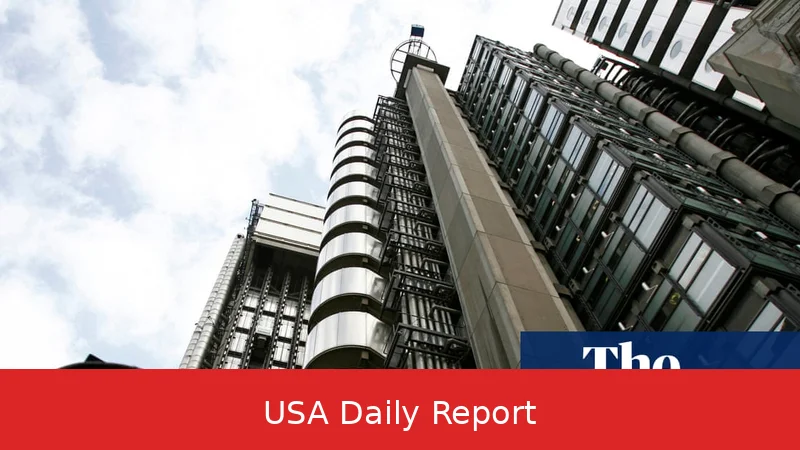
Lloyd's of London says it'll continue underwriting hull and cargo risk for vessels navigating the Strait of Hormuz, even as war-risk premiums surge to historic highs. The insurer's stance comes amid a $20 billion reinsurance pledge and mounting pressure on shipping firms to absorb steep new costs.
Only 66 vessels have dared to thread the Strait of Hormuz since the Feb. 28 clash erupted - a sliver of the traffic that usually carries about one-fifth of the world's oil.
That's a fraction of the usual load.
Lloyd's says it still writes cover, but now levies a premium that can add hundreds of thousands to a $30 million ship's bill.
The U.S. Has a $20 billion reinsurance backstop in place.
Rising War-Risk Premiums
Insurance broker Marsh reports that war-damage coverage for hull and cargo now costs between 1% and 1.5% of a vessel's insured value, up from a quarter of a percent before the conflict.
That's a 10-fold increase.
A typical Aframax tanker, valued around $50 million, now faces an extra $500,000 to $750,000 per voyage.
When such costs are layered onto freight rates already squeezed by volatile oil prices, ship owners risk seeing profit margins evaporate, prompting some to reroute or halt voyages altogether.
Lloyd's Policy Moves
Lloyd's broadened its notification zone last week.
Clients must now alert underwriters before entering the Gulf, Oman, and Hormuz, so insurers can price risk case by case.
Industry Voices
And Sir Charles Roxburgh, chair of Lloyd's, told MPs the market remains "open and supporting international trade" despite the turmoil.
He added that safety, not insurance, is the pressing concern.
Analysts at Jefferies expect most Gulf policies to be cancelled then reinstated at the new, steeper rates.
Government Backstop
The Treasury's $20 billion facility is designed to provide reinsurance for hull and cargo losses, explicitly excluding pollution claims that arise when a ship sinks, a gap that some experts say could leave insurers exposed to massive environmental liabilities.
Critics doubt its reach, however.
The plan relies on private insurers sharing the risk, a partnership still untested in war zones.
It could restore confidence among charterers, potentially nudging some of the stranded 1,000-plus vessels back into service and easing the premium shock.
What It Means for Traders
Higher premiums squeeze margins, forcing shippers to adapt.
Shippers may pass the added cost to oil refiners, who could in turn raise product prices, fueling broader inflationary pressure.
Insurers with diversified portfolios, like Lloyd's syndicates, stand to earn record underwriting profits, while smaller carriers risk being priced out of the Gulf entirely.
Historical Context
During the 1990-91 Gulf War, insurers also hiked war-risk rates, but the market rebounded quickly once a cease-fire was declared and shipping lanes reopened.
Premiums then rose to about 0.5% of vessel value.
Today's 1%-1.5% ceiling reflects a steeper climb, driven by the broader geopolitical stakes of the Iran-Israel conflict.
The pattern shows that insurers rarely abandon the Gulf entirely, preferring to price risk rather than leave global trade hanging.
UK chancellor Rachel Reeves told parliament that reopening the strait and securing affordable coverage remain top priorities, underscoring that the market's openness hinges on both diplomatic progress and insurers' willingness to price risk.