
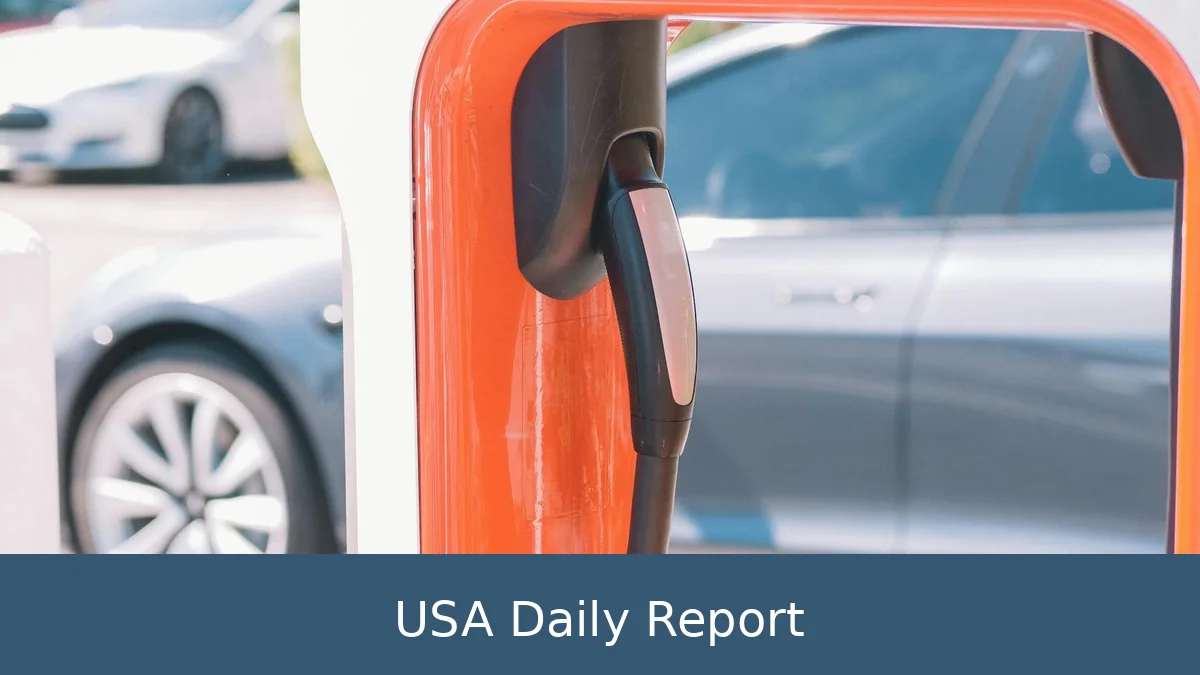
Electric cars have gone from curiosity cabinets on 19th‑century sidewalks to a key part of today’s auto market. In the United States, the journey has been marked by bold experiments, policy swings, and a relentless push for cleaner energy. Readers who wonder why a Tesla can share the road with a pickup, or how a city’s charging network might affect their next car purchase, will find answers here. This guide walks through the early sparks that lit the EV movement, the setbacks that nearly dimmed it, the breakthroughs that revived it, and the forces shaping its road ahead. By the end, you’ll grasp the milestones that defined American electric mobility, understand the infrastructure and incentives that make owning an EV practical today, and see which technologies could rewrite the next chapter.
Early Experiments and the First Wave (Late 19th–Early 20th Century)
When Thomas Edison’s laboratory was buzzing with light‑bulb inventions, a handful of engineers were already tinkering with batteries that could move a carriage without a horse. In the 1890s, electric runabouts appeared on the streets of New York and Chicago, humming quietly beside noisy gasoline rivals. Those early models were simple: a lead‑acid battery, a modest motor, and a wooden frame. They could cruise a few dozen miles before needing a recharge, which meant owners often swapped batteries at local shops rather than waiting for a charge.
And yet, the appeal was clear. Urban drivers loved the lack of exhaust fumes and the ease of starting a vehicle with a twist of a key, not a crank. Wealthy businessmen used electric taxis to avoid the soot that plagued horse‑drawn carriages, and electric delivery vans began to appear in city centers. The market was small but enthusiastic, and a few manufacturers—such as Columbia and Detroit Electric—found a niche among affluent buyers.
But the promise of electric propulsion hit a roadblock when gasoline engines became cheaper and more reliable. Henry Ford’s assembly line slashed the price of the Model T, making a gasoline car affordable for the average worker.
Meanwhile, improvements in internal‑combustion efficiency and the discovery of cheap oil fields turned gasoline into the fuel of choice. By the 1920s, electric cars had faded from mainstream showrooms, relegated to a handful of specialty uses like milk delivery and golf carts.
Still, the early experiments left a technical legacy. Engineers learned how to mount motors on chassis, manage battery cooling, and integrate simple regenerative braking concepts. Those lessons would resurface decades later when modern EVs finally found the power to compete with gasoline.
The Rise, Fall, and Revival (Mid‑20th Century to 1990s)
World War II sparked a brief resurgence in electric vehicles, as fuel rationing forced manufacturers to explore alternatives. The U.S. Army tested electric trucks for short‑range logistics, and a few automakers released prototype electric pickups for the civilian market.
Those experiments proved that an electric drivetrain could handle heavier loads, but the post‑war boom in cheap gasoline and the construction of the interstate highway system shifted consumer desire toward long‑range, high‑speed travel.
In the 1960s and ’70s, the oil crises reignited public interest in fuel‑efficient cars. Automakers responded with hybrid concepts, but battery technology still lagged. Lead‑acid cells remained heavy and offered limited range, while nickel‑cadmium batteries were expensive and suffered from memory effects. The result was a series of concept cars that dazzled at auto shows but never reached production floors.
Then, in the early 1990s, California’s stricter emissions standards forced the industry to confront the environmental cost of gasoline. The California Air Resources Board (CARB) introduced the Zero‑Emission Vehicle (ZEV) mandate, demanding that a percentage of each automaker’s sales be electric or hydrogen‑fuel‑cell powered. Major manufacturers—GM, Ford, and Chrysler—released limited‑run electric models like the GM EV1, the Ford Ranger EV, and the Chrysler TEVan.
Those vehicles proved that modern electronics could control motor torque, that regenerative braking could recapture energy, and that drivers could travel farther than the early 1900s runabouts. Yet the ZEV program faced political pushback, and many of the early EVs were recalled or destroyed after the mandate softened. Still, the experience taught the industry that consumer acceptance hinged on range, price, and a reliable charging network—lessons that would shape the next wave of electric mobility.
Modern Breakthroughs: From Niche to Mainstream (2000s–2020s)
When the new millennium arrived, two forces collided: rapid advances in lithium‑ion battery chemistry and a growing climate‑change narrative. Lithium‑ion cells offered three times the energy density of lead‑acid batteries, while dropping in price thanks to mass production for consumer electronics. Automakers seized the moment, and startups like Tesla entered the scene with a bold vision: a high‑performance electric sedan that could rival any gasoline car on speed and luxury.
And the market responded. Tesla’s Roadster proved that an EV could sprint from zero to 60 mph in under four seconds, shattering the stereotype of electric cars as sluggish. The Model S followed, offering over 200 miles of range on a single charge, a spacious interior, and a sleek design that appealed to mainstream buyers. Other legacy brands caught up quickly. Nissan released the Leaf, a compact hatchback aimed at city commuters, while Chevrolet introduced the Bolt, a relatively affordable EV with a respectable range.

Meanwhile, federal and state incentives lowered the effective purchase price for many buyers. Tax credits up to $7,500, along with rebates for home charging equipment, made the total cost of ownership competitive with gasoline models, especially as fuel prices rose. Automakers also began to invest in their own charging solutions, partnering with utilities to install fast‑charging stations along highways.
Still, the transition wasn’t seamless. Early adopters worried about “range anxiety,” the fear of running out of charge far from a station. To address that, the industry rolled out a network of Level 3 DC fast chargers capable of delivering 80 percent charge in 30 minutes. Retail chains, grocery stores, and even fast‑food restaurants added chargers to attract customers, turning a pit stop into a quick coffee break.
By the late 2010s, electric vehicles accounted for a noticeable slice of new‑car sales, especially in California, Washington, and the Northeast. Automakers announced ambitious electrification plans, pledging to roll out dozens of new EV models over the next decade. The stage was set for electric cars to move from niche to mainstream, a shift that continues to accelerate today.
Infrastructure and Policy: Powering the Transition
Charging infrastructure is the backbone of any EV ecosystem. Without reliable places to plug in, even the most advanced battery won’t get drivers far. Federal policy has played a key role, funding grants for highway chargers and supporting research into ultra‑fast charging standards. The Department of Energy’s “Alternative Fuels Data Center” tracks charger locations, helping drivers plan trips across the country.
And states have taken matters into their own hands. California’s “Clean Vehicle Rebate Project” not only subsidizes vehicle purchases but also funds the installation of public chargers in low‑income neighborhoods. New York’s “Charge NY” initiative aims to place fast chargers every 50 miles along major corridors, ensuring that long‑distance travel remains doable.
Utility companies are also stepping in. Some offer special EV rates that lower the cost of charging during off‑peak hours, encouraging drivers to charge at night when the grid is less strained. Others are piloting vehicle‑to‑grid (V2G) programs, where an EV’s battery can feed electricity back to the grid during peak demand, creating a two‑way relationship that benefits both utilities and owners.
Yet challenges remain. Rural areas still lack enough charger density, and many apartment complexes have no dedicated parking spots for EVs.
To bridge that gap, policymakers are exploring incentives for landlords to install shared charging stations and for businesses to provide workplace chargers. The goal is a seamless network where a driver can start a trip in Detroit, charge in Cleveland, and finish in Pittsburgh without hunting for a plug.
Future policy will likely focus on standardizing charging connectors, speeding up permitting processes for new stations, and integrating renewable energy sources directly into charging hubs. As the grid itself becomes greener, the environmental benefits of electric vehicles will multiply.
Consumer Considerations: Buying, Owning, and Maintaining an EV Today
For a typical American driver, the decision to go electric starts with cost. While the sticker price of many EVs still exceeds that of comparable gasoline models, the total cost of ownership often tells a different story. Electricity costs less per mile than gasoline, maintenance bills are lower because electric motors have fewer moving parts, and federal tax credits can shave thousands off the purchase price.
But there are practical questions to answer. How far do you drive each day? If your daily commute is under 30 miles, a compact EV with a 150‑mile range will likely cover you with plenty of buffer. For longer trips, consider a model with fast‑charging capability and a network of chargers along your usual routes. Home charging is the most convenient solution for most owners; a Level 2 wallbox can fully charge a typical EV overnight, turning the garage into a personal fuel station.
Insurance rates for EVs can be slightly higher due to the higher repair costs of battery packs, but many insurers now offer discounts for low‑emission vehicles. It’s worth shopping around and asking about EV‑specific policies. Also, keep an eye on the battery warranty—most manufacturers guarantee their packs for eight years or 100,000 miles, protecting you against premature degradation.
Maintenance differs from a gasoline car. No oil changes, no spark plugs, and fewer fluid replacements mean fewer trips to the mechanic. However, tire wear can be higher because EVs are heavier, so rotating tires regularly helps extend their life. Software updates are delivered over the air, adding new features or improving efficiency without a visit to the dealership.
Finally, think about resale value. As the market matures, used EVs are becoming more attractive, especially as battery technology improves and range anxiety eases. A well‑maintained EV with a healthy battery can retain value comparable to a gasoline car of similar age, especially in states with strong EV adoption.
Looking Ahead: Technology, Market, and Societal Impacts
The next decade promises a wave of innovations that could reshape the EV landscape. Solid‑state batteries, still in development, promise higher energy density, faster charging, and longer lifespans, potentially doubling the range of today’s models. Meanwhile, autonomous driving software is being integrated into many electric platforms, creating the possibility of shared, driver‑less electric fleets.
And the market is diversifying. Beyond sedans and SUVs, manufacturers are rolling out electric pickups, delivery vans, and even heavy‑duty trucks. These vehicles will rely on larger battery packs and high‑power charging stations, but they also open new revenue streams for fleets looking to cut fuel costs.
From a societal perspective, widespread EV adoption could cut transportation‑related emissions dramatically, improving air quality in urban centers. Reduced dependence on imported oil also has geopolitical implications, giving the United States greater energy security. On the flip side, the surge in battery production makes people wonder about raw‑material sourcing and recycling. Companies are investing in closed‑loop recycling programs to recover lithium, cobalt, and nickel, turning waste into a resource for the next generation of batteries.
Infrastructure will keep evolving. Expect more fast‑charging corridors powered by renewable energy, solar canopies at parking lots, and wireless charging pads embedded in roadways for trucks that can charge while moving. These advances could make charging as effortless as refueling a gasoline car was in the past.
At the end of the day, the future of electric vehicles in America hinges on three pillars: technology that keeps getting better, policies that smooth the path for consumers, and a cultural shift that embraces cleaner mobility. As battery costs keep falling and charging becomes ubiquitous, the electric car will move from a symbol of innovation to a daily reality for most Americans.
If you’re weighing an EV purchase, start by mapping your daily routes and checking the charger network near home and work. Install a Level 2 charger if you have a garage; it turns overnight charging into a habit as natural as setting an alarm. Take advantage of federal tax credits and state rebates to lower the upfront cost, and remember that lower fuel and maintenance bills often offset the price gap over time. Keep an eye on emerging battery technologies and upcoming models that might offer longer range or lower price points. By staying informed and planning ahead, you can join the growing community of drivers who aren't just saving money, but also helping steer America toward a cleaner, quieter road ahead.
This article was created with AI assistance.


