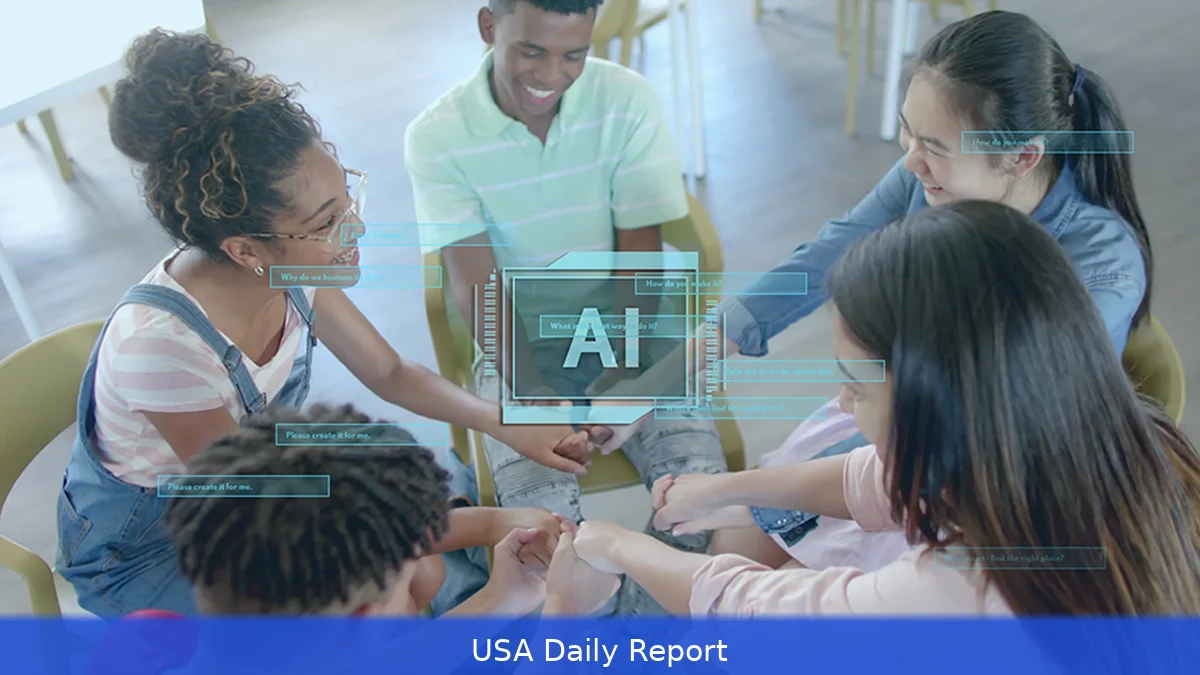
In 2026, AI has become common in education. Schools, from elementary to university level, are trying to figure out how to use tools like ChatGPT responsibly and stop cheating. Parents want to know what’s allowed, what’s risky, and how schools plan to keep learning fair and effective.
Current State of AI Use in US Schools
The Department of Education hasn't imposed strict AI rules. Instead, it gave broad guidelines encouraging schools to manage AI use themselves. These guidelines, issued in early 2025, encourage schools to develop their own policies balancing innovation with academic integrity. This means there’s no federal ban on AI tools like ChatGPT, but states and districts vary widely in how they handle them.
In K-12 education, this patchwork approach shows up clearly. For example, in 2023, New York City public schools initially banned ChatGPT outright on school networks after concerns about cheating. However, after months of debate and community input through town halls and surveys, the district lifted the ban in 2025. Instead, NYC introduced a "traffic-light" system for AI use: green means allowed for specific educational purposes, yellow requires teacher or administrator approval, and red prohibits use entirely, such as during exams.
This NYC model is currently open for a 45-day public feedback period ending June 15, 2026. Other large districts like Los Angeles Unified and Chicago Public Schools have adopted similar tiered approaches, though many smaller districts still have outright bans or no formal policies at all.
Some states, including Texas and Florida, encourage AI literacy programs but have left enforcement to local school boards.
At the college level, policies tend to be more permissive but still cautious. Elite universities such as Harvard, MIT, and Stanford generally permit AI use in coursework, provided students disclose when they’ve used AI tools for writing, data analysis, or coding. For example, Harvard’s 2026 policy requires a statement in submitted work noting AI assistance, aiming to maintain transparency.
Other institutions range from complete bans on AI-generated content to conditional permissions where professors decide on a case-by-case basis. The University of California system, for instance, piloted AI guidelines in 2025 that allow AI use for drafting but prohibit submission without human revision. This reflects broader debates on academic integrity and the evolving role of AI in scholarship.
Key Developments in AI Policy and Tools
This year, many schools started using AI detection software to help enforce their rules. Turnitin remains the dominant player, with its AI writing detection feature claiming 85% to 95% accuracy in identifying AI-generated text. Since its launch in late 2024, Turnitin’s AI detector has been adopted by over 70% of US colleges and 40% of high schools.
Other tools like GPTZero, Originality.ai, and Copyleaks are gaining traction, offering schools multiple options. GPTZero, for example, touts real-time detection and a lower false positive rate, which appeals to districts wary of penalizing innocent students. Yet, no tool is perfect. False positives can still disrupt students’ academic progress, leading to disputes and appeals that schools have had to address through revised protocols.
AI in education isn't only about catching cheating. Lots of students and teachers use it to help with studying.
For instance, students use AI to brainstorm ideas, proofread essays, and practice coding skills. Language learners benefit from AI tools that offer instant feedback and conversation practice.
Research from the Education Technology Association in March 2026 found that 62% of surveyed high school students reported using AI tools at least weekly for studying or homework help. However, about 12% admitted to submitting AI-generated work as their own at least once. This small but significant group has prompted schools to set consequences ranging from warnings and grade reductions on first offenses to zeroes or expulsions for repeated violations. For example, the Chicago Public Schools’ 2026 disciplinary code now explicitly lists unauthorized AI use as academic misconduct, with penalties scaling by severity.
Impact on Teaching and Learning
AI is changing how classrooms work. Teachers are updating lessons to teach students about AI and how to think critically about its results. Many educators have started incorporating AI tools into assignments to encourage ethical and creative use.
Some schools offer workshops for teachers on how to integrate AI responsibly. For example, the Los Angeles Unified School District launched a $2 million AI professional development program in early 2026, training over 1,000 teachers in using AI tools effectively and spotting misuse.
AI also helps personalize learning. Adaptive AI-driven platforms can analyze student performance and tailor exercises accordingly. This means students struggling with math can get extra practice targeted to their weak points, while advanced learners can move ahead faster. Companies like Khan Academy and DreamBox Learning have expanded AI features that many US schools now use.
Still, concerns remain about equity. Not all students have equal access to AI tools at home, raising questions about fairness. Schools are working to bridge this gap by providing devices and internet access, but it’s an ongoing challenge.
Expert Views on AI in Education
Experts have different views, but most agree AI will play a role in education going forward. Dr. Lisa Martinez, an education technology researcher at the University of Michigan, says AI can boost learning if schools set clear, consistent rules and focus on teaching critical thinking skills alongside tech use.
Conversely, Dr. Robert Chen, an academic integrity specialist, warns about overreliance on detection software, which can create adversarial relationships between students and teachers. He advocates for more open dialogue about AI’s role and developing curricula that incorporate AI rather than just policing it.
Meanwhile, parents and advocacy groups are pushing for transparency. The Parent Teacher Association of America released a statement in February 2026 calling for schools to communicate clear AI policies and provide resources to help families understand AI’s benefits and risks.
What’s Next for AI in US Education?
The future looks like more nuanced policies and better tools. The Department of Education plans to update its AI guidelines by the end of 2026, incorporating feedback from districts nationwide. Expect more schools to adopt tiered AI use systems like NYC’s.
Technology will improve too. AI detection tools are expected to reach over 98% accuracy within two years, according to industry forecasts. At the same time, more AI-powered learning platforms will emerge, focusing on personalized education and reducing teacher workload.
Parents should stay informed, ask schools about their AI policies, and encourage kids to use AI ethically. With AI becoming a classroom staple, understanding its role and limits is key to navigating education in 2026 and beyond.
AI in US education in 2026 is a balancing act. Schools want to harness its benefits for personalized learning and skill-building while guarding against misuse. Policies vary widely, and parents need to stay engaged to understand how AI is shaping their children’s education.


