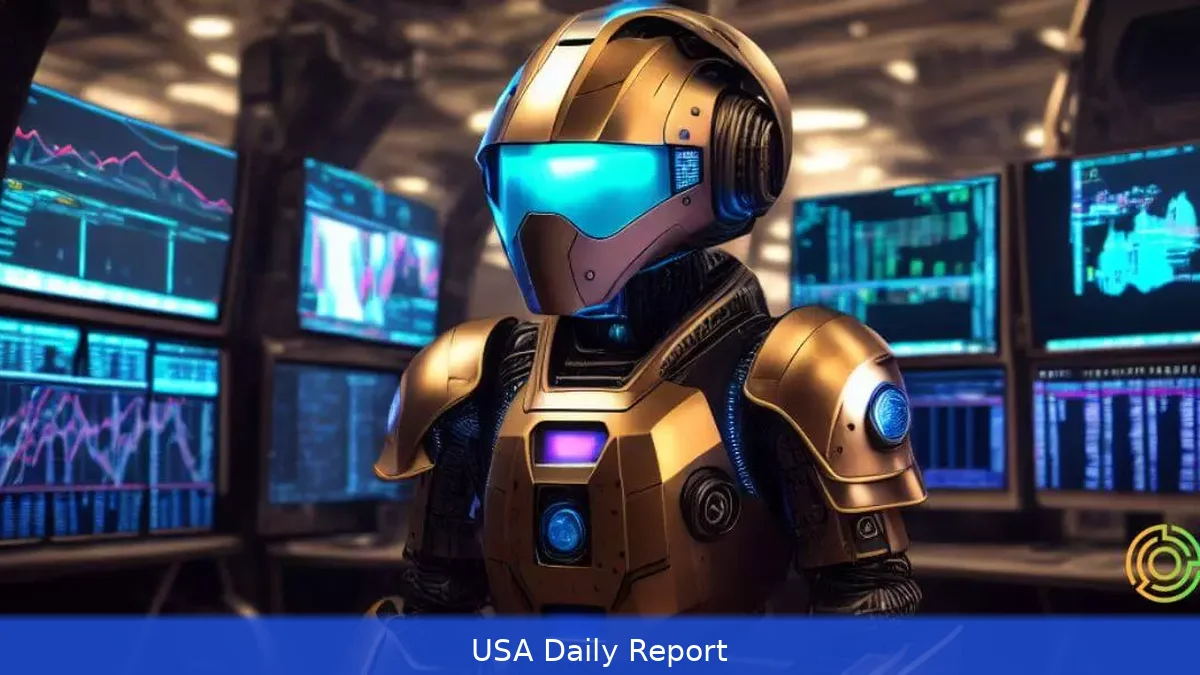
In 2026, Wall Street is using artificial intelligence more than ever, changing how trading, banking, and finance work. From powerhouse firms like Goldman Sachs and JPMorgan to cutting-edge tools like Bloomberg GPT, AI is transforming how money flows and decisions get made. This shift impacts everything from high-frequency trading to personalized banking services, with billions of dollars and millions of client interactions influenced by AI daily.
Current State of AI on Wall Street
AI isn’t just a future idea on Wall Street; it’s part of everyday work now. About 60-70% of US equity trading volume is now handled by AI-driven algorithmic trading, according to industry estimates from early 2026. High-frequency trading (HFT) firms rely on complex machine learning models to detect micro-movements in markets, executing trades at speeds measured in microseconds. These models analyze market signals, news feeds, and even social media sentiment to make split-second decisions.
Banks and asset managers have also embraced AI tools, deploying large language models (LLMs) and AI assistants to parse massive data sets, identify trends, and improve client interactions. For example, AI-powered customer service chatbots now handle over 40% of client inquiries at major banks, freeing human advisors to focus on complex cases.
Big firms such as Goldman Sachs and JPMorgan have put billions into AI research and infrastructure. Goldman Sachs alone allocated over $1.5 billion in 2025 to AI development, reflecting the sector’s priority on technology-driven efficiency. As a result, AI has become pivotal in shaping the financial industry’s future — from risk management to portfolio construction to regulatory compliance.
Key Developments in AI Usage
Goldman Sachs has introduced AI agents powered by Anthropic’s Claude. These "digital co-workers" handle complex tasks such as trade accounting, compliance checks, and client onboarding. Previously, these tasks could take hours or days, involving multiple departments. Now, AI streamlines workflows, reducing operational costs by an estimated 15% annually and improving accuracy by minimizing human error.
Their AI also assists in scenario analysis, helping traders evaluate risks under various market conditions faster than ever.
JPMorgan
Morgan Stanley
Citadel
Citadel’s AI systems execute tens of thousands of trades per day with precision, contributing to the firm’s reputation for top-tier returns. Their 2025 annual report stated that AI-driven strategies accounted for over 70% of the firm’s trading volume.
Bloomberg
Industry Impacts
AI has changed how finance handles risk, trading, and customer service. Risk teams now use AI to detect anomalies that may indicate fraud or market manipulation. For instance, JPMorgan’s AI systems flagged several suspicious trading patterns in 2025, leading to regulatory actions that prevented potential losses exceeding $100 million.
On the trading floor, AI algorithms handle complex portfolio rebalancing, reacting to market volatility instantly. This reduces human error and improves returns.
Firms report that AI-driven portfolio adjustments have improved annual returns by up to 2% in volatile markets. AI also helps comply with increasingly complex regulations by automating reporting and audit trails.
For customers, AI-powered chatbots and advisors provide 24/7 support, personalized investment advice, and faster loan approvals. Banks using AI have shortened mortgage approval times from weeks to as little as 48 hours. This pushes competition and customer expectations higher across the industry.
Expert Views
Experts in financial tech say AI is important but warn against relying on it too much. Dr. Lisa Thompson, a fintech analyst, notes, "AI boosts efficiency and decision-making speed, but markets are unpredictable. Human oversight remains essential to catch errors and ethical issues." Meanwhile, Wall Street veterans like former trader Mark Reynolds highlight the risk of AI-driven herd behavior, where many algorithms react similarly, potentially exacerbating market swings.
Regulators are paying close attention. The SEC has increased scrutiny on AI systems used in trading and compliance. In early 2026, the SEC released guidelines requiring firms to disclose AI model risks and maintain human supervision. This ensures AI’s benefits don’t come at the cost of market stability or transparency.
What’s Next for AI on Wall Street?
Looking forward, AI adoption on Wall Street will deepen. Firms plan to integrate more advanced generative AI to create dynamic financial models and predictive analytics. There’s also growing interest in AI for ESG (Environmental, Social, and Governance) investing, using AI to analyze vast datasets to assess companies’ sustainability practices.
Quantum computing may soon intersect with AI in finance, promising even faster data processing. Several Wall Street firms have pilot projects exploring this frontier, aiming to gain an edge in pricing and risk analysis.
But challenges remain—ethical AI use, data privacy, and regulatory compliance will shape how quickly and safely AI expands. Still, 2026 marks a clear turning point: AI is no longer just a tool but a foundational pillar of Wall Street’s future.
AI is deeply woven into Wall Street’s fabric in 2026. It powers trading, banking, fraud detection, and client service — transforming how money moves and how decisions are made. But with great power comes big responsibility. Firms and regulators are working to balance innovation with caution to ensure AI-driven finance remains secure, fair, and transparent in the years ahead.


