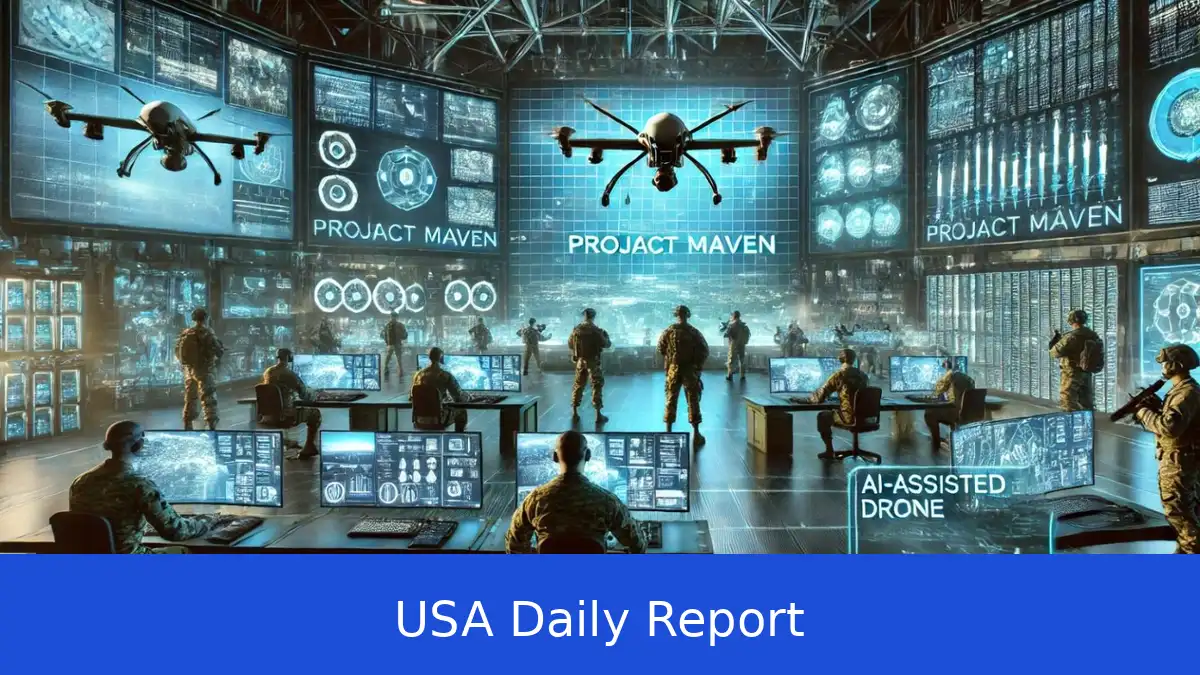
When Google workers learned their company was aiding the Pentagon’s drone wars, thousands protested. They feared AI could soon decide who lives or dies. That concern wasn’t just outside the military—it shook the Pentagon itself.
The Birth of AI in Modern Warfare
Back in 2018, Project Maven was still an early experiment. The Pentagon aimed to use computer vision to sift through massive amounts of drone footage captured in conflict zones. This idea: help military analysts identify targets faster and more accurately. But the project quickly sparked a fierce debate about ethics and accountability.
Thousands of Google employees protested their company’s involvement, dubbing it “the business of war.” They feared AI could soon automate lethal targeting decisions, removing crucial human judgment. The backlash even led Google to pull out of the contract. But the Pentagon pushed ahead.
Years later, Project Maven evolved into the Maven Smart System. Today, it’s actively deployed in U.S. Military operations, including missions targeting Iranian forces. The program’s journey from skepticism to operational use reveals a major shift in military thinking about AI.
Behind the Scenes: Key Players and Clashing Views
One figure loomed large in Project Maven’s story: Marine Colonel Drew Cukor. Described by colleagues as a "one-man wrecking ball," Cukor challenged military norms and bureaucracy to advance AI in warfare.
He led the initiative through five intense years, pushing the boundaries of what AI could do on the battlefield.
But not everyone was convinced. Vice Admiral Frank "Trey" Whitworth, a former SEAL Team 6 intelligence director and the Pentagon’s top intelligence official, questioned the project’s pace and oversight. Whitworth worried Project Maven might be skipping vital steps in the targeting process and sidestepping accountability measures.
In a tense meeting at a private defense retreat, Whitworth grilled Cukor about congressional scrutiny and the risks of letting AI influence lethal decisions. He was skeptical that the billion-dollar investment, much of it funneled to Silicon Valley’s controversial Palantir, was justified.
Still, by mid-2022, Whitworth took charge of the National Geospatial-Intelligence Agency, which oversees Project Maven. His role signaled a turning point—skeptics began becoming believers as AI proved its worth in real operations.
Ethical and Practical Challenges of AI Warfare
One big question about Project Maven still hasn’t been answered: who decides when a human life is at stake? And how can we hold machines responsible for those choices? Critics warn that relying on AI to target enemies risks eroding moral responsibility and transparency.
Supporters say AI tools help cut down human mistakes, speed up analyzing intelligence, and can save lives by making operations more accurate. But the debate over AI’s role in war isn’t just theoretical—it’s intensely practical. This means keeping good records, watching closely, and making sure AI doesn’t replace human decisions.
Project Maven’s journey reflects a broader military trend toward embracing AI despite these concerns. The Pentagon’s willingness to invest heavily and integrate AI into its highest-stakes missions shows how much faith defense leaders now place in this technology.
What’s Next for AI in Combat?
As AI systems like Maven Smart continue to mature, their use in warfare will likely expand.
The military has to juggle pushing new tech forward while keeping ethical limits in mind. Transparency about how AI impacts targeting decisions will be key to maintaining public trust and international norms.
At the same time, Project Maven’s story warns us about how quickly AI is being adopted in combat areas. It reveals how technology can outstrip policy and how fierce internal debate shapes the future of combat.
For now, the Pentagon’s AI efforts show no sign of slowing. The stakes couldn’t be higher. And the question remains: In the age of AI warfare, who really holds the trigger?
Project Maven’s evolution—from a controversial experiment to an active military tool—marks a new chapter in warfare. The debates it sparked inside and outside the Pentagon will shape how AI is used in combat for years to come.


