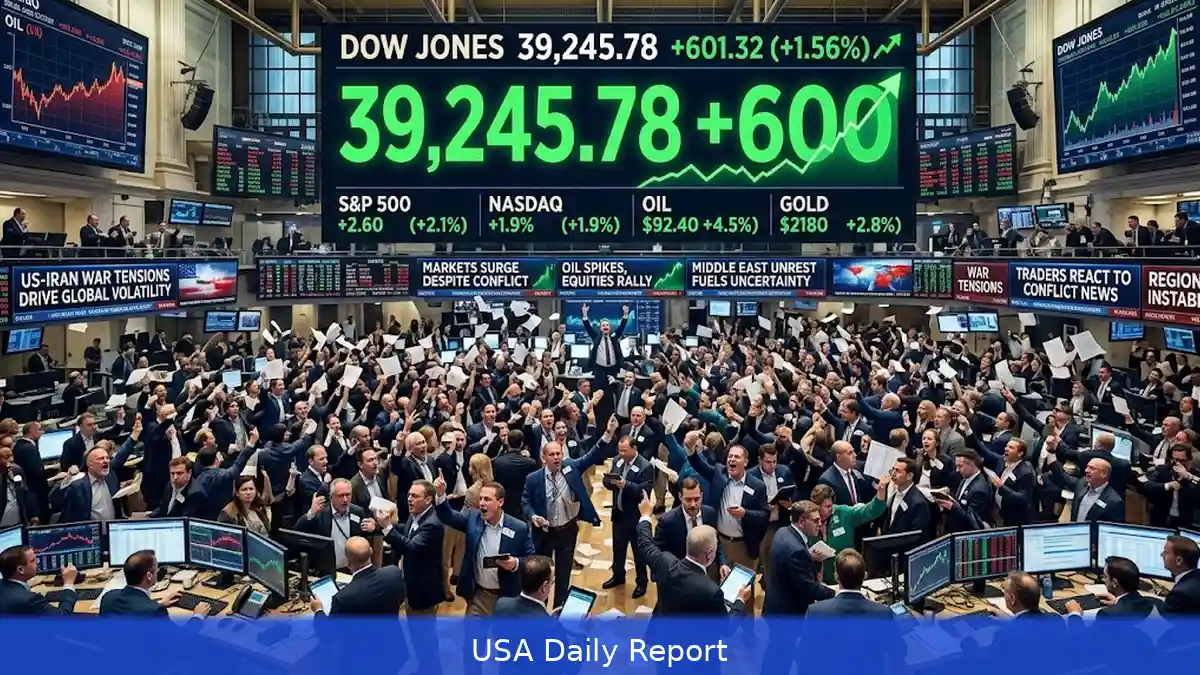
Dow Jones futures fell by more than 100 points Wednesday night as investors grappled with mixed signals from the Middle East. Optimism over a potential end to the Iran war clashed with growing skepticism, dragging futures lower after a strong session earlier in the day.
Market Reaction to Mixed Signals from Tehran
U.S. Stock futures slid Wednesday evening, with Dow Jones contracts down about 101 points, or 0.2%. The S&P 500 and Nasdaq 100 futures also traded lower by roughly 0.2%. Earlier in the day, all three major indexes closed higher—Dow surged 305 points, S&P 500 added 0.54%, and Nasdaq jumped 0.77%. But the rally ran into headwinds as news from Iran sowed doubt.
Iran’s foreign minister told state media that while top officials are reviewing a U.S. Proposal to end the hostilities, Tehran has no plans to hold direct talks with Washington. Adding fuel to the uncertainty, Iran rejected a U.S. Ceasefire offer and instead countered with its own five-point plan. That plan demands Tehran gain control over the Strait of Hormuz, a critical chokepoint for global oil shipments.
Oil Prices and Inflation Concerns Pressure Markets
Oil prices cooled slightly during Wednesday’s trading, with U.S. Crude futures settling at $90.32 a barrel, down 2.2%, and Brent crude dropping 2.17% to $102.22. The easing came as traders bet on some progress toward resolving the conflict. Still, oil remains elevated compared to earlier months, pushing inflation worries back into focus.
On Thursday morning, investors will eye initial jobless claims data for the week ending March 21, hoping for clues about the economy's resilience amid geopolitical strain.
Investor Sentiment Shifts Amid Conflict and Inflation Risks
Wall Street’s gains earlier in the week came after last week’s sharp selloff, triggered by rising tensions in the Middle East. But some market participants think the rally might be too optimistic. Kate Moore, chief investment officer at Citi Wealth, expressed caution, saying the recent price moves reflect hopes for a quick resolution without much inflation fallout.
"That makes me a little bit nervous," she said.
Moore advised investors to build portfolios that can withstand both inflation pressure and the possibility of a prolonged conflict. "We want to make sure that we're shored up against both the inflationary risks and what might be more kind of prolonged conflict," she added.
Energy Prices Remain Elevated Despite Slight Pullback
Despite Wednesday’s dip, oil prices remain high, reflecting ongoing uncertainty. On Friday, West Texas Intermediate crude climbed back to $97.58 a barrel, a 1.31% increase, while Brent crude surged 4.91% to $112.70. Even more dramatic were Middle Eastern benchmarks: Murban crude leapt 10.34% to $128.80, and natural gas prices rose nearly 6% to $3.24 per million British thermal units.
Rising energy prices are keeping inflation worries alive, putting pressure on markets that wanted a quick end to the conflict. The stakes are high: oil supply disruptions tied to the conflict could ripple through global economies, driving prices higher and squeezing corporate profits.
Traders are sorting through mixed signals from Tehran and shifting energy markets, leaving the Dow and other indexes on shaky ground. This week will show if hopes for peace can hold up against rising costs and ongoing geopolitical tensions.


