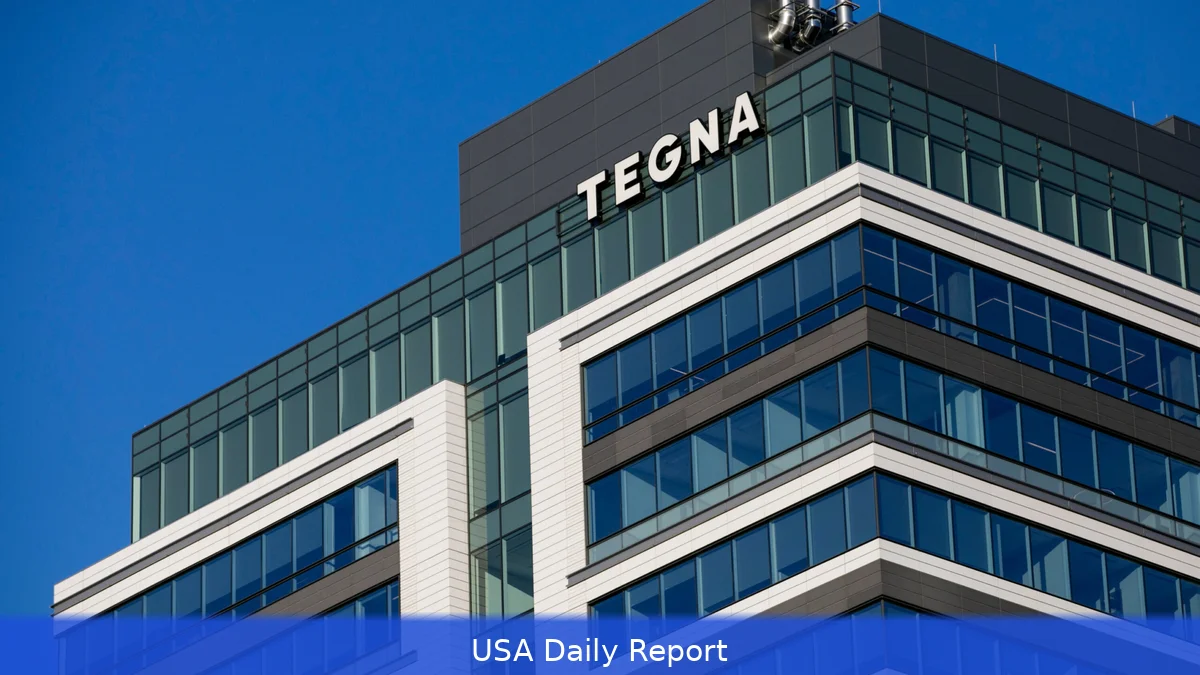
A federal judge stepped in late Friday to pause Nexstar Media Group’s $6.2 billion merger with Tegna Inc., blocking the creation of the nation’s largest local TV station owner. DirecTV and several state attorneys general challenged the deal, saying it violates antitrust laws and could hurt competition in local media.
Legal Battles Mount Against Massive Media Merger
The Nexstar-Tegna merger, finalized on March 19 after approvals from the Federal Communications Commission and Department of Justice, was designed to reshape the U.S. Local television landscape. But it immediately ran into fierce opposition. DirecTV and eight state attorneys general filed lawsuits claiming the merger would hurt consumers by driving up prices and reducing competition.
Chief U.S. District Judge Troy L. Nunley of Sacramento issued a 14-day temporary restraining order on March 27, effectively pausing the merger’s full integration. The court scheduled a hearing for April 7 to further examine the case.
Nunley’s 24-page ruling acknowledged that the pause isn’t a win for DirecTV yet but opens the door for the court to fully vet the legal arguments. The plaintiffs contend that Nexstar’s acquisition of Tegna would give the new entity overwhelming market power, allowing it to demand higher fees from distributors like DirecTV.
Those costs would then trickle down to millions of American TV subscribers.
“Plaintiff asserts Nexstar’s proposed merger with Tegna will drive up the cost of television service to tens of millions of Americans, shutter local newsrooms around the country, substantially reduce competition in dozens of local markets, and harm consumers,” Nunley wrote.
Regulatory Approvals and Controversies
Earlier this month, the FCC and DOJ greenlit the merger, with the FCC granting waivers to rules limiting how many households a single company’s stations can reach. Normally, a company can't own stations reaching more than 39% of U.S.
TV households. This deal pushes coverage past 60%, marking a sharp departure from previous limits.
FCC Chairman Brendan Carr, a Trump appointee, defended the waiver as legal and appropriate, but not everyone agreed. FCC Commissioner Anna M. Gomez, the only Democrat on the commission, blasted the approval process for lacking transparency and bypassing a full commission vote.
Senator Ted Cruz echoed concerns about the FCC’s handling, calling for a full commission review. The controversy highlights the tension between regulators’ willingness to allow media consolidation and fears about its impact on local journalism and market competition.
Nexstar’s Strategy and Market Position
Nexstar CEO Perry Sook has framed the merger as vital for sustaining strong local news in communities across the country.
Before the deal, Nexstar operated 201 stations in 116 markets. Tegna’s portfolio included 64 full-power television stations, making the combined company a dominant player.
To prepare for legal hurdles, Nexstar delayed fully merging Tegna’s operations into its own. The company structured Tegna as a subsidiary, which could help avoid a costly undoing if courts ultimately block the deal.
Still, the merger’s scale makes people wonder about the future of local media. Opponents argue that Nexstar’s increased leverage could force distributors to pay higher retransmission fees, which may translate to higher prices for consumers. Local newsrooms, already under pressure nationwide, could face cuts or closures due to consolidation.
Broader Industry Implications
Retransmission consent disputes have become common in the pay-TV industry, with broadcast groups demanding higher fees from satellite and cable providers. Many critics see the Nexstar-Tegna deal as a sign of growing concentration that could worsen these conflicts.
DirecTV’s legal challenge is part of a larger effort by multichannel video programming distributors (MVPDs) to combat what they see as unfair pricing power wielded by big broadcasters. The lawsuit argues that Nexstar’s expanded scale gives it the ability to extract excessive fees, harming competition and consumers.
This case highlights the 1996 Telecommunications Act, which set the rules for today's media regulation. Some lawmakers and legal experts question whether current rules and enforcement mechanisms adequately address today’s media consolidation trends.
Everyone in the industry is watching closely as the court case moves forward. The April 7 hearing could be a key moment in deciding whether Nexstar and Tegna can complete their merger or if regulators and courts will push back to protect competition and local news diversity.
The pause ordered by Judge Nunley leaves the future of the Nexstar-Tegna merger uncertain. It also marks a rare judicial check on an industry-shaping deal approved by federal agencies. The next steps could change how media ownership works and affect local TV business for a long time.


