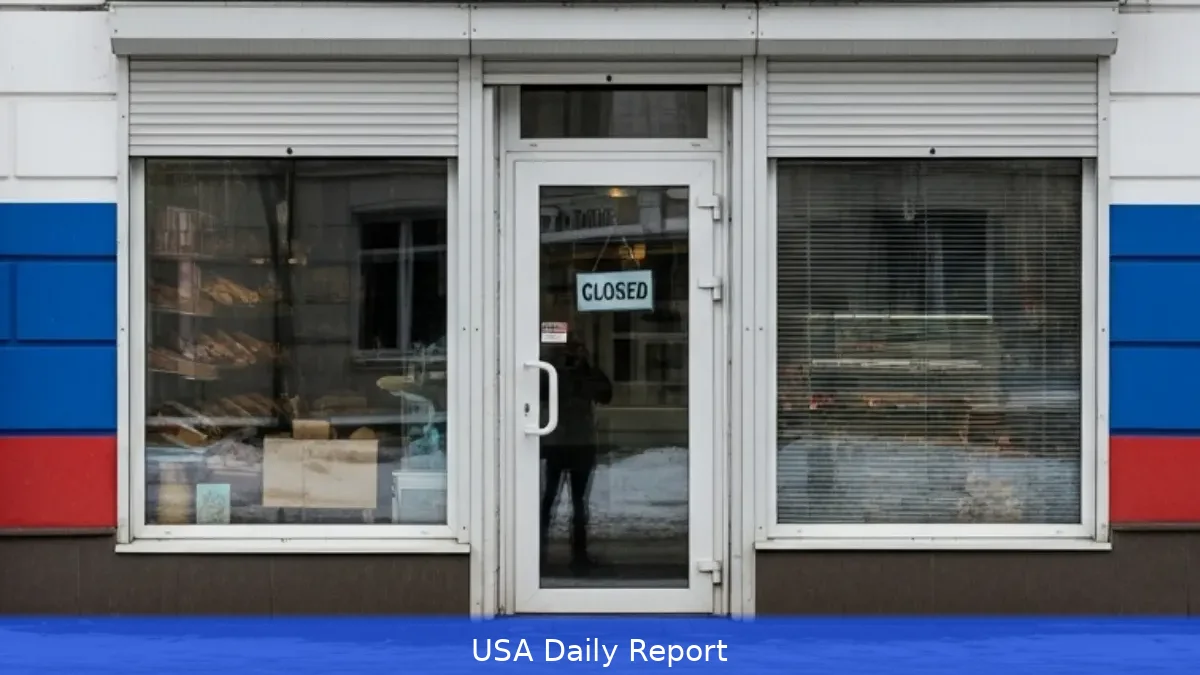
Denis Maksimov’s bakery outside Moscow, once a local favorite, now fights for survival after a staggering tax increase that threatens to shut down small businesses across Russia.
From Bakery to Battleground
Denis Maksimov’s bakery, Mashenka, named after his eldest daughter, became a symbol of Russia’s small business struggle after Maksimov appeared on President Vladimir Putin’s annual call-in show in December 2025. Standing in front of his bakery in the Moscow suburbs, Maksimov made a direct plea to the Kremlin to reconsider recent tax reforms that have turned the financial landscape hostile for small businesses.
"We understand very well that it’s not an easy situation for the country," Maksimov said during the broadcast. "We understand that raising taxes is necessary. But we’re looking ahead without optimism, frankly speaking. Many [businesses] will close down." His fears weren't unfounded. The tax changes have hit small companies like his bakery with a blow that could be described as catastrophic.
Wartime Tax Policy Hits Hard
Russia’s economy has been under intense pressure since the full-scale invasion of Ukraine began four years ago. Oil revenues, once a mainstay of budget strength, have plunged. Military spending that once buoyed growth has flattened. The Kremlin, facing a ballooning budget deficit, has turned to consumers and small businesses to fill the gap.
One of the most dramatic moves was a sharp increase in the value-added tax (VAT). The VAT rate was raised by 2%, but more damaging was the drastic lowering of revenue thresholds requiring businesses to pay VAT. Previously, only companies with annual sales above 60 million rubles ($783,000) were obligated to pay VAT.
This threshold dropped to 20 million rubles ($261,000) in 2026 and will fall further to 10 million rubles ($130,500) by 2028.
Small businesses that once benefited from the “patent taxation system”—a simpler, fixed annual payment scheme—now face much higher rates. Those with revenues over 20 million rubles must pay at least 6% of their revenues in tax plus a minimum 5% VAT. This can translate into a 3,500% tax increase for some, a staggering burden for small operators.
Economic Fallout on the Ground
The impact has been swift and brutal. Maksimov said he has relied on the patent system for eight years to manage costs and keep his bakery afloat. The new rules threaten to upend his entire business model. “We’re scared,” he admitted. “So unprotected, so anxious.”
Demand has dropped as customers tighten their belts amid inflation and economic uncertainty. Suppliers have raised prices to adjust to the tax reform, pushing costs higher across the board. Some small business owners have been forced to downsize or shutter completely.
Even outside Moscow, signs of distress are visible. A recent video on social media showed long stretches of empty storefronts on Nevsky Prospekt in St. Petersburg, once a bustling commercial artery. Shop after shop has closed, victims of the tax squeeze and declining consumer spending.
A Failed Plea and Lingering Uncertainty
Maksimov’s public appeal to Putin didn't reverse the reforms. During their televised exchange, Putin acknowledged the necessity of tax reform to control illegal imports but offered little relief to struggling business owners. He promised to "look at what can be done," but no concrete measures have followed.
Ironically, Maksimov’s bakery gained some publicity from the appearance, drawing new customers curious about the story. Mashenka now runs three bakery locations around Moscow, even sending gift baskets to the Kremlin. Still, the broader business environment remains bleak.
Many business owners share Maksimov's anxiety. Darya Demchenko, who runs a chain of beauty salons in Russia's second-largest city, said, “I’ve never felt so scared as this year.” Her words echo a growing sense of vulnerability among entrepreneurs nationwide.
What Lies Ahead for Russian Small Businesses?
The tax hikes come at a time when Russia’s economy is contracting under multiple pressures: sanctions, reduced energy export revenues, and ongoing military expenditure. The government’s reliance on small businesses to boost tax income risks deepening economic pain.
Several analysts warn that the lowered VAT threshold and increased rates could push many small enterprises out of business, shrinking the consumer market even further. The ripple effects may include higher unemployment and reduced local economic activity, compounding the challenges ordinary Russians face.
For Maksimov and others, the coming years will be a test of resilience. Can small businesses adapt to a tax system that has become so steep it borders on punitive? Or will many fold, leaving behind empty storefronts and quieter neighborhoods?
As Russia’s wartime economy forces small business owners like Maksimov into an impossible corner, the fate of enterprises like Mashenka remains uncertain. The Kremlin’s strategy to squeeze more revenue from small enterprises could backfire, eroding the very backbone of the country’s local economies.


