
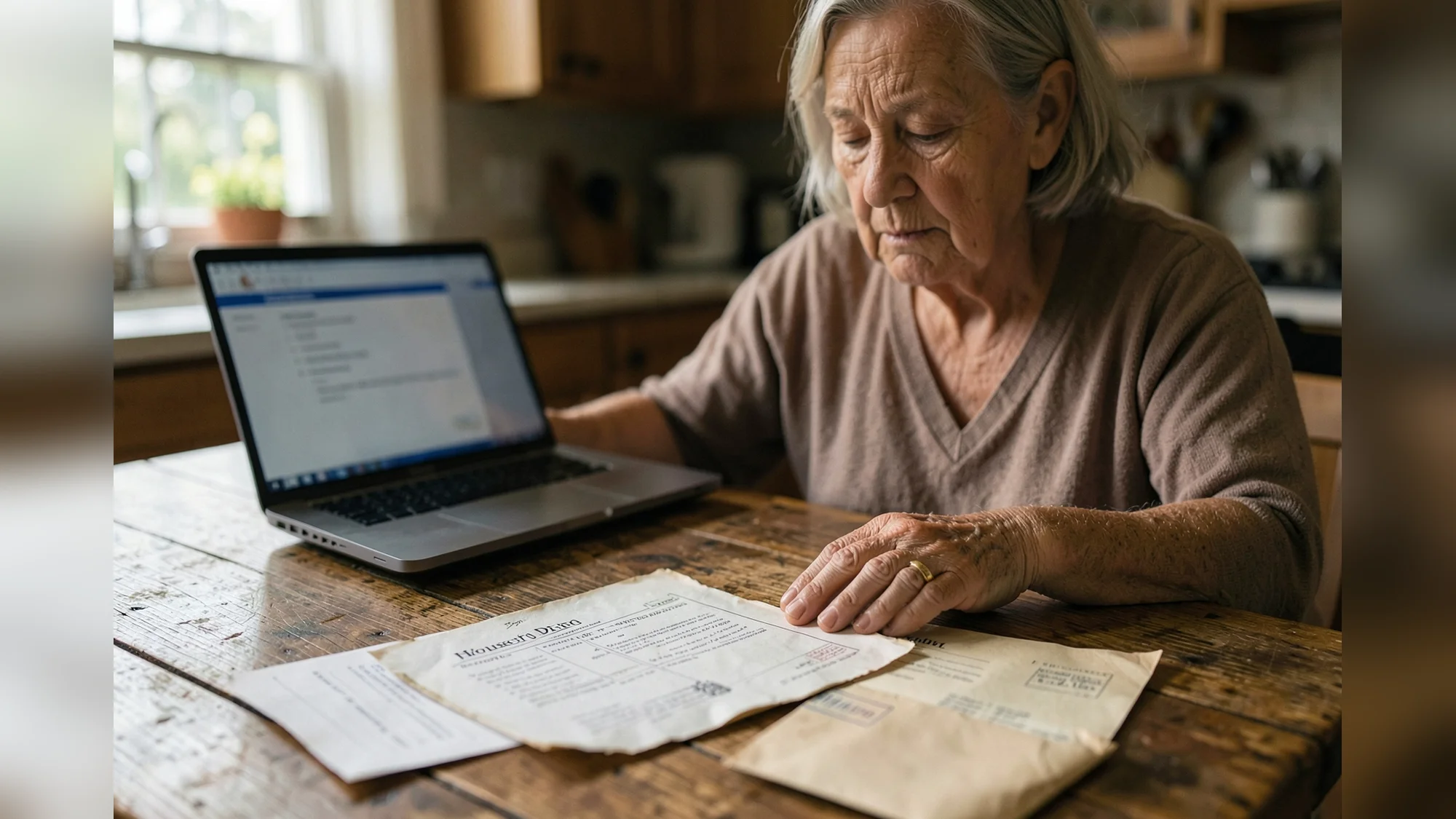
She found the house deed on the coffee table and a stack of beneficiary forms in the hall. One in four people over 55 have never discussed inheritance, according to YouGov research cited in reporting for Mattioli Woods, and estate planners say that silence is where disputes begin. Attorney Josh Fitzgerald told the Dayton Rotary Club on July 23 that when someone dies without a complete estate plan state law fills the gap and surprising outcomes can follow. Updating wills, beneficiary forms and trust documents after marriage, divorce, births or major asset changes is the short checklist advisers repeat.
At the kitchen table the mechanics of inheritance are suddenly concrete: paper and account forms often decide who gets what. That isn't just a family drama. Attorney Josh Fitzgerald told the Dayton Rotary Club on July 23 that assets with beneficiary designations or transfer-on-death instructions are non-probate assets, so bank accounts, retirement plans and life insurance generally pass to whoever is named on those forms even if a will says otherwise.
Harry Margolis, an estate attorney, makes the same point from a different angle. He said beneficiary designations and trust documents frequently control outcomes more than family expectations or informal promises. Margolis noted that children and grandchildren may have inheritance rights depending on state law, but stepchildren or longtime partners who aren't adopted or specifically named in estate documents generally lack a legal claim.
The practical consequences for children from a prior marriage rest on three concrete factors the advisers flag: the title and timing of property acquisition, the transfer mechanism used, and state marital-property rules. Family-law advisories point out that a home owned by one spouse before marriage is often treated as that spouse's separate property, which can mean it passes to that spouse's biological children unless the owner takes steps to provide for a surviving partner.
Without clear instructions a surviving spouse may still have rights, but those rights depend on the jurisdiction and on whether the asset is classified as community or separate property.
Estate planners converge on a compact checklist that raises the odds children from a previous marriage get the share their parent intends. First, update wills and trusts after marriage, divorce, births or significant asset changes. Second, review and where appropriate change beneficiary designations on retirement accounts and life insurance. Third, consider trusts to hold and direct assets and use transfer-on-death mechanisms or deeds where state law permits to keep assets out of probate. Advisors also cite specific tools such as transfer-on-death deeds and Lady Bird deeds and recommend naming and regularly updating durable and medical powers of attorney so whoever steps in can access accounts and act on the decedent's behalf.
Executors and trustees matter. The advisers urge choosing those fiduciaries carefully and making sure key documents and account access details are known to trusted family members or advisers. Several sources also recommend open conversations about intentions to reduce confusion and the risk of costly litigation. If parties want to preserve a surviving spouse's right to live in a home while ensuring children ultimately inherit, available estate tools include life estates or trust provisions that grant a lifetime right of occupancy while keeping title for the decedent's heirs, though the precise options depend on state law and careful drafting. Across the board the message is clear: assumptions and informal promises are weak protection, and legal documents must match stated wishes.
Related Articles
- Is a 3% fee on a $1.5M estate really worth $45,000 a year?
- Inheriting $1.5M: Keep or Fire a 3% Adviser?
Practitioners advise reviewing and updating estate plans ahead of known legislative or tax changes and before major life events. Check beneficiary forms, deeds, and trust terms, and act well before any filing or policy deadlines.
This article was created with AI assistance.


