
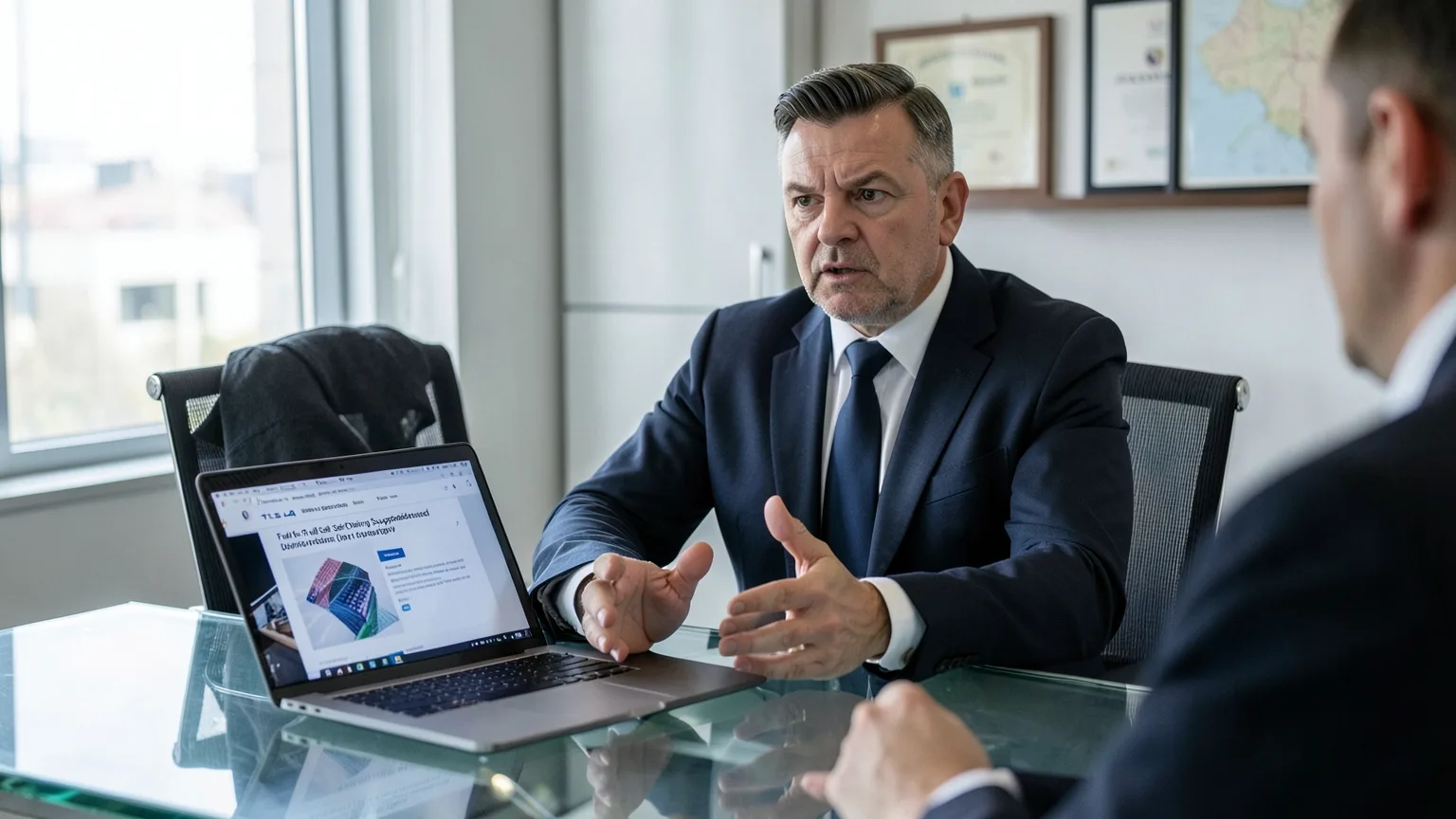
Slovakia’s transport minister said the country expects to approve Tesla’s Full Self-Driving (Supervised) within days and will send a recognition letter to the Dutch regulator RDW.
Slovakia will allow drivers to use Tesla’s Full Self-Driving (Supervised) within days, but drivers will remain legally responsible for monitoring and controlling their vehicles and for intervening if needed. The move would be a national recognition of the Netherlands’ RDW approval, not an EU-wide authorization.
Transport Minister Jozef Raz said in a LinkedIn video that Slovak authorities will soon deliver a recognition letter to the Netherlands’ regulator, RDW. Once this happens, the FSD system will be available for use in Slovakia. He noted that the RDW approved the system earlier this year. The RDW acts as Tesla’s lead authority in Europe (ca.investing.com).
Raz added in that video that "Once this letter is delivered, the FSD system will be available for use here as well," and he framed his comments as an anticipated administrative step rather than a completed national programme. He said the process is expected to be near-term.
The minister said the move would raise Slovakia’s tally of national approvals and make the country the ninth EU member to authorize the driver-assistance technology. He presented the count as a way of expanding access inside Slovakia.

Tesla’s Full Self-Driving is a driver-assistance feature, not a hands-off autonomous system. This means it requires a human driver to monitor the road and be ready to intervene (www.webpronews.com).
Raz told viewers "data shows that these cars reduce the accident rate," and he stressed "you’re still the driver, and you’re responsible for the car." Those safety claims are his statements, not independent findings.
They cited limits in the study’s methods and the miles of FSD driving used for comparison (economictimes.indiatimes.com).
The Slovak step follows the Netherlands’ RDW approval and would be national recognition of that decision; it would not itself grant EU-wide authorization. An EU authorization requires votes from member-state regulators that meet thresholds set by the bloc.
The FSD technology is already available outside Europe, including in the United States. National recognitions do not automatically resolve this.
The minister framed the expected step as a near-term national decision that proponents say will expand access in Slovakia. Independent experts and reporters continue to flag disputes over the strength of the safety evidence behind Tesla’s claims.
Two things matter next: whether the ministry sends the recognition letter to the RDW and whether member-state regulators can build the votes needed for an EU-wide authorization.
This article was created with AI assistance.


