
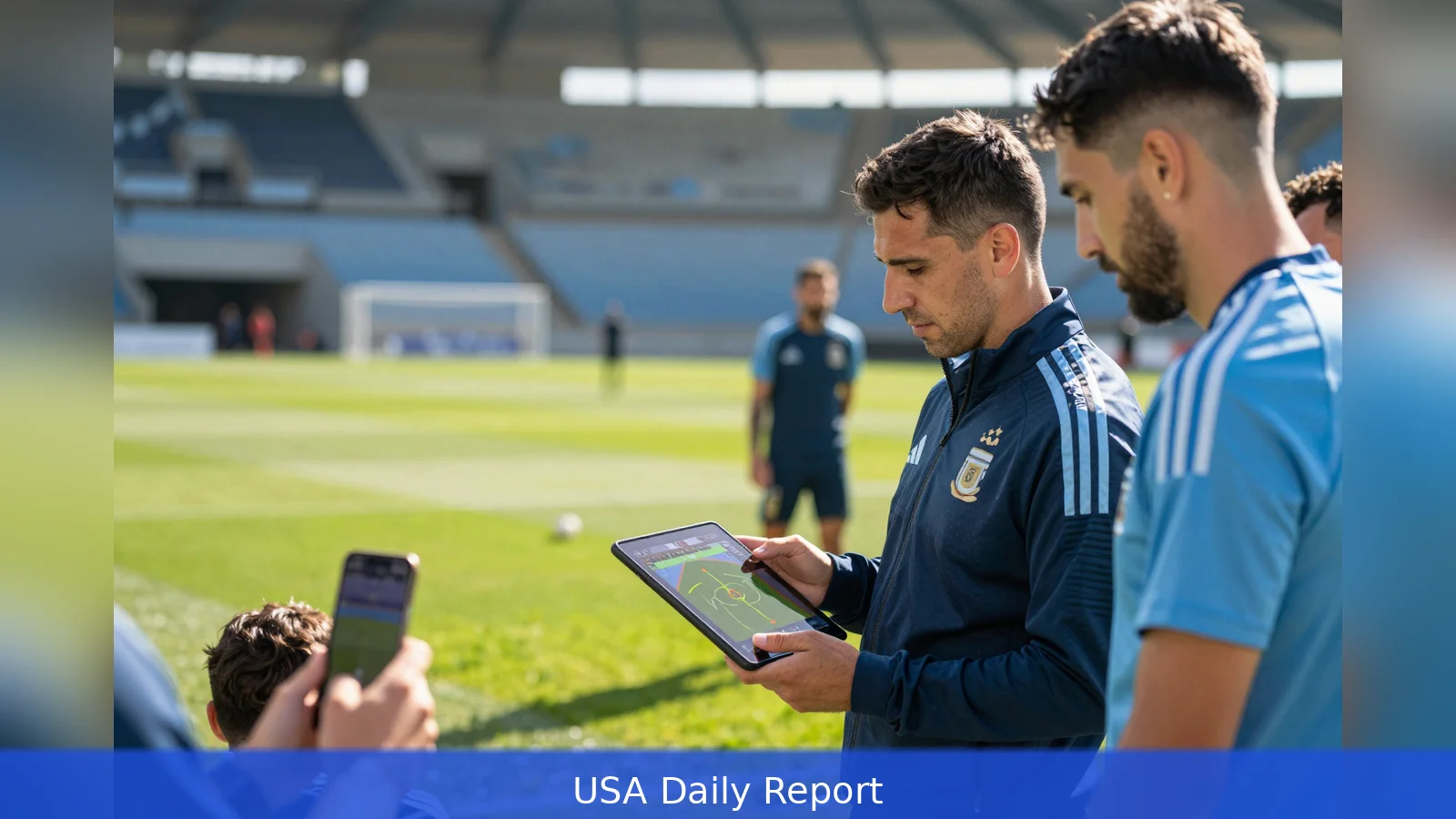
Coaches and fans will get real-time AI analysis and creative tools during World Cup match days because Google has embedded its Gemini brand into national-team operations through a sponsorship with the Argentine Football Association. Google has placed the Gemini logo on Argentina’s training kit and is promising the team access to its models. Fans will see Gemini-powered answers and on-demand creative outputs inside Google Search, and teams will be able to use the models to break down plays and speed scouting. The next concrete milestone is the World Cup kick-off in mid-June 2026, when those features are scheduled to come into active use.
Teams will be able to ask Gemini for play-by-play breakdowns and opponent scouting information because Google intends to route its AI analysis directly into team workflows.
How Gemini plugs into teams
Google signed a sponsorship with the Argentine Football Association and put the Gemini logo on Argentina’s training kit, a visible mark of the partnership that also grants players and coaching staff access to the company's models. The company closed the Argentina deal in March and withheld public announcement until May while it negotiated additional agreements with other top squads, including Brazil and France. Google has described the arrangement as both a sponsorship and a live experiment in deploying generative AI at scale for professional sport.
That access is meant to shorten the time from data to tactical decision. Instead of manual video review, coaches and analysts will be able to query Gemini-powered systems for automated play breakdowns, opponent tendencies, and statistical snapshots. Google hasn't publicly specified which internal tools or exact model configurations Argentina and other teams will use, and it hasn't disclosed the latency guarantees teams will receive.
Commercial terms, pricing, and precise operational timelines for team-use features were also not released. What's public is the sequence of events: Google finalized the Argentina agreement in March, announced the broader set of partnerships in May after securing additional teams, and plans for Gemini-driven features to be active during the tournament period.
Fan features, scale, and the risk profile
Fans will encounter a reconfigured Google Search interface that's designed to act like a fellow supporter, offering real-time, AI-generated answers, match analysis, deeper statistical breakdowns, and creative outputs on demand. Google says those outputs will include shareable items such as songs, memes, cartoons, and other visuals intended for social sharing.

Google spokesperson Flor Sabatini framed the deal as both experimental and promotional, saying, "It’s not just about opening the door to AI, but about understanding its real limits while improving experience." The company is positioning the World Cup as a public test of Gemini under intense, global traffic and culturally varied contexts.
Wired reported that the scale of the tournament will turn the World Cup into a stress test for generative AI: Gemini will probably face millions of simultaneous queries and to operate across diverse cultural settings. That magnifies the risk that factual errors, fabricated lineups, or misleading images could be amplified. Wired noted that if Gemini mixes up a statistic or generates an image with an incorrect badge, the mistake could have global visibility.
Both Google and the Argentine Football Association accept those risks as part of trialing AI under high pressure, according to the accounts in the agreement timeline. But the company has withheld technical specifics about moderation checks, the data sources that will feed team or fan answers, and how it will police or correct factual mistakes in real time.
The move into the World Cup follows broader industry activity and public debate about AI in sports. News organizations and tournament-security officials have highlighted that this World Cup will be larger than previous editions, with 48 teams and more matches spread across multiple countries. Organizers and local agencies have ramped up security planning and are coordinating federal, state, and private resources amid concerns that AI tools can be used both to augment legitimate operations and to create new threats.
Officials have specifically flagged risks such as deepfakes and the weaponization of drones, and tournament planning now includes contingencies for AI-driven disruptions. Google’s public materials and the football associations involved have presented the initiative as an experiment that will run in the public eye, rather than as a closed technical deployment.
The practical effect for coaches is immediate access to automated analysis that previously required people-hours of review. For fans the effect is a more interactive, creative search experience that packages data and graphics on demand. For Google the effect is a real-world load test of Gemini at global scale, with the attendant reputational and operational stakes if the system errs.
That combination of commercial sponsorship and live experimentation is unusual for a sporting event of this size. Google has described the partnership as sponsorship, but it also reads as a large-scale product trial running on one of the most public stages available to a tech company.
Commercial disclosure around costs and the service-level details remains absent, and that opacity will be an early focus for teams and regulators should errors occur. Meanwhile, rival teams and tournament partners will be watching how Google balances promotional objectives with the reliability demands of elite sport.
Related Articles
- San Francisco shuttle curb visits down 40% since 2019
- Momax Q.Mag X cuts phone charging heat with graphene
- Apple faces $250M settlement as it reboots Siri
The next milestone is the World Cup kick-off in mid-June 2026, when Google’s fan-facing search integrations and team-side Gemini access are scheduled to go live.
This article was created with AI assistance.


