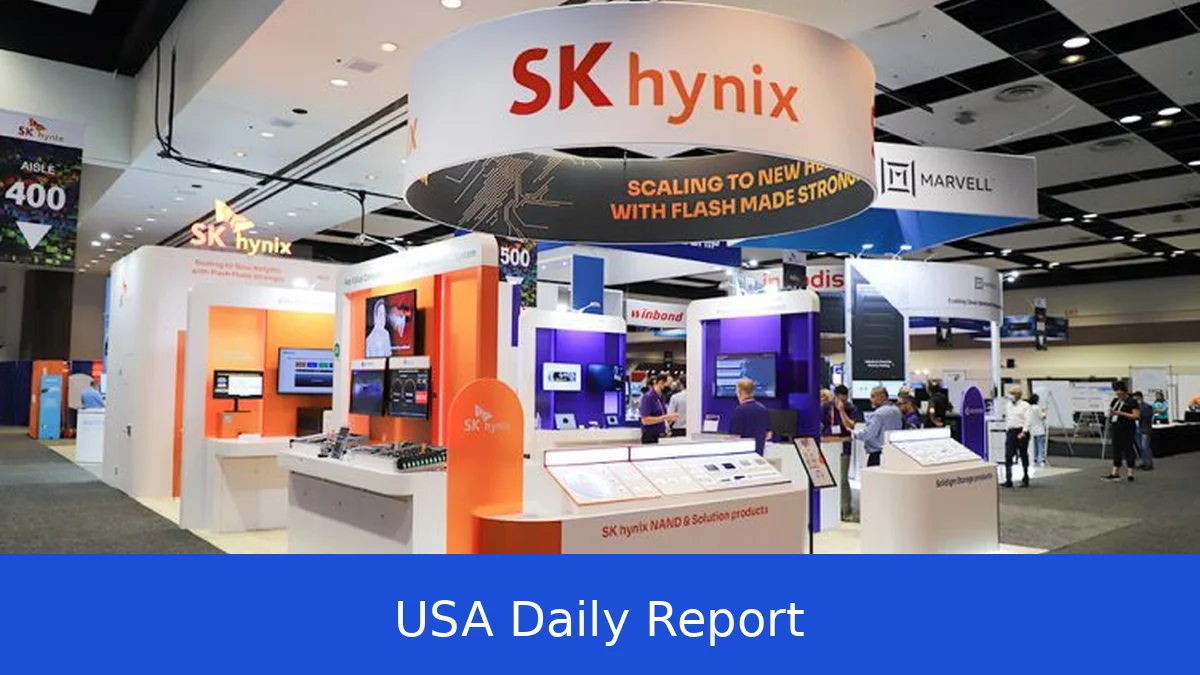
SK Hynix is exploring a major move to tap US capital markets, aiming to raise up to $10 billion through a potential American depositary receipt (ADR) offering. The South Korean chipmaker plans to use the money to boost production capacity and invest in AI-focused semiconductor infrastructure.
Big Bet on AI-Driven Memory Demand
SK Hynix, one of the world’s top memory chip producers, is looking to raise between 10 trillion and 15 trillion won — roughly $10 billion — via a US listing. The company intends to issue new shares as American depositary receipts, a strategy that would allow it to tap into a broader pool of global investors.
Memory chip demand is surging because AI applications are growing fast. AI workloads require massive amounts of high-speed memory, pushing semiconductor companies to expand production and upgrade technology.
Hang on though — SK Hynix’s plan isn’t just about capacity. The company is also targeting investments in AI-specific infrastructure. This includes developing a semiconductor cluster in Yongin, South Korea, designed to accelerate AI chip research and manufacturing capabilities.
Why the US Market?
SK Hynix sees several benefits from listing in the US. US markets have more liquidity and a large group of institutional investors who like tech stocks.
Also, issuing ADRs lets foreign companies raise money without dropping their main home market listing.
For SK Hynix, the potential $10 billion raise would be one of the largest moves by a South Korean chipmaker in recent years. It signals confidence in the company’s growth prospects and a recognition that AI-driven demand is reshaping the semiconductor industry.
Context: The Memory Chip Race
SK Hynix competes closely with Samsung Electronics and Micron Technology in the memory space, particularly in DRAM and NAND flash products. The chip market has seen cycles of boom and bust, but AI’s rise is creating a more sustained demand spike.
Expanding capacity to meet this demand is costly. Building new fabs and upgrading existing ones can run into billions of dollars. Companies need capital to keep up or risk falling behind rivals. SK Hynix’s fundraising plan reflects that urgency.
South Korea’s semiconductor industry is a national priority, given its role in the country’s export-led economy. The government supports initiatives to boost chip production and innovation, including fostering semiconductor clusters like the one SK Hynix plans in Yongin.
Potential Impact
If SK Hynix pulls off the US listing, it might change how money moves in the global chip market.
With more funds, SK Hynix could speed up rolling out new memory tech needed for AI. That could strengthen SK Hynix’s competitive edge and influence market dynamics.
But the deal depends on how the market and investors feel at the time. The tech sector’s recent volatility could pose challenges. But if the AI boom continues as expected, demand for memory chips will keep climbing, making SK Hynix’s expansion timely.
Other chipmakers are watching this move closely, too. Other chipmakers may follow suit in seeking US capital to fuel growth amid the AI-driven semiconductor surge.
Right now, SK Hynix’s plan to raise $10 billion in the US shows it’s betting heavily on AI’s growth. How the market responds could shape the future of memory chip investments worldwide.


