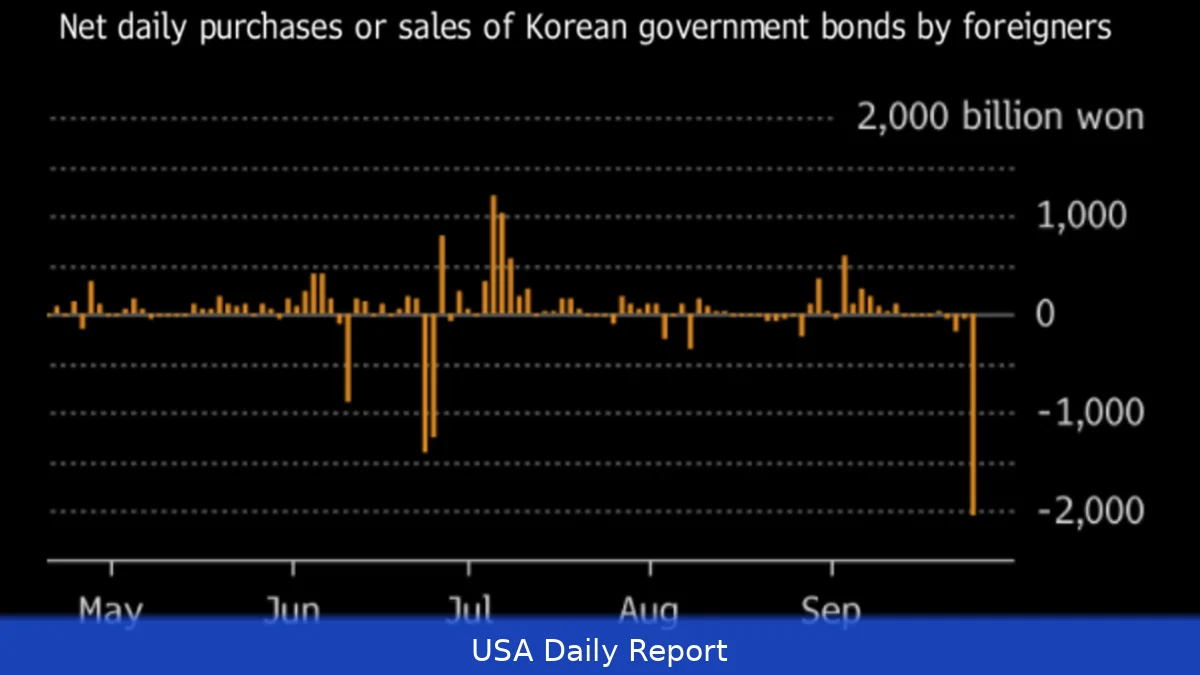
South Korea announced a $3.3 billion bond buyback to stabilize its government bond market, which has been shaken by global events. This move comes amid rising volatility caused by ongoing geopolitical tensions and economic challenges.
Emergency Buyback Amid Rising Volatility
South Korea’s finance ministry announced an emergency purchase of government bonds worth 5 trillion won, roughly $3.3 billion, to ease turbulence in the bond market. The program will unfold over two days, with 2.5 trillion won targeted this Friday and the same amount set for the following Wednesday.
Markets have been unsettled due to the prolonged Middle East conflict affecting economies worldwide. South Korea’s bond yields surged recently, reflecting investor anxieties about inflationary pressures and fiscal stability.
Supplementary Budget and Net Redemption
Beyond the buyback, the government plans to propose a supplementary budget bill that includes net redemption of government bonds. This would mean South Korea pays down more debt than it issues, an uncommon step not seen since 2021.
The net redemption aims to mop up excess government bonds using surplus tax revenues, which have grown thanks to stronger-than-expected tax collections. The finance ministry stressed that the final size of the redemption would be hammered out during Cabinet discussions and parliamentary scrutiny.
Political Backing and Economic Relief
The ruling Democratic Party and the government reached a consensus earlier Thursday to submit the extra budget bill to the National Assembly by Tuesday.
The bill is designed to help cushion the blow from rising oil prices and offer support to small and midsize enterprises along with households vulnerable to price shocks.
South Korea’s economy is under pressure from global uncertainty, inflation, and supply chain issues. The government is stepping in to stabilize financial markets and support the economy.
Historical Context and Market Impact
South Korea has rarely used net bond redemption in recent years, making this a noteworthy shift.
In the past, the government has mostly issued new debt to refinance maturing bonds. The strategy might show growing confidence in fiscal health or a move to reassure investors amid shaky global conditions.
Bond markets remain unpredictable. The success of the buyback and budget depends on investor confidence and global risk trends. The Middle East conflict’s persistence adds unpredictability.
Investors will watch bond yields closely in the coming weeks. If yields fall, it would show the buyback is working. If volatility continues, the government may need to act again.
South Korea’s $3.3 billion bond buyback is a rare move to calm market volatility during uncertain times. It remains to be seen if this will ease investor concerns as geopolitical tensions unfold.


