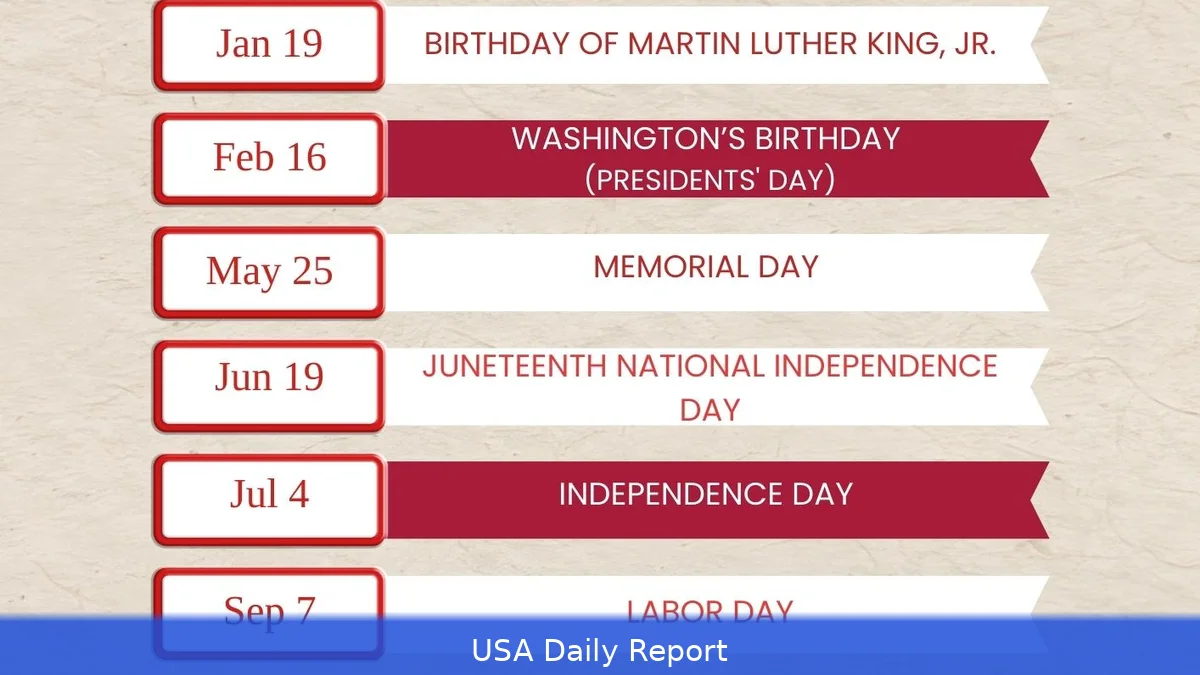
Planning your year around US federal holidays in 2026? Here’s the full rundown of all 11 federal holidays, exact dates, what closes, what stays open, and insider tips on bill payments, mail, shopping, and more to keep your year running smoothly.
Quick Reference: 2026 Federal Holidays Calendar
- New Year's Day: Thursday, January 1
- Martin Luther King Jr. Day: Monday, January 19
- Presidents' Day: Monday, February 16
- Memorial Day: Monday, May 25
- Juneteenth National Independence Day: Friday, June 19
- Independence Day: Saturday, July 4 (observed Friday, July 3)
- Labor Day: Monday, September 7
- Columbus Day: Monday, October 12
- Veterans Day: Wednesday, November 11
- Thanksgiving Day: Thursday, November 27
- Christmas Day: Friday, December 25
These 11 federal holidays are spread throughout the year, giving you plenty of chances to plan time off or special events. Note that when holidays fall on weekends — like Independence Day in 2026 — the federal government observes the holiday on the nearest weekday. That means Friday, July 3 will be treated as the federal holiday for many government offices and banks.
What Closes on Federal Holidays?
Federal offices shut down completely on all 11 federal holidays. That includes Social Security offices, IRS locations, and other government-run agencies. Banks nationwide close their doors, too, so no in-person banking or teller services are available on these days.
Post offices also close, with no mail pickup or delivery on holidays. Stock exchanges like the NYSE and NASDAQ stop trading on these dates as well, plus Good Friday, which in 2026 falls on April 3. Many public schools follow the federal holiday schedule, closing their doors, while some private schools might have different calendars — always check locally.
Some local government services might pause, such as municipal offices or public libraries. However, emergency services like police and fire departments operate as usual, 24/7.
What Stays Open?
Retail stores and restaurants usually keep their doors open on federal holidays, often with special sales or holiday menus.
Big-box stores like Walmart and Target often run holiday promotions, so these can be great days for shopping deals.
Gas stations and convenience stores typically remain open around the clock, which is helpful if you’re traveling or need essentials. Hospitals and healthcare facilities operate normally, including urgent care centers and pharmacies with 24-hour service.
Grocery store hours vary — many reduce their hours on holidays, so check local listings before heading out to avoid disappointment. Some smaller businesses may close, especially if owners prefer to spend the holiday with family.
Bank Holidays and Bill Payments
Every federal holiday is a bank holiday — that means no electronic funds transfers, wire payments, or clearing of checks on these days. If you have bills due on or just after a federal holiday, it’s smart to schedule payments a day or two early to avoid late fees.
Automatic bill payments that fall on a holiday typically process the next business day, but don’t count on it. Plan ahead for things like mortgage payments, credit cards, utilities, and insurance premiums.
Many banks offer alerts to remind you of upcoming holidays and payment dates.
Mail and Deliveries
The United States Postal Service (USPS) closes on all federal holidays, so no mail is sent, delivered, or collected on those days. If you’re expecting important mail, keep this in mind to avoid delays.
Private delivery companies like UPS and FedEx sometimes deliver on federal holidays, but service varies by location and holiday. For example, FedEx Home Delivery usually doesn’t operate on major holidays, while UPS may offer limited service. Check each carrier’s website or contact local offices for their 2026 holiday schedule well before your shipping deadlines.
Stock Market Closures
The New York Stock Exchange (NYSE) and NASDAQ close on all 11 federal holidays, plus Good Friday on April 3, 2026. This means no trading or market orders can be placed on those days.
Investors should mark these dates carefully to avoid surprises, especially if you manage retirement accounts or actively trade stocks. Some mutual funds or ETFs may price shares based on the previous trading day, so keep your calendar handy.
Observed Holiday Dates in 2026
When holidays land on weekends, the federal government observes them on weekdays to give workers a day off. In 2026, Independence Day falls on a Saturday, so the federal holiday is observed on Friday, July 3. That means federal offices, banks, and the stock markets will be closed on July 3, not the actual holiday date.
Other holidays fall on weekdays in 2026, so there are no alternative observation days needed. This helps keep the schedule straightforward for planning work, travel, and appointments.
Keep an eye on your company’s holiday calendar, too. Some businesses observe federal holidays differently, or add extra days off around Thanksgiving or Christmas.
Mark these 2026 federal holiday dates on your calendar now. Plan bill payments, shipments, and travel around closures. Retail and restaurants mostly stay open, so you can still shop or grab a meal. Keep an eye on observed dates like July 3 for Independence Day closures. With a little advance planning, you’ll avoid surprises and make the most of your holidays.


