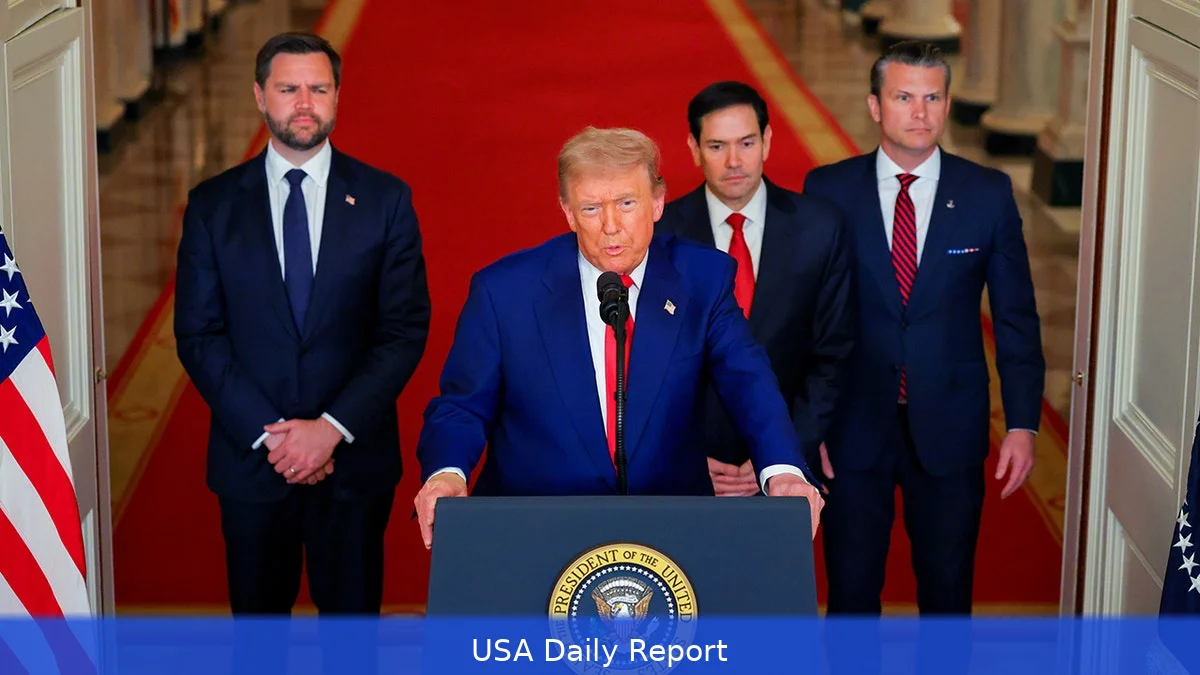
After President Trump's strong comments on the Iran conflict, stock futures ticked up on Tuesday. Markets had been shaky because of rising oil prices and geopolitical worries, but Trump's talk about safeguarding global oil routes seemed to boost investor confidence.
Trump’s Tough Talk Sends Ripples Through Markets
President Trump addressed the UN General Assembly with a fiery tone, calling his administration's tenure a "golden age of America" and boasting about the strength of the U.S. Economy. He highlighted the stock market's rally despite the recent jitters caused by escalating tensions in the Middle East.
Trump warned Iran against continuing to block the Strait of Hormuz, a vital shipping channel for nearly 20% of the world’s seaborne oil trade. "I won't allow a terrorist regime to hold the world hostage," he said, threatening severe retaliation if Iran disrupts the global oil supply.
His comments came just days after Iran effectively closed the Strait following U.S. And Israeli military strikes on Iranian targets. Tehran declared it would attack any ship attempting to transit the waterway, raising fears of a major supply disruption.
Energy Prices Surge as Conflict Escalates
Oil prices jumped sharply, topping $115 per barrel overnight — a level not seen since Russia's invasion of Ukraine sent shockwaves through energy markets in 2022.
Gasoline prices rose nationally to an average of $3.54 per gallon, marking a 20% increase in just a month.
The spike shook investors and caused sharp drops in stock markets around the world. But by Monday afternoon, oil prices eased back below $100 per barrel, and stocks recovered some ground after Trump described the conflict as "very complete, pretty much." Still, the economic picture remains volatile with uncertainty clouding growth prospects.
Fed Officials Warn of Inflation Risks Amid Market Swings
Federal Reserve officials have been vocal this week, signaling caution despite recent signs of easing inflation. Atlanta Fed President Raphael Bostic warned that inflation could resurge, suggesting the neutral interest rate might be creeping higher. Meanwhile, Fed Vice Chair for Supervision Michelle Bowman expressed concern that the central bank is "behind the curve" in addressing labor market challenges, hinting at the need for faster rate cuts if conditions deteriorate.
Chicago Fed President Austan Goolsbee emphasized the importance of maintaining the Fed’s 2% inflation target and dismissed speculation about aggressive rate cuts. Fed Chair Jerome Powell echoed those sentiments, describing current rates as "modestly restrictive" and stressing the difficulty of balancing policy to avoid overheating or stalling the labor market.
Gold Hits a Record High as Investors Seek Safe Havens
Gold prices climbed again Tuesday, marking the 37th record close this year.
Gold prices climbed past $3,800 an ounce as geopolitical risks and inflation worries grew. Investors poured money into gold ETFs at historic levels, signaling a flight to safety as stock markets remained jittery.
That surge in gold contrasts with the mixed performance of stock indexes. The Nasdaq fell over 1% recently, while the S&P 500 and Dow Jones Industrial Average also retreated from earlier gains. The Russell 2000 small-cap index showed resilience but still lagged behind the previous highs.
Global Energy Markets Face Additional Pressure from Russia
While tensions in the Middle East grab headlines, Russia’s energy policies add another layer of uncertainty. Russian President Vladimir Putin threatened to halt gas supplies to Europe, potentially worsening the continent’s energy crunch. Europe relies heavily on Russian gas, with pipeline and liquefied natural gas imports making up a big portion of its consumption.
Putin’s threat followed Iran’s closure of the Strait of Hormuz and sparked a surge in European natural gas prices, which rose 58% in just a few days. The Kremlin is reportedly considering shifting exports to Asian markets, which could reshape global energy flows and push prices even higher.
Meanwhile, Lloyd’s of London, the world’s largest maritime insurer, has raised prices and canceled policies for ships traveling through the Persian Gulf and Strait of Hormuz. The move threatens to disrupt maritime insurance markets and complicate shipping logistics in a critical oil transit zone.
Investors are keeping a close eye on how geopolitical tensions and central bank moves will play out in the coming weeks. With energy prices and inflation pressures still high, markets face a delicate balancing act between growth hopes and risk aversion.


