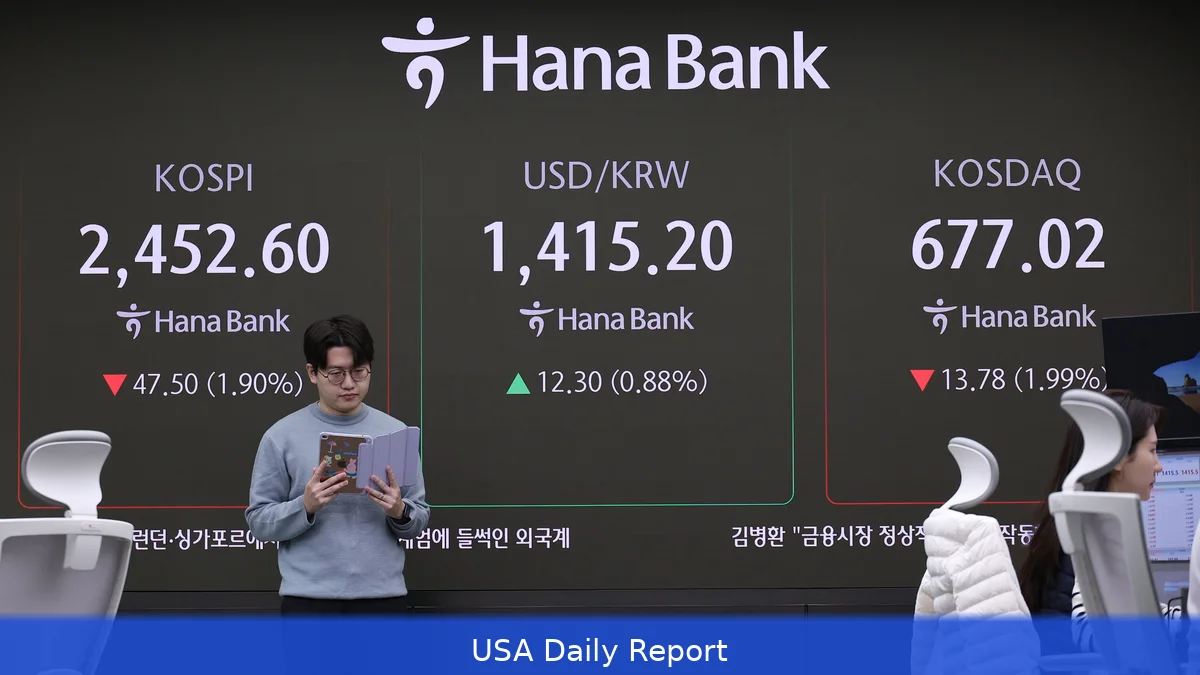
South Korea’s stock market, once a favorite among global investors, has turned volatile amid escalating tensions in the Middle East. The Iran conflict has injected uncertainty that’s making what was once a hot trade suddenly look like a poor bet.
Middle East War Pressures Global Markets
When conflict erupted in Iran earlier this year, global markets took notice. The escalation has pushed investors into safer assets, leaving riskier bets like South Korean stocks exposed to sharp swings. Geopolitical worries have been dominating for weeks, causing many investors to reconsider their positions.
South Korea, deeply integrated into global supply chains, feels the heat from rising oil prices and market jitters. Crude oil futures have surged by nearly 46% this month, marking the largest monthly gain in years. The spike has stoked inflation fears around the world, and inflation usually hurts stocks.
Investors once drawn to South Korea’s tech-heavy market are now pulling back. The country’s dependence on exports means any disruption in global trade, or a spike in energy costs, hits earnings forecasts hard.
Plus, the uncertainty surrounding the U.S. Federal Reserve's next moves amid inflation worries has left many hesitant to take on additional risk.
For now, bond investors are showing a clear preference for short-term U.S. Treasuries. That’s a move to reduce exposure to rising interest rates and market volatility. The Federal Reserve will probably hold its benchmark interest rate steady in the 3.50% to 3.75% range at its upcoming meeting, but the war’s fallout keeps markets guessing.
Why Korean Stocks Are Losing Their Shine
South Korea’s stock market had been a darling for global funds, praised for its growth potential and innovation. But the geopolitical spillover from the Iran conflict has shifted the mood. Energy costs rising sharply squeeze manufacturers and exporters.
That’s a big deal for South Korea’s economy, where industry accounts for a large share of GDP.
Higher oil prices don’t just inflate costs. They dampen consumer spending as households adjust to pricier fuel and goods. That combination can slow economic growth and chip away at corporate profits. Sure, the war’s direct impact may seem far away geographically, its economic ripples are reaching Seoul’s trading floors.
Plus, the broader market is wrestling with inflation that’s stuck above target levels and signs of a weakening labor market. Those factors cloud the outlook for corporate earnings, making investors wary of stocks exposed to global trade and commodity swings.
All these pressures make South Korea a tougher place to bet on right now. The once-hot trade has cooled as investors shift toward safer assets and shorter-term strategies.
Investor Sentiment and Market Dynamics
According to portfolio managers, volatility in rates and markets is set to stay high until there’s more clarity on the conflict and central bank policies. Danny Zaid of TwentyFour Asset Management noted that investors want to keep duration neutral to avoid long-term risks until the picture becomes clearer.
J.P. Morgan’s Treasury Client Survey reveals clients are holding their biggest outright short positions in months, trying to limit exposure to rising interest rates. That’s a clear sign the market expects further turbulence ahead.
But some investors think the conflict won’t last long and will stay contained. They expect oil prices to stabilize eventually, easing inflation pressures and opening the door for the Federal Reserve to cut rates later this year. If that happens, it could spark a rally in both Treasuries and risk assets.
But until then, South Korean stocks face a tough road. Because of geopolitical risk, inflation, and economic uncertainty, many investors are staying cautious or moving to safer options.
The Iran war has changed how investors see risk, making South Korea’s stock market a much riskier bet than before. Investors will be watching closely for any sign of easing tensions or policy shifts that could restore confidence.


