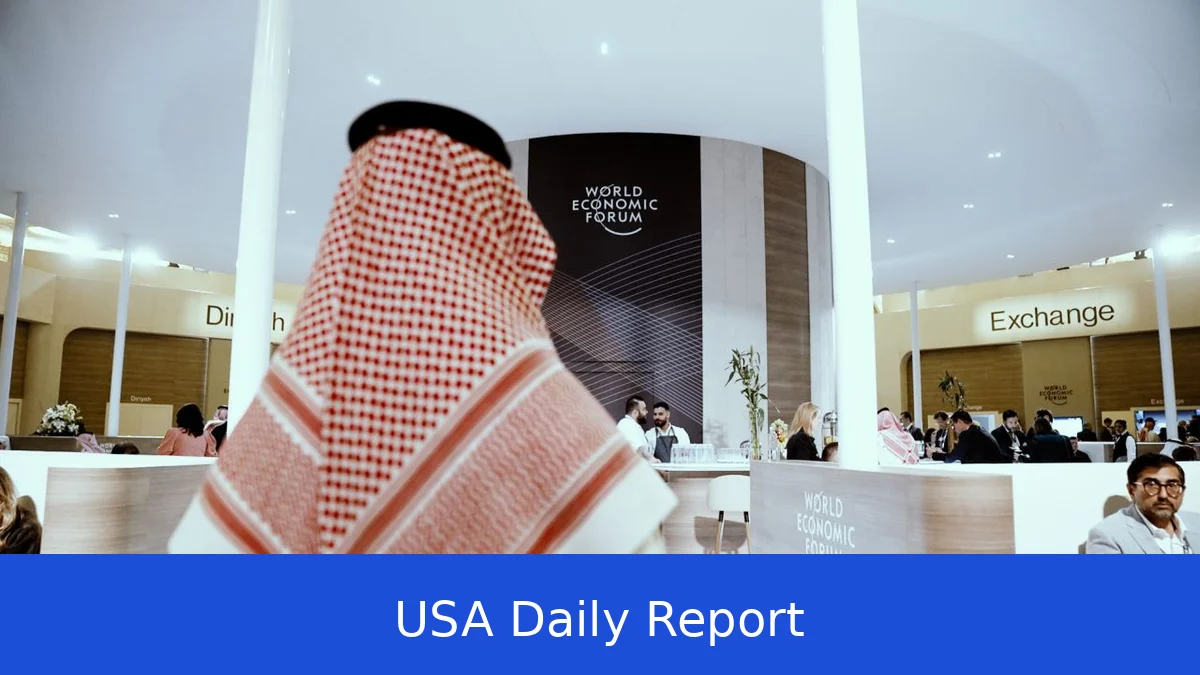
The World Economic Forum decided to delay its planned conference in Saudi Arabia because tensions around the Iran conflict are rising. This delay shows how worries about regional stability are affecting global economic ties.
Forum Postponement Signals Rising Regional Risks
The World Economic Forum (WEF) had planned to hold a major conference in Saudi Arabia, aiming to boost economic ties and foster dialogue among key Middle Eastern players. But escalating conflict involving Iran has forced organizers to push back the event indefinitely. Organizers fear that the worsening security situation might disrupt plans to boost trade and investment here.
Saudi Arabia has been at the heart of recent diplomatic moves, including negotiations with the United States on a landmark deal. The pact would deepen economic and defense cooperation between Riyadh and Washington, countering growing influence from adversaries like Iran, Russia, and China.
Still, the deal ties closely to broader Middle East peace efforts. A key condition for progress is the normalization of relations between Saudi Arabia and Israel. U.S.
Officials stress that such normalization can't move forward without a credible path toward a Palestinian state and calm in Gaza, according to State Department spokesperson Matthew Miller.
Secretary of State Antony Blinken echoed this stance during a recent economic conference in Riyadh. He emphasized that peace in Gaza and a Palestinian state remain prerequisites for Saudi-Israeli ties to advance, underscoring the complex web of politics underpinning the region’s economic landscape.
Diplomatic Moves amid Conflict
On the sidelines of the forum, Blinken met Saudi Crown Prince Mohammed bin Salman to discuss the potential deal. The pact will probably cover security guarantees, economic collaboration, technological exchange, and support for Saudi Arabia’s civilian nuclear program.
Observers say the agreement could mirror the Abraham Accords, which in 2020 brought several Arab states into formal relations with Israel while sidestepping the Palestinian state issue. Saudi Arabia’s leadership has described such a pact as potentially the biggest diplomatic breakthrough since the Cold War.
At the same time, tensions flare in Lebanon, where Israeli forces are negotiating withdrawal timelines tied to a ceasefire with Hezbollah. Israel has requested a 30-day extension to pull troops from southern Lebanon, citing delays in deployment of Lebanese forces and continued discovery of Hezbollah weapon caches. Hezbollah, backed by Iran, has condemned any delay as a breach of Lebanese sovereignty.
These developments come as Saudi Arabia’s top diplomat recently visited Lebanon for the first time in a decade, signaling a potential thaw in relations. The visit follows Lebanon’s election of a new president and appointment of a prime minister, both seen as setbacks for Hezbollah’s influence. Saudi Foreign Minister Prince Faisal bin Farhan expressed confidence in the new Lebanese leadership’s ability to implement reforms and stabilize the country.
Broader Impact on Economic Cooperation
The Iran crisis looms large over these diplomatic efforts. Recent U.S. Calculations suggest a temporary withdrawal from military action against Iran, despite harsh crackdowns on protests within the country. President Donald Trump signaled a pause after Iran reportedly halted executions of detained protesters and the violence subsided, easing immediate tensions.
Still, Gulf nations including Saudi Arabia, Oman, and Qatar have urged caution, warning that strikes could destabilize the region further and hurt their interests. Qatar, hosting the largest U.S. Military base in the Middle East, has been particularly vocal, having suffered missile attacks reportedly from Iran-linked forces after earlier U.S. Strikes on Iranian nuclear sites.
Israeli Prime Minister Benjamin Netanyahu also reportedly urged the U.S. To hold off on military strikes, fearing escalation could undermine fragile peace efforts and economic cooperation plans.
The postponement of the WEF conference shows how security concerns ripple through the region’s economy. Saudi Arabia, positioned as a central player in Middle Eastern trade and diplomacy, faces a delicate balancing act as it pursues ambitious economic deals amid rising instability.
Experts say that unless there’s progress politically—like peace in Gaza and a clear plan for a Palestinian state—economic projects could stall. Because security and economic cooperation are so linked in the Middle East, the Iran conflict could slow investments, shake up energy markets, and hold back infrastructure projects.
As the WEF postpones the conference, the future of the Saudi-U.S. Mega-deal and broader regional economic integration hangs in the balance, with hopes pinned on diplomatic breakthroughs that remain elusive.


