
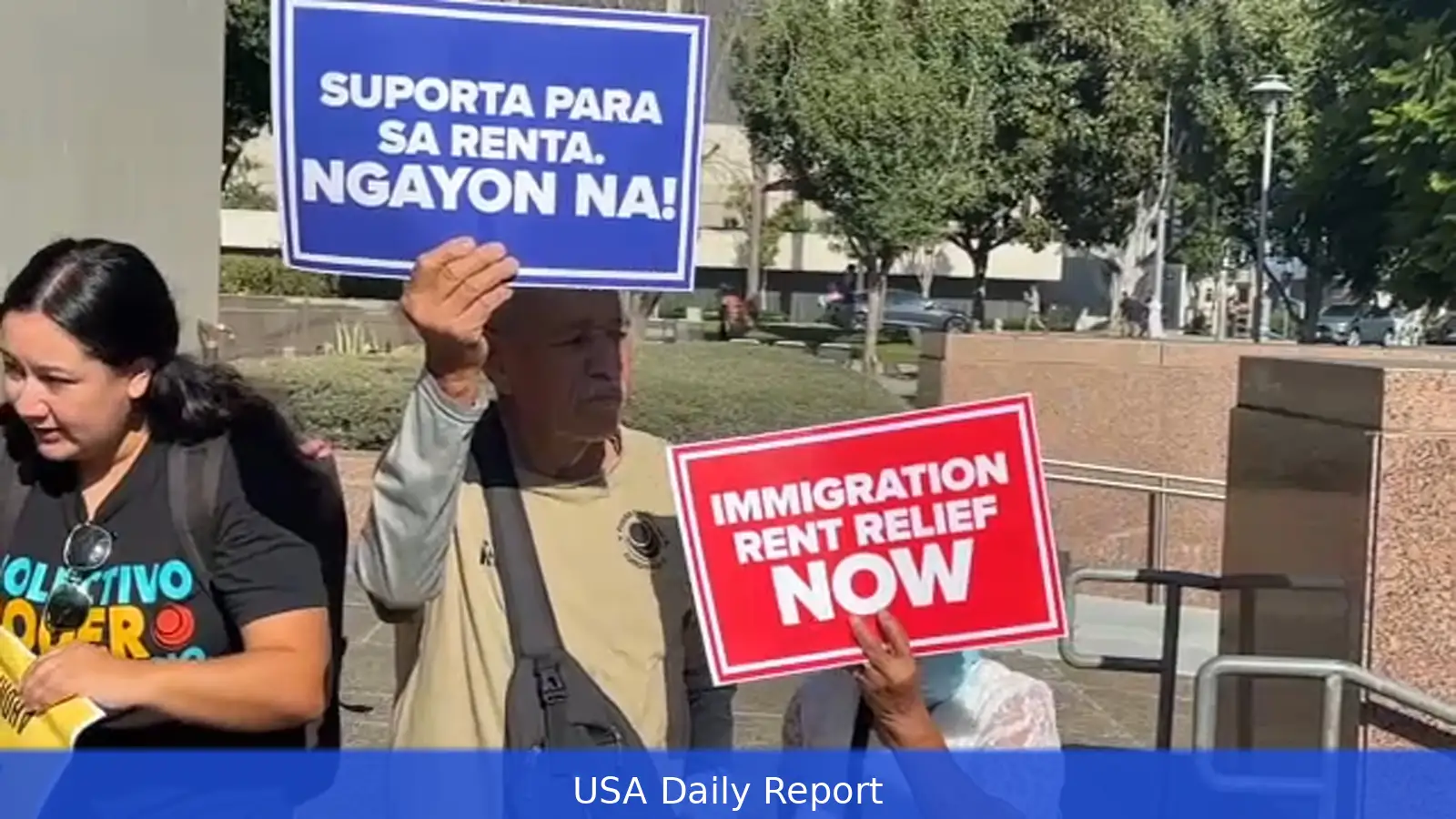
If rent is piling up after a wildfire, sudden job loss, or an enforcement-related disruption, Los Angeles County runs a rent relief program that can pay landlords or tenants directly — up to $15,000 per household. Here's what you need for the 2026 rent-relief round: who qualifies, which documents to pull together, how to submit the application, how long payments usually take, and a few tips to avoid delays.
Quick reference
- Maximum aid: up to $15,000 per household (not to exceed six months of rent)
- County allocation (2026): roughly $30 million targeted for wildfire and enforcement-impacted residents
- Who can apply: tenants and landlords for households facing emergency conditions; small landlords (4 or fewer units) are prioritized
- Income limits: program uses Area Median Income (AMI) tiers — generally serves households at or below 80% of AMI, with priority for households at or below 50% of AMI
- Website & help: https://www.lacountyrentrelief.com/ • Phone: 877-849-0770 (weekdays 8 a.m.–5 p.m.)
- Admin & forms handled by the county's Department of Consumer and Business Affairs (DCBA) and a third-party administrator
Introduction
I'll walk you through the LA County relief program in plain language: eligibility, the documents folks actually ask for, how to apply, quick fixes to speed things up, and the common mistakes that stall cases. It's written for 2026; program rounds and money allocations can shift, but the core steps, required documents, and the payment path stay the same. The county focuses on households hit by wildfires, enforcement actions, and sudden income loss tied to COVID-era recovery and other emergencies.
Prerequisites
Do yourself a favor: gather the basic paperwork before you begin the application. Having every document ready cuts delays. Expect a wait — it can take several weeks for a decision — but check with DCBA for any expedited processes if your unit was fire-damaged or you face imminent displacement.
- Bring a government photo ID if you can; if someone in the household lacks one, call DCBA and ask which alternate documents or affidavits they'll accept for intake.
- Rental agreement or lease: signed lease or written rental agreement showing tenant and landlord names, unit address, rent amount, and lease dates. If there’s no formal lease, a notarized housing attestation plus proof of regular rent payments works.
- Proof of need: documentation showing sudden income loss or emergency impact — recent pay stubs (last 30 days), unemployment award letters, a layoff or furlough notice, or written documentation of wildfire damage or an enforcement notice affecting residency.
- Rent ledger / past-due notice: a landlord-provided ledger, late rent demand, or eviction notice showing arrears. Programs often require a ledger covering the last six months.
- Bank statements: 30–90 days of household bank statements to confirm finances and that rent was paid historically where applicable.
- Landlord paperwork: completed IRS Form W-9 for the payee, landlord government ID, and ownership proof (property tax bill or deed). Small landlords (4 units or fewer) should have a current business license or owner affidavit ready for priority processing.
- Contact information: tenant and landlord emails, cell numbers, mailing addresses — the program uses email and phone to notify approval, request documents, and initiate payment.
- Social Security Numbers: SSNs for applicants and all adult household members when available. If an SSN isn’t available, the program accepts ITINs or alternate identification with an attestation.
Step-by-step application
Follow these numbered steps. Do them in order. Missing one item often triggers a request for more documents and slows approval.
- Check initial eligibility online. Start at https://www.lacountyrentrelief.com/. Use the eligibility checker or FAQ to confirm household income band, residency in Los Angeles County, and the qualifying hardship (wildfire, enforcement action, or sudden income loss). The site lists AMI tiers — households at or below 80% AMI are typically eligible; those at or below 50% get priority.
- Create an account. If eligible, create a secure account on the portal. Use a personal email you check daily. The portal stores uploads and shows application status. Note your username and password immediately — lockouts require phone verification and add days to processing.
- Complete the online form. Fill in tenant and landlord information, monthly rent amount, amount of arrears, and the reason for need. You'll be asked to specify whether payment should go to the landlord or tenant. Most programs pay landlords directly if they accept the funds; tenants can receive payments only in limited situations.
- Upload required documents. Attach ID, lease, pay stubs, bank statements, rent ledger, and the landlord W-9. Use PDFs or clear JPEGs. Label each file clearly — like Tenant_ID.pdf, Lease_Unit123.pdf, Landlord_W9.pdf. Scan or photograph documents clearly and keep file sizes reasonable — if you're unsure, call the helpline and they'll tell you how to upload without breaking the upload rules.
- Sign electronic forms. E-sign the tenant declaration and landlord attestation in the portal. The landlord must confirm ownership and agree to accept rental assistance; small landlords who sign quickly often get prioritized.
- Submit and track. Click submit and note the confirmation number. Expect an auto-email with the number and a list of any missing docs detected by the portal. Track status in your account and watch email spam folders for messages from @lacountyrentrelief.com.
- When the portal or a caseworker asks for more paperwork, respond quickly — the faster you supply what's missing, the sooner they can move your file. If the portal or caseworker asks for more documents, provide them immediately. The clock often pauses while you wait. Use the case number when calling 877-849-0770.
- Receive approval and payment. Approvals typically show in your portal and by email. Payments to landlords are usually issued by electronic transfer or check within 7–21 business days after approval, depending on payment routing and W-9 verification. If payment goes to a tenant, expect identity and bank verification steps that can add time.
Tips to speed approval
Small choices make a big difference. Try these practical steps.
- Scan documents rather than photographing them. Scans are clearer and avoid rejection for illegibility.
- Make file names descriptive and short — it helps caseworkers find what they need.
- If your landlord won’t cooperate, apply anyway. The program allows tenant-initiated applications; the county will attempt outreach to the owner, and emergency payments can be made directly to tenants in narrow cases.
- If wildfire damage is the cause, include official damage reports, photos, or insurance denial letters along with a county or city-issued evacuation order, if available. Those documents trigger expedited review.
- Small landlords: have your W-9, proof of ownership, and business license ready. The county prioritizes landlords with four or fewer units and may process their payments faster.
- Keep copies of everything. Save digital and paper copies of uploads, emails, and confirmation numbers.
- Call early. The helpline 877-849-0770 is busiest in the morning — call right at 8 a.m. On weekdays when possible.
Common mistakes to avoid
These are the things that cause denials or long delays.
- Missing W-9 or incorrect tax ID for the payee. That single error will block payment.
- Low-quality uploads: blurred IDs, partial lease pages, or screenshots that crop dates. The portal rejects these and asks for new files.
- Waiting to get the landlord to sign before applying. Start the application with what you have — the county will reach the landlord.
- Not certifying household income correctly. Include income for everyone in the household over 18. Under-reporting can trigger repayment requirements later.
- Using an inactive email address. All status notices come by email; missed notices create delays.
- Assuming approval equals immediate cash. Approval starts payment routing and verification. Expect 7–21 business days for funds to land with the payee after approval.
Related Articles
- Section 8 Housing Requirements 2026
- 1099 Tax Calculator 2026: Estimate What You Owe
- Medicaid 2026 Income Limits: Eligibility Guide
If rent is overdue because of wildfire damage, sudden income loss, or related enforcement actions, start at https://www.lacountyrentrelief.com/ and get the landlord involved right away. Call 877-849-0770 (weekdays 8 a.m.–5 p.m.) if you hit a snag. Keep complete, labeled documents ready, respond to requests within 3–5 business days, and expect approval timelines from expedited 7–14 days up to a standard 30–45 days. Small landlords (4 units or fewer) and households at or below 50% AMI get priority. Act quickly — funds are limited and the county’s $30 million 2026 allocation for wildfire and enforcement-impacted residents moves on a first-come, verified-need basis.
This article was created with AI assistance.


