
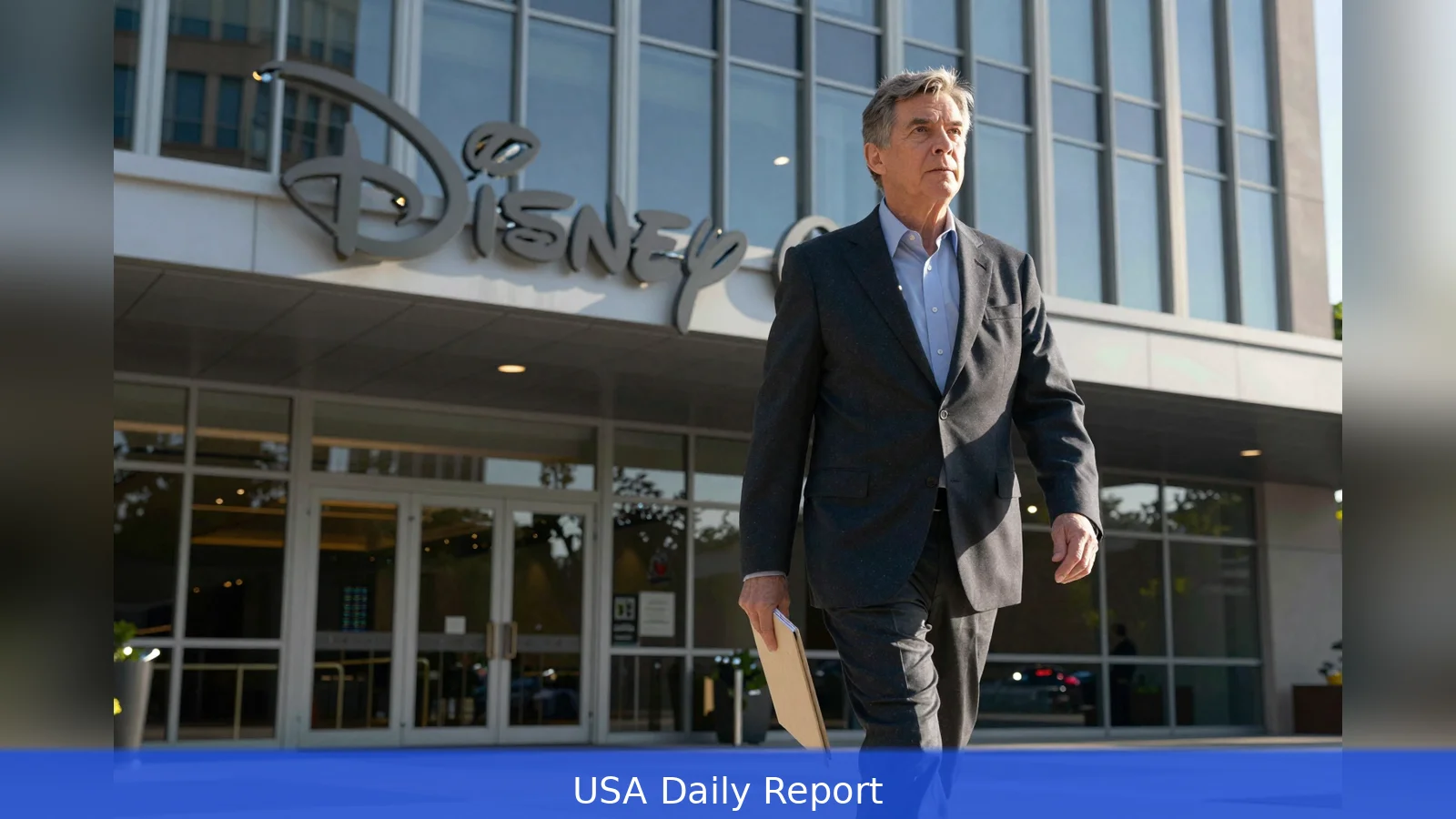
"Apple didn't show that much interest," Bob Iger told the Financial Times. He used that line while outlining a string of high-profile deals that nearly landed at The Walt Disney Company but never closed. Iger said Disney came close to buying Twitter from Jack Dorsey at a "very attractive price," opened early merger talks with Apple, and had James Bond on its acquisition list before Amazon secured MGM in 2022 and paid more than $1 billion for full creative control of 007 in February 2025. Iger stepped down as CEO on March 18, handed leadership to Josh D'Amaro, and will probably leave Disney's board in December.
"We had a list and I figured let's just tick them off and buy them all," Bob Iger told the Financial Times, framing the mindset behind his dealmaking. He used the interview as an exit accounting, naming targets he pursued, targets he won, and high-profile negotiations he walked away from.
Iger recounted a discrete negotiation to buy Twitter from co-founder Jack Dorsey, saying the offer on the table was a "very attractive price." The plan, he said, would have been to use the social network as a global distribution platform for Disney content. But Iger described a moment of judgment on the morning the deal was due to close when he concluded the acquisition would be "a horrible distraction" from Disney's core businesses, and he pulled away.
The outcome left the ownership path clear. Elon Musk bought Twitter in 2022 and later renamed the company X. Iger didn't offer transactional specifics beyond the timing and his rationale for walking away, but the episode underlines how strategic focus shaped the limits of Disney's expansion even as the company chased scale and reach.
Apple talks and the pull of cultural fit
"Apple didn't show that much interest," Iger said, tracing the prospect of a much larger tie-up. The interview recalled a long personal history: Iger served on Apple's board from 2011 to 2019 and said his first call with Steve Jobs moved fast to a deal that put Disney content on the first video iPod.
That history helped prompt early-stage merger conversations with Apple while Iger ran Disney, but those discussions "never went anywhere," he told the Financial Times. He framed the Apple talks as exploratory rather than transactional, a recognition that cultural fit and appetite on the other side were decisive.

In short, Apple didn't match Disney's willingness to transact.
Across the Twitter and Apple episodes, the through-line Iger offered was judgment about distraction and fit. He described Pixar and his relationship with Jobs as formative for his acquisition strategy, and he pointed to Marvel and Lucasfilm among the large buys that did clear the bar. Those wins reshaped Disney's content pipeline, but the near-misses show how selective the company remained even when pursuing an aggressive agenda.
Iger also acknowledged that not every target can be secured. On James Bond, he confirmed 007 had been on Disney's list but didn't supply negotiation details. The franchise ultimately moved the other way: Amazon bought MGM in 2022 and then invested more than $1 billion in February 2025 to assume full creative control of the Bond films, a path that kept 007 out of Disney's reach.
The account in the Financial Times also touched on governance and succession. Iger stepped down from his second CEO tenure on March 18 and handed operational control to Josh D'Amaro.
He remains a board member for now, but he will probably leave that role in December. The timing frames how the deal discussions fit into a period of leadership transition that included his brief departure and later return to the CEO role.
For Iger, the deal posture was simple and unapologetic. He described a checklist approach to scale: identify adjacencies that expand Disney's content or distribution reach, then decide which ones to press and which to abandon. The Financial Times interview makes plain that that calculus was not purely about price. It was also about where corporate attention should live.
Those judgments left concrete market consequences. Twitter slipped into private hands under Elon Musk and became X. MGM became part of Amazon's studio ecosystem in 2022, and Amazon's later payment for Bond control in 2025 placed the franchise beyond Disney's grasp. And Apple, despite a long working history with Disney executives, didn't move materially toward a merger.
The disclosures sharpen the public record on several negotiations that never closed, and they reveal the mix of personal relationships, prior deals, and strategic restraint that guided Iger's agenda. He leaves a board seat in December and a legacy of blockbuster acquisitions that altered Disney's balance sheet and cultural footprint, even as several marquee possibilities slipped away.
Related Articles
- Siri AI: Google cloud power, on-device privacy
- Apple faces $250M settlement as it reboots Siri
- Siri at WWDC, High Stock and Higher Expectations
Iger will probably leave the Disney board in December.
This article was created with AI assistance.


