
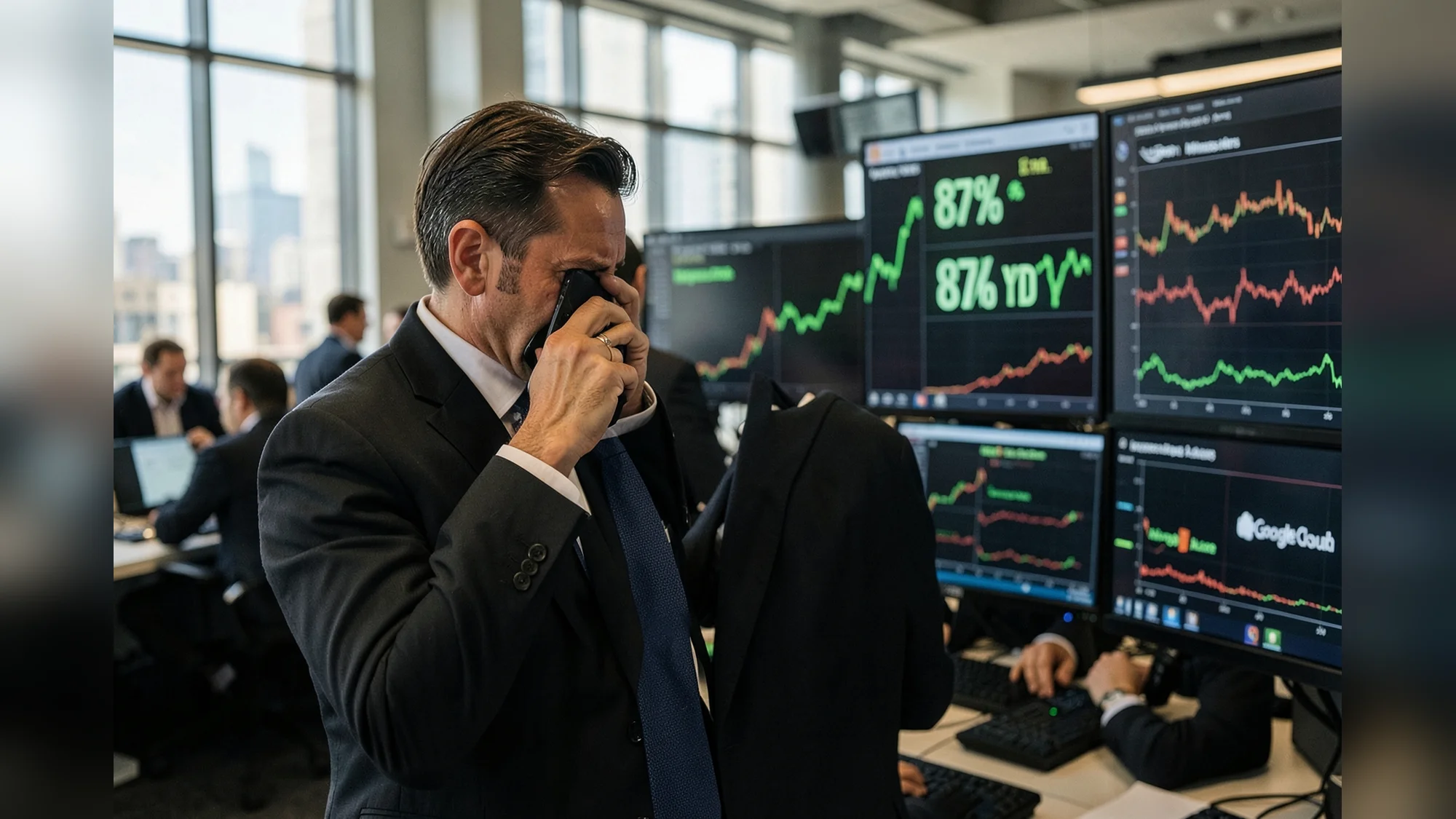
A New York trading desk went quiet as July approached earnings season, then came alive when a hot chip index kept powering higher. The Philadelphia Semiconductor Index had climbed about 87 percent year-to-date through early July 2026 while the biggest cloud builders showed notable weakness. JPMorgan strategist Jason Hunter called the divergence the key market story of the summer and warned the next few weeks of hyperscaler earnings and guidance will decide whether this is a healthy rotation or an early echo of a wider correction. If the major buyers of AI capacity can stabilize before autumn, JPMorgan said the broader market probably holds together.
Traders felt the split in real time. Quiet desks turned into focused ones as semiconductor names raced upward, dragging chip and infrastructure suppliers with them. At the same time the largest buyers of that capacity were lagging, which is an unusual internal tension inside a single investment theme.
The concrete numbers underline the contrast. The Philadelphia Semiconductor Index climbed about 87 percent year-to-date through early July 2026. By contrast Meta was down roughly 5 percent and Microsoft about 18 percent over the same span, and Microsoft posted its worst monthly loss since the year 2000 in June 2026.
Jason Hunter framed that divergence as the summer's defining market debate. Hunter pointed to projected capital spending tied to AI as part of the puzzle, saying Meta, Microsoft, Amazon, and Alphabet are projected to spend roughly $725 billion on AI-related capital expenditures in 2026.
JPMorgan separately estimated five major hyperscalers would collectively spend about $697 billion. Those massive outlays coexist with visible underperformance among the hyperscalers, creating a split between the sellers of capacity and the buyers of it.

Hunter drew an explicit historical comparison to the late 1990s, when hardware and infrastructure names ran hot while their large corporate buyers began to wobble. JPMorgan's note makes the point bluntly: the pattern either becomes a tidy rotation inside the AI theme or it shades into a broader market correction.
The bank told clients to watch individual hyperscaler performance charts over the summer and to treat near-term earnings guidance as a decisive signal.
The directive is practical. First, close attention to quarterly results and forward guidance will show whether hyperscalers are still willing and able to accelerate capital projects. Second, price action inside those stocks will reveal whether the market is reallocating gains from semiconductors into the buyers of compute, or whether strength in chips is running ahead of demand.
Not every strategist agrees with the cautionary read. Morgan Stanley offered a more optimistic assessment in early July 2026, saying signs of a rotation from semiconductor momentum toward hyperscalers might already be under way. That scenario implies a functioning reallocation inside the AI trade, which would lower the chances that strong semiconductor gains foreshadow a larger market reversal.
The split matters beyond equity desks because hyperscaler capex is large enough to ripple through other markets. JPMorgan warned that an AI stock correction, or conversely a stabilizing rotation, would change risk appetites for crypto traders and other investors who treat AI momentum as a cross-market tailwind. In short, what happens in a handful of big cloud and AI names could alter sentiment across digital assets and risk-on strategies.
The immediate actors in this test are clear: semiconductor firms, AI infrastructure suppliers, the four named hyperscalers and the five major hyperscalers in JPMorgan’s capex estimate. The next few weeks of earnings and guidance from those companies will be the market's test of whether the current split is a healthy sectoral reallocation or an early warning sign.
Related Articles
- Chip stocks slide 20% as two big banks split on buying
- Brent near $78 as Citigroup warns another oil shock may loom
- JPMorgan Moves $2B in Private Credit Trades, Stressing Funds
JPMorgan centers the timeline on hyperscaler earnings and guidance over the summer as the next market test. Those reports, and how Meta, Microsoft, Amazon and Alphabet perform on guidance and price action before autumn, will likely determine whether the market holds together or the divergence widens. Originally reported by cryptobriefing.com.
This article was created with AI assistance.


