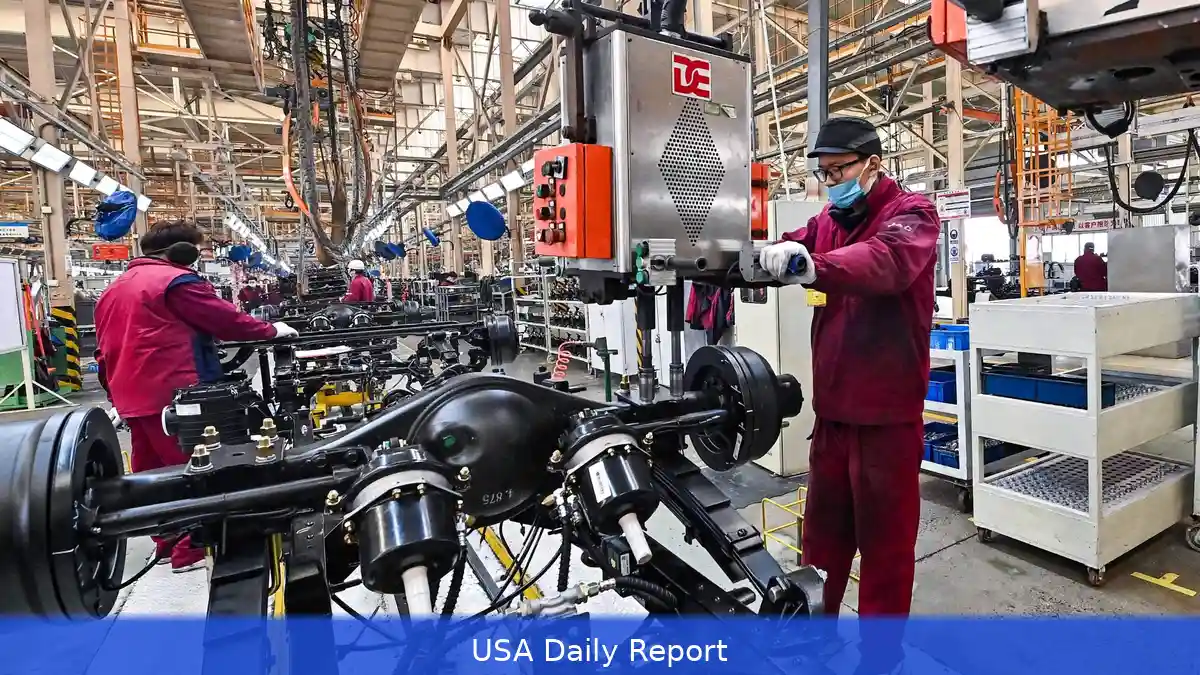
In March, China's factory activity slowed down because exporters faced higher costs and geopolitical tensions. Once a powerhouse, China's manufacturing sector now faces challenges that might change its growth in the near future.
Export Costs Surge Amid Iran Conflict
China’s manufacturing firms faced a sharp rise in expenses last month, driven largely by disruptions linked to the ongoing conflict in Iran. According to the private RatingDog China manufacturing purchasing managers index (PMI), factory activity eased to 50.8 in March, down from a multi-year high of 52.1 in February. While the reading still indicates expansion—any number above 50 signals growth—the dip reflects mounting pressure on export-oriented companies.
Yao Yu, founder of RatingDog, highlighted that "cost pressures intensified significantly" and supply chains encountered “notable disruptions.” These issues are complicating production plans and undermining the momentum exporters had built earlier in the year.
Contrast with Official Data
Interestingly, official government figures have painted a more optimistic picture of manufacturing recently, suggesting some resilience despite global uncertainties. But the private gauge’s drop reveals underlying strains that official surveys may overlook. Exporters have been diversifying away from traditional markets, including the United States, to offset tariff pressures. Yet, the Iran war and rising global trade protectionism are squeezing costs and causing headaches for supply chains.
China’s trade surplus hit a record $1.2 trillion in 2025, fueled by booming exports to non-U.S. Buyers. But that dependence on external demand exposes vulnerabilities as domestic consumption remains weak. The country is still battling a prolonged slump in property markets and deflationary pressures that keep internal spending subdued.
Economic Growth Slows to a Three-Year Low
China’s overall economic growth cooled to 4.4% year-on-year in the fourth quarter of 2025, the slowest pace since the pandemic-hit quarter of 2022. That was down from 4.8% in the previous quarter. Even so, the full-year expansion came close to Beijing’s official target, clocking in at 4.9%.
Policymakers managed this with modest stimulus, helped by smaller-than-expected tariff hikes from Washington and exporters’ efforts to find new markets.
Still, risks are mounting. The Trump administration’s trade policies continue to cast a shadow, with threats of new tariffs on countries trading with Iran complicating China’s export strategy further. Reuters forecasts economic growth to slow again to about 4.5% in 2026, suggesting policymakers may need to ramp up stimulus to counteract these pressures and address structural issues.
Structural Challenges and Outlook
China’s manufacturing sector has long been a bedrock of its economic might. But structural vulnerabilities now add to the external pressures. Weak domestic demand, a fragile property market, and persistent deflationary trends underline the limits of relying heavily on exports for growth.
The rising global trade protectionism and geopolitical risks, including the unpredictable stance of U.S. Trade policy, mean the environment for exporters remains volatile. Supply chains are increasingly complex and sensitive to disruptions, as the Iran conflict has shown.
Beijing has to carefully keep growth steady without pushing stimulus too far and risking financial problems. The manufacturing slowdown in March might be an early warning signal that more targeted policy actions are needed.
At the same time, China’s push to diversify its trade partners beyond the United States has helped ease some tariff pressures in recent years, but it hasn’t eliminated the risk from global trade tensions. The country’s economic health will hinge on how well it can manage these geopolitical headwinds while stimulating domestic demand.
Heading into 2026, China’s manufacturing slowdown and rising export costs might push policymakers to change course. Whether Beijing can maintain steady growth while navigating these challenges remains one of the biggest questions for the global economy this year.


