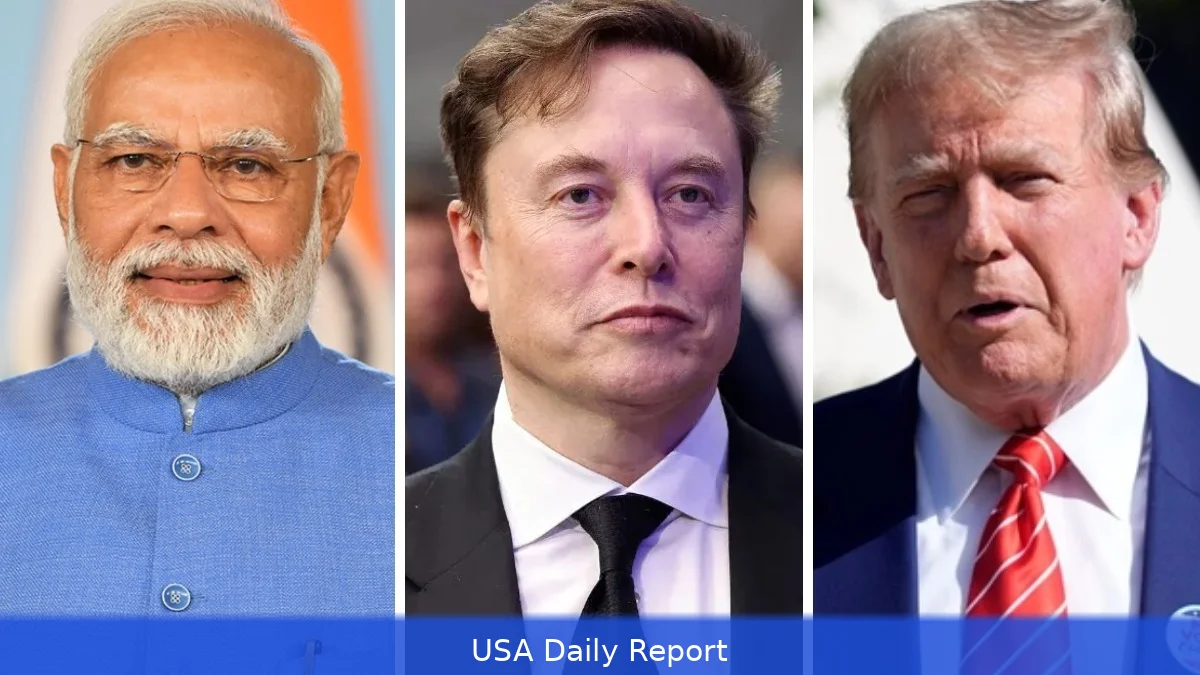
Elon Musk sat in on a phone call between U.S. President Donald Trump and Indian Prime Minister Narendra Modi this week. Musk joining the call sparked questions about private individuals getting involved in government discussions.
Rare Participation in Diplomatic Talks
Reports confirmed that Elon Musk, CEO of Tesla and SpaceX, joined a high-stakes conversation between President Trump and Prime Minister Modi. The call focused on the escalating war tensions involving Iran, a conflict drawing intense global scrutiny. Two U.S. Officials familiar with the call disclosed Musk’s involvement, though they spoke anonymously due to the sensitivity of the matter.
Musk isn’t a government official or diplomat, which makes his presence on the call quite unusual. His presence in such a critical discussion between two world leaders is almost unheard of. No official explanation has clarified whether Musk contributed directly or merely listened in. The White House declined to comment specifically on Musk’s role, emphasizing only the productive nature of the U.S.-India relationship.
Private Sector Influence on Foreign Policy
The incident highlights an emerging trend: private sector leaders increasingly intersecting with government policy at the highest levels. Musk’s advisory role to Trump on improving government efficiency is public knowledge, but joining an international call about a volatile war zone adds a new layer to his influence.
Some critics say private involvement like this mixes business interests with government decisions. It raises concerns about transparency and accountability — especially when decisions could affect global security and economic stability.
Supporters believe Musk’s tech knowledge and global business experience could help in tricky talks.
Even so, business leaders have influenced diplomacy before, though usually less directly. History has seen business leaders influencing diplomatic outcomes, but usually in less direct ways. Musk's direct inclusion in this call signals a shift in how governments might leverage private sector connections.
Geopolitical Stakes and Economic Ramifications
The Iran conflict remains a focal point for global powers. The U.S. And India, both democracies with significant trade and strategic ties, have a vested interest in the region’s stability. Any discussion involving these nations and Iran carries weighty implications for international markets, energy supplies, and security alliances.
Market watchers know that geopolitical crises often ripple through financial systems worldwide. Energy prices, supply chains, and investor confidence can all be jolted by escalations in conflict zones. Musk’s companies themselves are tied to global supply chains and energy technologies, adding another dimension to why his presence might be strategic.
At the same time, Musk’s involvement comes amid other U.S. Trade tensions that have rattled companies and consumers. President Trump’s tariff policies, aimed at reshaping global trade, have already caused headaches for American brands abroad. Levi’s, for example, warned of anti-American sentiment affecting overseas sales. Such sentiments could grow if political and economic uncertainty deepens.
Trade disruptions and geopolitical risks often force companies to rethink pricing and sourcing strategies. Rising import costs can push firms to raise prices or seek alternatives. Consumers, meanwhile, may turn away from U.S. Products in favor of local or regional brands, as has been seen in markets like India and Canada. All of these factors feed into a complex web of economic pressures tied to diplomatic moves.
Looking Ahead: Transparency and Accountability in Question
The Musk-Trump-Modi call adds fuel to ongoing debates about private influence in government. It comes at a moment when many are watching how tech billionaires engage with political power. The event could push lawmakers and watchdogs to demand clearer rules about private participation in foreign policy discussions.
As the Iran conflict continues, further details about the call’s content and outcomes may emerge. For now, Musk’s role remains murky — a stark reminder that the boundaries between business and politics are increasingly porous. Whether this trend will grow or face pushback we'll have to wait and see.
Musk’s role in this call highlights how private power is increasingly part of global diplomacy.


