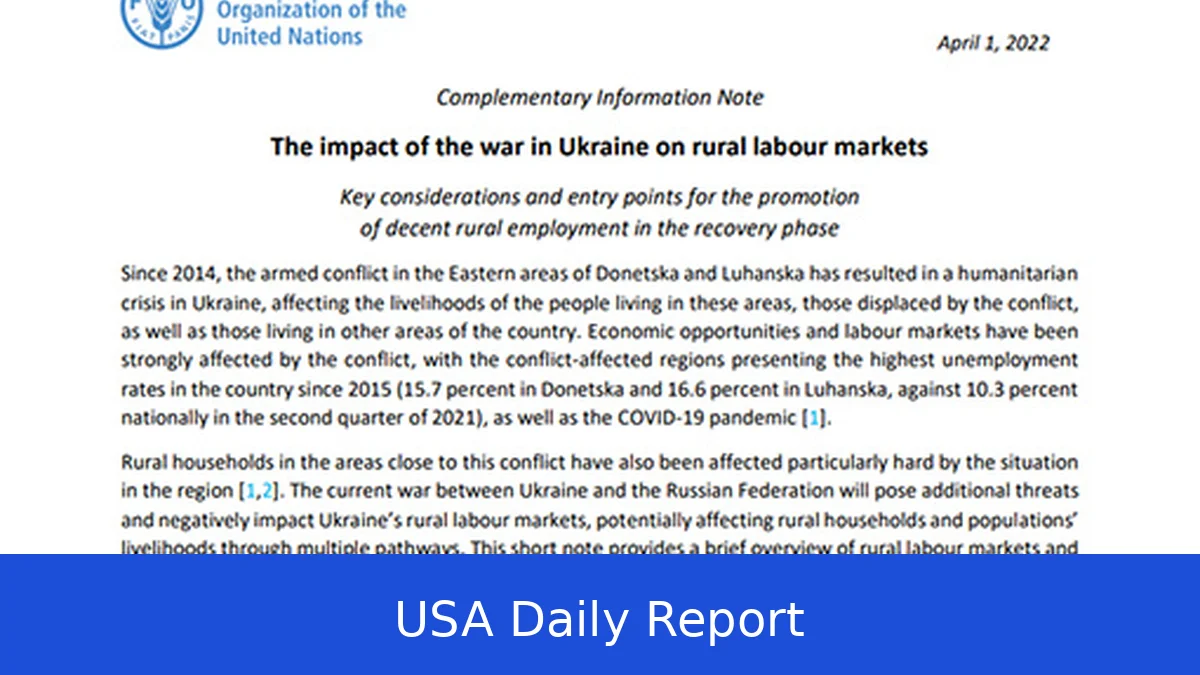
When war uproots a quarter of a country’s workforce, economists expect chaos. Ukraine’s experience since Russia’s invasion proves otherwise — its labor market is holding steady against staggering odds.
War Upends Ukraine’s Economy, But Workers Adapt
Ukraine’s economy has changed dramatically since the conflict started. Defense industries have ballooned while tourism and other sectors took a nosedive. Millions of Ukrainians either joined the armed forces or fled abroad as refugees. Usually, losing so many workers would devastate any labor market.
But the labor market has held up better than expected. Though official government surveys stopped in 2022 due to the invasion, Ukraine’s advanced digital systems offer a new way to track employment. Online job platforms and administrative data have become vital in piecing together the real picture.
“The quality of data in Ukraine is rare for a wartime economy,” Tito Boeri, a professor of economics at Bocconi University, said. “For the first time, we can observe how a labor market functions during war.”
Flexibility and Remote Work Cushion the Blow
Flexibility has played a big role in keeping Ukraine’s labor market steady.
Companies and workers have adapted quickly, shifting roles and industries to meet new demands. The rise in defense-related jobs absorbed many displaced workers.
Working remotely has helped a lot, too. With many urban centers under threat or damaged, people found ways to keep working from safer areas or even from abroad.
This shift helped maintain income streams and economic activity when physical offices were not an option.
Financial support measures from the government and international partners further softened the impact. Social safety nets and subsidies helped workers stay afloat despite the upheaval.
Digital Infrastructure Enables Real-Time Insights
Ukraine’s earlier investment in digital systems really helped during the war.
In past wars, data stopped coming in, but now economists can watch labor trends almost live. That creates a clearer understanding of how war shocks ripple through employment.
These insights help shape policies and decide where to put resources. They also offer lessons for other countries facing crises, showing how digital tools can sustain economic monitoring even under duress.
Still, challenges remain. Certain sectors have contracted sharply, and many Ukrainians outside the country face uncertain prospects. Yet the labor market’s overall endurance reveals a layer of economic adaptation few expected.
Looking Ahead: What Ukraine’s Labor Market Shows Us
The situation remains fluid, with fighting ongoing and millions displaced. But Ukraine’s experience rewrites assumptions about wartime economies. Even amid destruction, a labor market can adjust, survive, and even find pockets of growth.
This story shows how digital tools, flexible jobs, and support programs have kept things going. What happens next depends on the war’s course — and on how Ukraine leverages these strengths moving forward.
The data from Ukraine’s labor market gives us a rare look at how economies survive war, shaking up old ideas about conflict and jobs. The country’s ability to keep its workforce engaged despite massive disruption could reshape how economists study and respond to crises.


