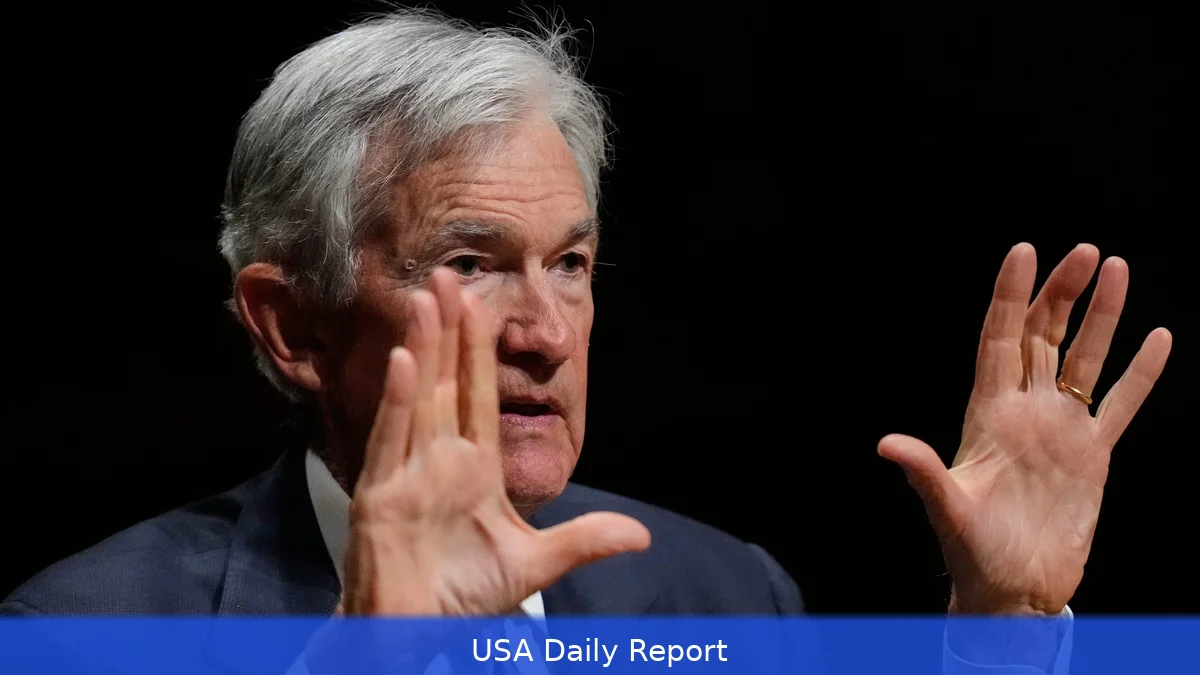
America’s national debt has swelled to $39 trillion, a figure that Federal Reserve Chair Jerome Powell says isn't immediately dangerous but is on a troubling course. Speaking to a Harvard economics class, Powell stressed the urgency for lawmakers to act before the situation worsens.
Debt Level vs. Debt Trajectory
Powell made a clear distinction between the current size of the debt and its future path. The $39 trillion debt load is sustainable for now, thanks to the U.S. Dollar’s status as the world’s reserve currency and the depth of American capital markets. Still, he warned the rising pace at which debt is outstripping economic growth is a red flag.
“The level of the debt isn't unsustainable,” Powell said, “but the path isn't sustainable. It won't end well if we don’t do something fairly soon.”
That warning echoes concerns Powell has voiced before: the government’s borrowing is growing faster than the economy itself, pushing the debt-to-GDP ratio higher each year. The Congressional Budget Office projects this ratio to climb from 101% today to 120% by 2036, surpassing post-World War II records.
Rising Interest Costs Tighten the Budget
Interest payments on the national debt are ballooning. The government will probably shell out over $1 trillion annually on interest by 2026.
That’s nearly triple the $345 billion paid in 2020 and already a heavy burden in the current fiscal year, with $270 billion spent in just the first quarter—more than the defense budget over the same period.
These rising costs squeeze the federal budget, forcing tough choices. Powell pointed out that these costs limit the budget but don’t mean a collapse is coming. Yet mixing up constraints with disaster distorts the debate over fiscal policy.
Fixing the Problem: Growth and Balance
Powell didn’t call for outright debt reduction. Instead, he suggested a more achievable approach: the government should aim for a primary budget balance—where revenues match spending excluding interest—and foster economic growth that outpaces debt increases.
“We don’t have to pay the debt down,” he said. “We just need to have primary balance and begin to have the economy actually growing more quickly than the debt.”
Powell made it clear that Congress and the White House, not the Fed, are responsible for handling the national debt. His warnings have often fallen on deaf ears in Washington, but the trajectory he described leaves little room for complacency.
Context and Risks Ahead
The warning comes at a tense time. Gas prices hover near $4 a gallon amid ongoing conflicts in the Middle East, adding inflation pressures and complicating the economic outlook. Powell’s caution about debt growth adds another layer of concern for policymakers already juggling inflation, growth, and geopolitical risks.
The U.S. Has carried large debt loads before, with Japan often cited as a parallel due to its even higher debt-to-GDP ratio. But Powell pointed out the key difference: America’s economy and capital markets still have room to maneuver, while the debt’s rapid growth rate remains the real danger.
Lawmakers face a challenging balancing act. Tightening fiscal policy risks slowing growth, but ignoring the debt trajectory risks ballooning interest payments and eroding fiscal flexibility. Powell’s message was clear: the current path is unsustainable, and the time to act is now.
Powell told Harvard students that the U.S. can manage its debt for now, but if things don’t change, the results could be serious. It’s still unclear if political leaders will act on this warning in time.


