
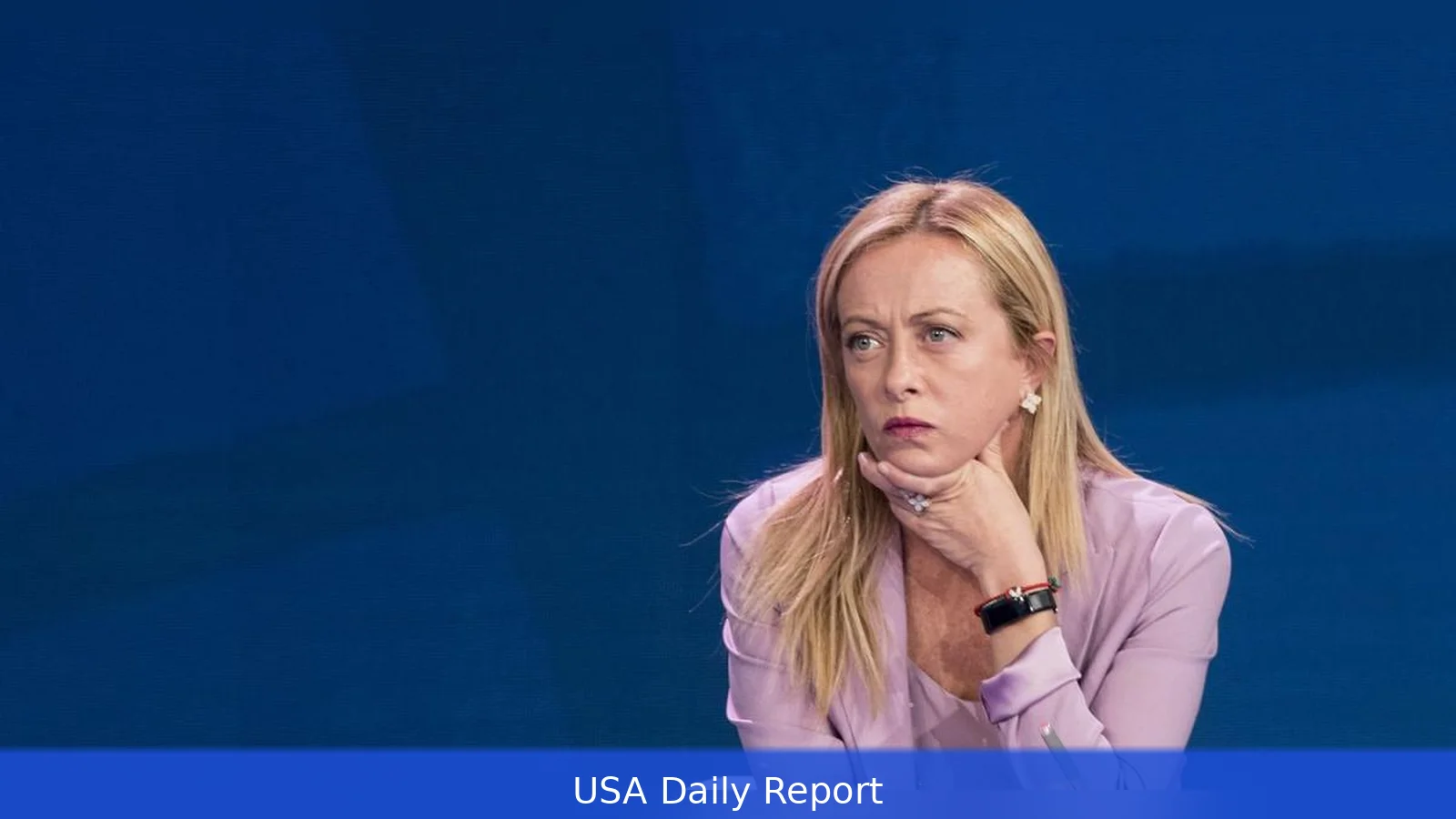
Giorgia Meloni gave Terna’s CEO a blunt choice: take a €7.3 million severance or accept the chairmanship of Eni. Giuseppina Di Foggia, named Terna chief executive in 2023 and recently proposed as Eni’s next chair, must decide; the government says it will act depending on her pick.
The ultimatum
Italian Prime Minister Giorgia Meloni told reporters in Milan that Giuseppina Di Foggia must decide whether to take a €7.3 million severance from grid operator Terna or accept the chairmanship of energy major Eni. Meloni said the choice is for Di Foggia to make and that the government will consider its options accordingly.
The sum at stake — about €7.3 million (roughly $8.6 million) — has become a flashpoint ahead of key corporate meetings and has forced ministers and state-backed investors into damage control. Terna’s board is expected to convene an extraordinary meeting in the coming days to examine the claim.
Di Foggia was named Terna’s chief executive in 2023 and was recently proposed as Eni’s next chair as part of a string of appointments overseen by government-affiliated shareholders. Her possible dual exit and reappointment has raised questions about how severance rules interact with transfers among state-linked firms.
Contract terms and legal questions
- A person familiar with the matter told reporters the contract does not contain a clause expressly barring severance for early resignation or at the end of a mandate, which helps explain Di Foggia’s resistance to abandoning the payout.
- Italy’s economy ministry has publicly opposed state-backed companies paying large severances to executives who leave voluntarily, reflecting political sensitivity while households and businesses face high energy costs.
- Corporate governance experts say the dispute sits at the intersection of contract law and shareholder governance: Terna could block the payout via internal rules or shareholder decisions, but a clear contract could invite legal challenges if the company withholds payment.
Shareholders and nominations
- State-linked ownership raises pressure: Italy’s Treasury, through state lender Cassa Depositi e Prestiti (CDP), holds major stakes in both Terna and Eni, giving government-affiliated shareholders significant influence.
- Pasqualino Monti has been nominated as Terna’s next CEO by Cassa Depositi e Prestiti; that nomination still needs shareholder ratification and is part of wider changes across state-influenced firms.
- The overlap of state roles as regulator and major shareholder has intensified questions about political considerations in corporate decisions and whether market governance norms are being followed.
Political backdrop and market signal
The controversy comes as a politically sensitive moment for Meloni’s government, which is managing public anger over living costs and the fallout from a recent referendum loss.
Related Articles
- Fermi shares plunge 23% after CEO, CFO exit amid short-seller allegations
- AI's Next Bull Market: Infrastructure and the Edge
- UnitedHealth Tops Q1 Estimates, Raises 2026 Profit Forecast
This clash lands at a politically sensitive moment for Meloni: households and businesses are squeezed by high energy costs and the government is still managing fallout from a recent referendum loss, making large payouts politically toxic. The dispute also underscores tensions between contract rights and state-linked shareholder influence in Italy’s energy sector. Terna’s board is expected to meet in the coming days to examine the severance claim, and Di Foggia’s proposed role at Eni still needs shareholder ratification.
This article was created with AI assistance.


