
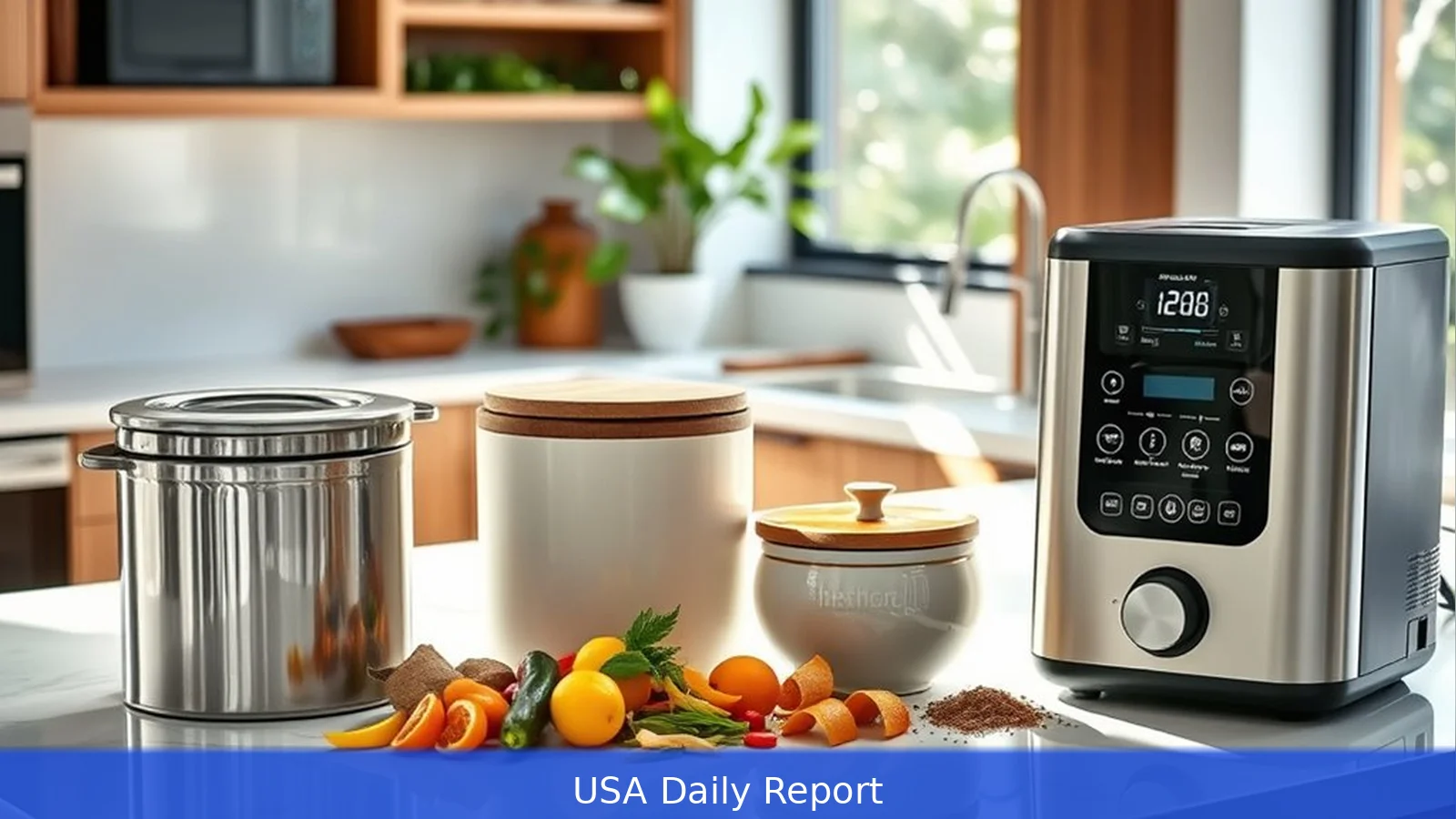
Most countertop electric composters promise garden-ready soil — but they don’t. They grind and dry kitchen scraps into a shelf-stable residue you can mix sparingly into potting soil or use to kick-start a backyard compost pile.
What these machines actually do
Most countertop electric composters reduce waste volume and cut odors by grinding food scraps and then drying or aerating the material until it’s shelf-stable. That output isn’t the dark, crumbly compost you buy at a garden center; it’s a processed residue meant to be mixed into potting mixes in small ratios or used to kick-start backyard compost systems.
Some models advertise finished compost, but in real use only a few approach that standard. Typical results are stable, reduced-volume products that are easier to store or hand off to municipal or backyard programs.
Why people buy them
- Reduce kitchen odors and the need to run to an outdoor bin.
- Lower the volume of food waste sent to municipal landfills.
- Improve convenience for handling peels, coffee grounds and small leftovers year-round.
- Provide an environmental benefit by stabilizing food waste and reducing landfill methane when coupled with proper disposal or backyard composting.
Energy and practical limits
These units generally use modest electricity per cycle, varying by model and program. They are rarely a one-step replacement for a hot compost pile or municipal organics collection but are useful intermediate tools for making waste easier to manage and reducing odors and volume.
Best overall: Reencle Prime
The Reencle Prime stands out among models that aim to go beyond simple drying. Widely introduced in the U.S. after success in South Korea, the Prime ships with or supports a starter pack called ReencleMicrobe, which contains activated carbon, wood pellets, glucose and a microbial mix developed by the company. The unit also includes a prefilled carbon filter to control odors.
At about 14 by 15 by 22 inches the Prime may be too large for some counters, but its footprint plus the microbial starter mean it produces material closer to traditional compost than most rivals. The ReencleMicrobe starter is sold separately for $65; owners report both the cartridge and the filter are recurring ownership costs to factor in.
Other devices tested in 2026
New entries in 2026 broadened options. GEME’s Terra II and Clear Drop’s Organics Collector were added to recent testing pools and show two different approaches: Terra II emphasizes compact design and automated cycles, while the Organics Collector focuses on simplified maintenance and easier emptying. Airthereal is under active review for noise profile and cycle time. All brands balance trade-offs among size, power draw, processing method and the nature of the output.
How to pick the right model
Start with what you expect the machine to do, then compare models on these points:
- Footprint and capacity: Will it fit your counter and handle your household’s daily scraps?
- Output type: Do you want a dried residue, something closer to compost, or primarily odor control?
- Operating trade-offs: cycle time, noise, and per-cycle energy use.
- Ongoing costs: filter replacements, microbial starter cartridges, and ease of emptying.
- Maintenance and noise: Some units have quieter cycles or simpler cleaning routines than others.
Related Articles
- Fermi shares plunge 23% after CEO, CFO exit amid short-seller allegations
- Fermi CEO and CFO Step Down as 'Fermi 2.0' Reorg Sends Shares Tumbling
- Roundhill's DRAM ETF Draws Strong Flows and Active Options Trading After April Launch
Countertop electric composters are handy for cutting odor and shrinking food waste, producing a processed residue that can supplement — but not replace — traditional hot composting. If you want material closer to garden-ready compost, choose models with microbial starters and budget for recurring cartridges and filters.
This article was created with AI assistance.


