
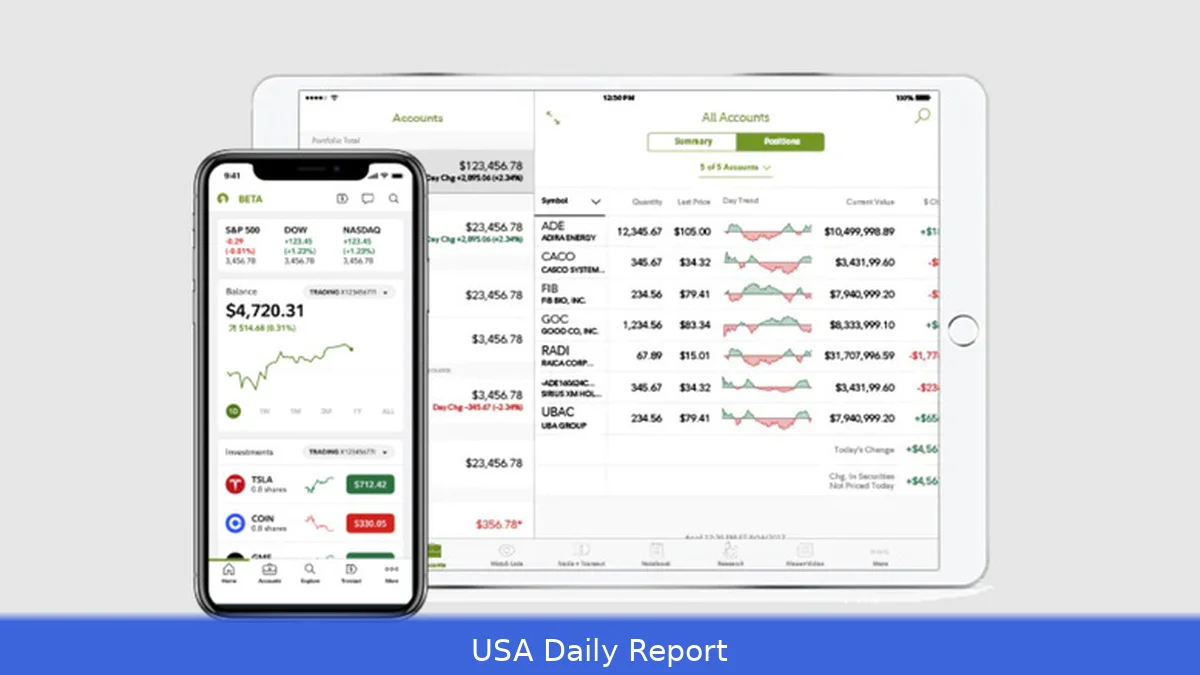
Picking an investment app used to be simple: broker or financial advisor. Not anymore. By 2026 you can pick from apps aimed at beginners, active traders, retirement savers and people focused on cutting fees — the market now offers more specialized choices. Some apps advertise $0 commissions on stock and ETF trades; others try to stand out with deep research, low-cost index funds and retirement-focused products. This guide cuts through the marketing and shows what each app actually offers, how they differ, and which one fits your goals. You’ll learn how to compare fees, account types, security, and trading features. You’ll also get practical steps for opening an account, moving money, and avoiding common mistakes. Read on if you want to pick an app and start investing with confidence.
How to choose the right investment app for your goals
Start with your goal. Are you saving for a cash emergency, a house down payment, retirement, or just experimenting with stocks? Goals shape account choice. If you’re saving for retirement, you’ll want an IRA with low-cost funds and good customer support. If you want to trade frequently, you’ll need competitive pricing and fast execution. Meanwhile if you want hands-off investing, you’ll want solid automated portfolios or robo-advisors.
Compare fees next. Watch three fee buckets: trading fees, account fees, and fund expense ratios. A lot of platforms list 'zero commission' for basic stock and ETF trades — that cuts the trade fee, but you still pay through spreads, margin interest or advisory fees. Look at spreads, margin interest, options contract fees, and management fees for managed accounts. Fund expense ratios matter more over decades than a $0 trade fee. Even a tiny 0.05% gap in expense ratios adds up over decades; small annual differences compound into meaningful dollars by retirement.
Check account types. A full-service broker will offer taxable brokerage accounts, IRAs, Roth IRAs, SEP IRAs for freelancers, custodial accounts for minors, and sometimes 529 college savings plans. Some apps have limited tax-advantaged offerings.
If you need a 401(k) rollover or backdoor Roth support, confirm the app handles those moves without fuss.
Think about trading tools and research. Beginner-friendly apps simplify the experience with guided onboarding and educational content. Advanced traders need detailed charts, order types, level II quotes, and short-selling or options analytics. No single app excels at everything. Decide whether you want simplicity or power.
Factor in customer service and trust. You'll want phone support and easy account transfers when things go sideways.
Check whether the app is backed by a major broker or bank, and whether accounts are covered by SIPC protection. For many investors, trust and ease of use matter more than a few basis points in fees.
Don't forget behavioral fit. Some platforms gamify trading with confetti and push notifications. That tempts some people into risky behavior. If you’re prone to frequent trading or panic selling, choose an app that discourages overtrading or offers guardrails like round-up investing or automated rebalancing.
Finally, test the app with small amounts. Open a taxable account and start small. Learn the deposit, settlement, and trading rhythm. You’ll discover quirks—how long ACH transfers take, whether limit orders consistently fill, how dividend reinvestment works—and those quirks influence whether you stick with the app long term.
Robinhood: who it's best for and where it falls short
Robinhood changed investing for retail customers. It removed visible commissions and made trading simple. The interface is clean and mobile-first. For someone who wants to buy a few stocks or ETFs without a learning curve, Robinhood fits. Its account opening is fast, and fractional shares let you buy expensive stocks without full-share capital.
Robinhood offers cash accounts and margin-style accounts with features like instant deposits and buying power. Many users like the instant access to funds for small deposits. But instant features can tempt overtrading, and margin carries risks if markets fall. Options trading is available and accessible, but options amplify losses for inexperienced traders. Make sure you understand assignment risk on options and the requirements for exercising contracts.
Robinhood's research tends to be lighter than what full-service brokers offer — expect basic charts and headlines rather than institutional-grade screening tools. You’ll find basic charts, analyst ratings, and news headlines. Heavy analysts and active traders may miss depth: no advanced screening tools, limited order types, and less granular data. For buy-and-hold investors, that’s less of an issue. For day traders, it’s limiting.
Robinhood tightened support after heavy public criticism, but users still post complaints about long waits on forums and review sites. If phone support and hand-holding matter, consider a larger firm. Also watch for liquidity and trade execution. Remember: 'zero commission' doesn't automatically mean every order gets the best possible execution — routing choices can affect fills and prices. Robinhood routes orders to market makers and payment for order flow helps keep commissions at zero. That model has pros and cons. It can subsidize free trading but also create conflicts around execution quality.
Security and safety: Robinhood accounts are SIPC-protected. The app supports two-factor authentication and device-level protections. But remember: a secured account doesn’t immunize you against bad trading decisions or losses from investing in volatile securities. Use caution with margin and options. Keep emergency savings separate from your investable capital.
Put simply, Robinhood fits casual traders and beginners who want an easy, low-cost entry; it isn't the best pick if you need deep research or hands-on support. It’s less suited for hands-on active traders who need deep tools, and for investors who prioritize high-touch support and institutional-grade research.
Fidelity: strengths for retirement savers, long-term investors, and active traders
Fidelity aims for broad coverage. It offers full-service brokerage accounts, IRAs, 401(k) rollovers, and retirement planning tools. Its product mix appeals to long-term investors who want low-cost index funds and dozens of commission-free ETFs. Fidelity also offers managed accounts, financial planning, and in-person branches for those who prefer face-to-face help.
Cost matters at Fidelity. Fund expense ratios are among the industry’s lowest for many in-house funds.
That makes Fidelity attractive for buy-and-hold investors. Low operating costs mean compounding works in your favor over decades. Fidelity also competes on margin and lending rates, often with competitive pricing, and it provides a variety of account-level features like dividend reinvestment and fractional shares.
For DIY investors Fidelity’s research stack is deep. You get analyst reports, detailed screeners, and a wide array of order types. Active traders will appreciate advanced platforms with extensive charting, conditional orders, and streaming data. That capability comes with a steeper learning curve than some simpler apps, but it gives experienced investors more ways to implement strategies.
Point is, customer service and reliability rate highly at Fidelity. Phone support, live chat, and branches add redundancy.
This matters when moving large balances or dealing with tax-efficient distributions. Fidelity also supports rollover assistance and offers educational resources on tax-loss harvesting, required minimum distributions, and converting accounts.
Retirement savers benefit from Fidelity’s planning tools. The platform runs retirement calculators, target-date funds, and managed accounts tailored to age and risk tolerance. For those who want a hybrid approach—some DIY investing, some professional management—Fidelity’s managed portfolios and advisor network provide options.

Fidelity also emphasizes security and regulatory compliance. Accounts are SIPC-insured and the firm implements account protections, encryption, and multiple authentication methods. That builds trust for investors moving substantial sums or consolidating accounts.
All told, Fidelity suits people who take investing seriously—retirement savers, long-term investors focused on fees, and active traders seeking depth. If you want a single provider that can handle everything from a young investor’s first brokerage account to complex retirement planning, Fidelity stands out.
Schwab: bank-broker integration and full-service appeal
Charles Schwab aims for the middle ground between discount brokers and full-service banks.
It mixes low fees with broad account options and an extensive branch network. For people who want banking and brokerage under one roof, Schwab’s checking accounts, debit cards, and cash sweep features make it convenient to manage money and investments in one place.
Schwab competes on cost with many no-commission trades and a wide selection of low-fee index funds and ETFs. That makes Schwab attractive for retirement accounts and taxable investing alike. The platform offers fractional shares, robust transfer tools, and assistance for rollover and consolidation of existing 401(k) plans.
Schwab’s trading platforms offer breadth. Casual investors can use a clean mobile app.
Active traders can use StreetSmart Edge, which provides advanced charting indicators, customizable layouts, and multiple order types. Options traders and futures participants will find the tools they need, along with educational material to learn the mechanics.
Customer service and trust rank high for Schwab. Phone support runs around the clock. Many investors still value the ability to walk into a branch. That real-world option becomes important if you face a complex estate or tax issue, or want an in-person consultation with a human advisor.
Investment advice options span automated robo-advisors to human financial planners. Schwab’s robo service offers managed portfolios with automatic rebalancing and tax-loss harvesting. For investors who want to scale up to a human advisor as assets grow, Schwab provides that continuum. That makes the platform a good long-term home for investors who expect their needs to evolve.
Security and safeguards include SIPC coverage and multiple authentication layers. Schwab also offers a cash management system with FDIC insurance on swept balances through partner banks, which can be useful for those who keep significant uninvested cash within the brokerage.
Schwab fits investors who want a reputable, full-service provider that balances price, tools, and human support. It’s especially useful for people who value bank-broker conveniences and a pathway from DIY investing to professional advice.
Other apps to consider: Webull, Vanguard, E*TRADE, SoFi, and newer challengers
The market beyond the big three includes apps that specialize. Webull targets active traders with powerful charting, extended-hours trading, and complex order types. It offers free trades and a modern interface but has less emphasis on retirement planning or in-person support. Webull suits hands-on traders who want cheap commissions and deep technical tools.
Vanguard remains the go-to for index-fund investors who prioritize low expense ratios above all. Vanguard’s fund lineup is famous: core funds and ETFs with minimal management costs. Vanguard’s app may feel utilitarian, but the cost savings in funds can add up over decades. The catch: Vanguard historically emphasized mutual funds and may not lead in slick mobile features or real-time trading tools.
E*TRADE blends strong trading tools with investor education. It offers advanced platforms, a broad product set and branch presence in some markets.
For options traders and active investors who want a wealth of trading tools and research, E*TRADE remains solid. It also provides managed accounts and retirement planning services.
SoFi pitched itself as a financial lifestyle brand: banking, student loan refinancing, and investing all in one. Its investing arm offers automated portfolios, direct stock investing, and fractional shares. SoFi often bundles member benefits like career coaching and community events. For younger investors who want an integrated fintech experience, SoFi can be attractive. But for investors who require deep research or advanced trading, SoFi is lighter on features.
Newer challengers and niche platforms appear regularly. Some apps focus on social trading, crypto integration, or specialty assets like fractional real estate. Others target active options traders or provide seamless retirement rollovers. Evaluate these apps on the same core criteria: fees, account types, execution quality, and support. A splashy user interface doesn’t replace a solid custody arrangement and clear fee policy.
For investors who want diversification across providers, it’s fine to use multiple apps: one for retirement investing with a low-cost custodian, another for speculative trades. That approach increases administrative work and can complicate tax reporting. Use it only if you understand the trade-offs and keep records tidy.
Fees, order types, account types, tax issues, and security explained
Fees come in visible and hidden forms. Visible fees include commissions, advisory fees, and subscription costs. Hidden fees come as wider spreads, payment for order flow, and high fund expense ratios. Always read the fee schedule. A zero-commission trade could still cost you through worse execution prices or heavy fund expense ratios.
Order types matter. Market orders execute quickly at the current price and are simple. Limit orders let you set a target price but may not fill. Stop orders trigger market orders at a given price. Advanced conditional orders can join these primitives to build complex logic. For active traders, access to different order types and order routing quality can affect performance. For buy-and-hold investors, limit and market basics usually suffice.
Account types shape tax treatment. Taxable brokerage accounts don’t shield gains from taxes. IRAs and Roth IRAs provide tax advantages: traditional IRAs give tax-deferred growth while Roth IRAs give tax-free withdrawals post-retirement if rules are followed. SEP and SIMPLE IRAs help self-employed workers. 401(k) rollovers can consolidate old employer plans but watch for withholding and rollover windows. Some apps will guide rollovers; others may not handle 401(k) assets directly.
Taxes present practical headaches. Short-term gains are taxed as ordinary income. Long-term gains get preferential rates if you hold more than a year. Dividends can be qualified or ordinary, with different tax treatment. Tax-loss harvesting can turn losses into tax benefits by offsetting gains, but rules around wash sales can complicate automated harvesting if you trade the same asset or a substantially identical one within the wash-sale window.
Security and custody: SIPC protects against the broker’s failure for certain losses up to specific limits, but it doesn’t protect against market losses. FDIC covers cash held in banking sweep programs up to limits.
Use strong passwords, enable two-factor authentication, and consider hardware keys if available. Keep tax records and statements for your own backup. For large balances, consider spreading assets or discussing insurance options with the custodian.
Finally, be mindful of operational details: ACH transfer limits, settlement times (typically two business days for most securities historically, though some trade settlement rules may vary), transfer fees for ACAT moves, and minimums for certain account types. Those operational frictions matter when you need cash fast or want to consolidate accounts.
How to get started, build a portfolio, and avoid common mistakes
Open an account with one app after you research fees, account types, and tools. Gather personal information: Social Security number, address, employment details, and funding source. Link a bank account for ACH transfers and consider initial small deposits to learn transfer timing. Verify identity as required; many apps let you use your phone to scan documents for a faster process.
Decide on asset allocation before picking securities. A simple rule-of-thumb is to set equities vs. Bonds based on time horizon and risk tolerance. Younger investors often hold more stocks; those near retirement shift toward bonds and cash. Target-date funds or managed portfolios handle allocation automatically, while DIY investors can build a mix of broad-market ETFs and bond funds for low cost.
Rebalance periodically. Markets move, and your allocation drifts. Rebalancing forces you to sell high and buy low, which helps lock in discipline. Set a calendar reminder or use automated rebalancing if your app offers it. Keep taxes in mind: rebalancing taxable accounts can trigger capital gains. Use new contributions or tax-advantaged accounts to rebalance with minimal tax impact.
Dollar-cost average. Rather than timing the market, invest fixed amounts at regular intervals. That reduces the risk of bad timing and builds habit. For long-term goals like retirement, consistent contributions matter more than perfect entry points. For lump sums, consider partially entering the market over weeks to reduce regret from immediate volatility.
Avoid common behavioral mistakes. Don’t chase hot stocks or double down on a position out of pride.
Limit checking your portfolio obsessively; frequent monitoring encourages impulsive trades. If you use margin or options, know the worst-case scenarios. Paper-trade strategies or simulate option positions if the platform supports practice environments.
Finally, track taxes and records. Download year-end statements, 1099 forms and transaction histories. Taxes on trading can get complex with many lots and wash-sale rules. Consider tax software or a CPA if your activity is substantial. Keep education ongoing: markets change and so do products. Stay curious, but stay disciplined.
Pick an app that matches your goals, not the noise. If you want low-cost retirement investing, consider a platform known for cheap index funds and solid planning tools. If you want simple, frictionless trades, choose a mobile-first app. And if you need deep research and planning options, go with a full-service broker. Start small, diversify, and automate where you can. Keep emergency savings separate, enable security features, and track taxes. Change apps later if your needs evolve, but avoid switching on impulse. The right app helps you execute a plan—stick to the plan.
This article was created with AI assistance.


