
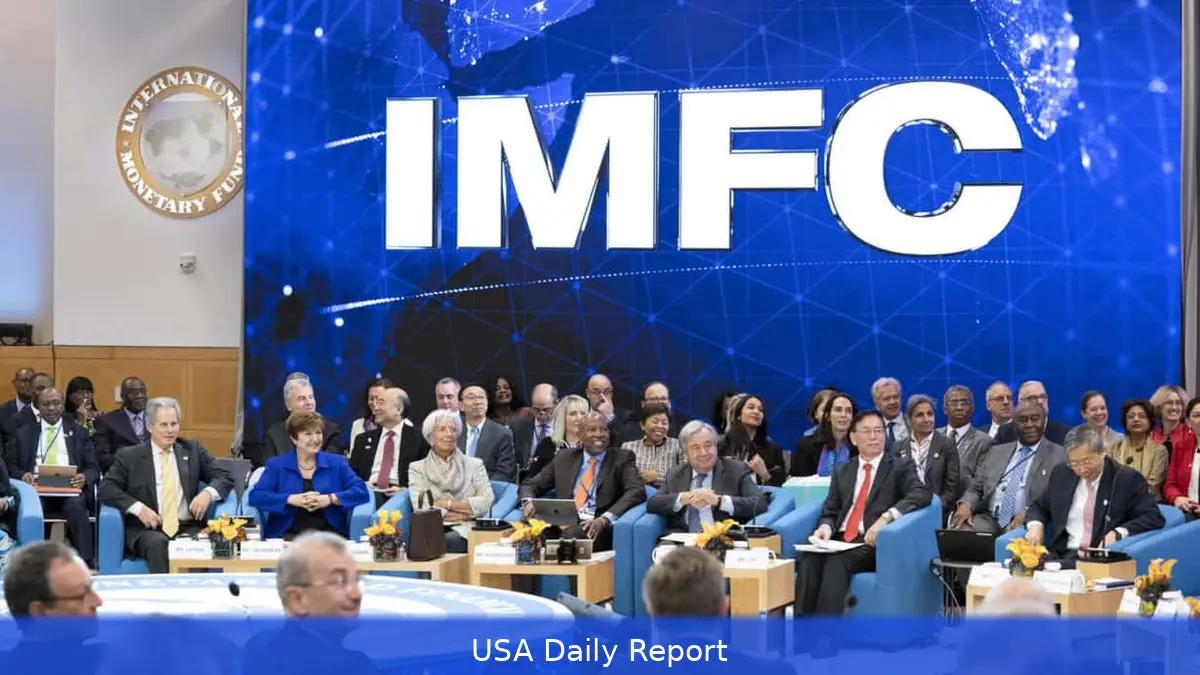
IMF and World Bank leaders are meeting in Washington under the shadow of a new Middle East war. The conflict has already forced both institutions to rethink growth and inflation forecasts. Expect the meetings to center on emergency funding and how to shield poorer countries.
Downgrades, numbers and a big warning
The International Monetary Fund and World Bank have signaled they'll cut global growth forecasts and lift inflation expectations because of the conflict that flared in late February. That shock follows two earlier global hits: the COVID-19 pandemic and Russia's full-scale attack on Ukraine in 2022. The timing is awful: public debt is near record highs and many governments are already running tight budgets.
Both institutions have been explicit about the likely toll. The World Bank's new baseline projects growth for emerging markets and developing economies at 3.65% in 2026, down from 4% in its October estimate. The bank said growth could slump to as low as 2.6% if the war drags on. And inflation in those economies is now seen at 4.9% for 2026, compared with an earlier 3% estimate; in a severe scenario inflation could spike to 6.7%.
The IMF has been equally stark. Kristalina Georgieva, managing director of the International Monetary Fund, warned that disrupted shipping through the Strait of Hormuz and damage to key energy infrastructure will leave lasting damage.
She told officials the conflict could add fuel shortages, push more people into food insecurity and risk breaking inflation expectations. Georgieva also flagged a figure often repeated this week: roughly 45 million additional people could face acute food insecurity if disruptions continue.
These figures aren't abstract — when 45 million more people risk hunger, policy choices have immediate, real consequences. When tens of millions more people risk hunger, central bankers and finance ministers take note fast.
Who will feel the pain
The blunt truth is emerging markets and low-income countries are most exposed. Many import fuel and fertilizer. They have little fiscal space and face rising costs for food and energy. In practice, many of those countries can't hike interest rates or launch big stimulus packages without worsening already-heavy debt burdens.
IMF staff estimate emergency needs for low-income and energy-importing nations could run between $20 billion and $50 billion soon. The World Bank says it can mobilize about $25 billion through crisis-response tools soon and could scale that up to $70 billion within six months if needed. Those are headline numbers — but they also show how fast demand for international support can surge when a geopolitical shock hits supply chains and commodity markets.
Policy makers now face a stark trade-off: they must weigh fighting inflation against supporting growth, because both goals are costly right now. Tightening monetary policy to fight inflation can choke off weak growth. Expanding social support to blunt price shocks costs money many governments don't have. And currency pressures will make dollar-denominated debts harder to service.

Trade chokepoints and supply pain
Analysts are watching the Strait of Hormuz and regional energy hubs. Georgieva warned damage at sites such as Qatar's Ras Laffan — a major LNG export complex — won't be something that gets fixed overnight. And when ships slow or choose longer routes to avoid danger, that adds shipping time and costs. Global markets feel those ripples quickly.
Fuel shortages on islands in the Pacific, the IMF said, would likely be among the most severe immediate impacts. But the effects spread: higher fuel bills push up transport and fertilizer costs, and food prices follow. That, in turn, squeezes household budgets, especially in countries where food is a large share of spending.
Trade disruptions also complicate an already-fragile global inflation picture. If inflation expectations among households and firms start to drift up, central banks may need to respond more aggressively — at the cost of growth. Georgieva warned about that risk, saying inflation expectations could "break anchor and ignite a costly inflation process" if policymakers mishandle the shock.
How the IFIs and governments are responding
World Bank President Ajay Banga argued leaders' choices matter. "Leadership matters, and we've come through crises in the past," Banga said, praising past work on fiscal and monetary controls that helped economies weather earlier storms. He urged targeted measures to protect vulnerable people while avoiding broad policies that could feed inflation.
Both institutions are preparing to shift resources. The IMF has signaled it will update its global outlook with specific revisions. The World Bank has laid out figures for mobilizing crisis finance. At the same time, both say they'll prioritize aid to countries with limited buffers and large energy import bills.
Coordination will be hard: the G20 is politically strained and major powers disagree on the Middle East, which complicates any joint fiscal or trade action. The G20 — the forum that could marshal a joint approach — is politically strained. Relations between the United States and China are tense, and the group includes countries whose positions diverge sharply on the Middle East. That makes a unified fiscal or trade response harder to achieve.
Choices for national policymakers
Governments now must choose carefully. Economists cited at the meetings urged targeted, temporary relief for poor households rather than broad price controls or export bans that could worsen supply shortages. The IMF has publicly appealed to countries to avoid unilateral moves such as export restrictions on food or fertilizer that could stoke global scarcity.
At the same time, some countries will have to defend currencies and keep inflation expectations anchored. That often means higher interest rates — and higher borrowing costs for households and businesses. It's a squeeze governments don't want, but one they may not be able to avoid.
Emergency financing can ease immediate pain, but it won't erase the shock; the IMF and World Bank say their support is meant to buy time for stabilization and targeted policy responses. time for countries to stabilize markets and protect vulnerable people while longer-term adjustments play out.
What officials are watching next
Officials at this week's meetings will track shipping flows through the Strait of Hormuz, damage assessments from key energy facilities, and the pace of shipments for fertilizer and grain. They'll also monitor how inflation expectations behave in key economies. If expectations drift upward, central banks could face pressure to tighten further, with knock-on effects on growth.
The sessions in Washington aim to set a practical response: where to send emergency cash, which programs can be scaled up quickly, and how to make sure help reaches countries with little fiscal room. Georgieva and Banga both emphasized support for the most vulnerable — but they differed in tone and emphasis at times, reflecting the complex politics behind the numbers.
Bottom line: officials will be deciding how much to spend now and how to avoid fueling the very inflation they're trying to tame.
Related Articles
- Fed signals patience, projects one cut in 2026
- UAE Leaves OPEC — Saudi Arabia Picks Up the Slack
- Three risks that could push the Fed to pause
“Don’t pour gasoline on the fire,” Kristalina Georgieva, managing director of the International Monetary Fund, warned.
This article was created with AI assistance.


