
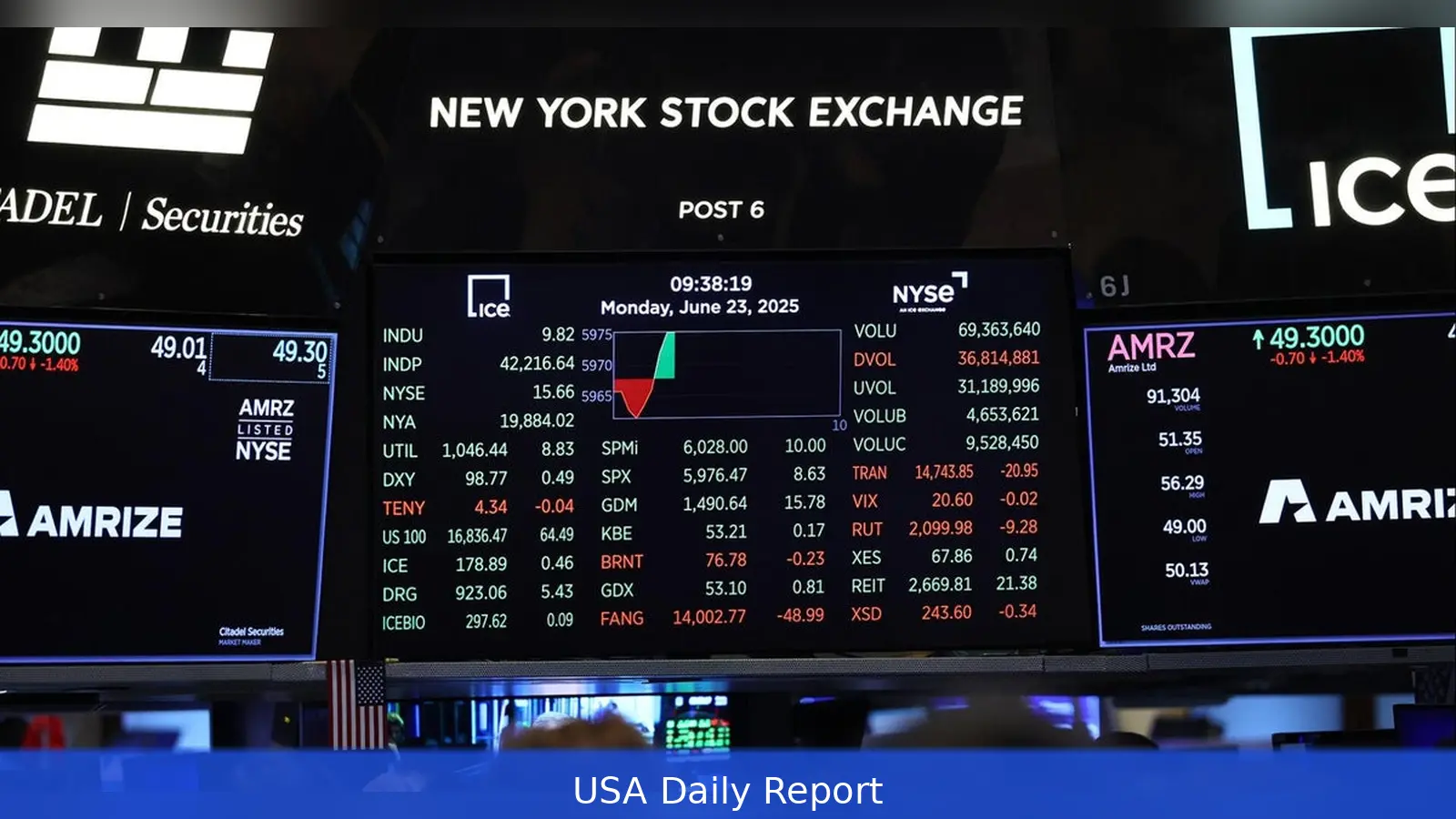
Wall Street pushed higher Tuesday after reports that U.S. and Iranian delegations could resume talks in Pakistan, easing a key geopolitical risk and boosting demand for riskier assets.
Middle East optimism lifts risk appetite
Stocks opened higher on Tuesday as reports that U.S. and Iranian delegations could resume talks in Pakistan nudged traders toward risk assets. Investors reacted after reports indicated Iran remained open to negotiations, while officials said any deal would require Tehran to abandon nuclear weapons. The move away from immediate escalation cut a source of uncertainty that had pressured markets since the conflict began.
That calm helped major indexes post gains: the S&P 500 rose 0.39%, the Dow Jones Industrial Average added roughly 45 points, and the Nasdaq-100 climbed 0.76%. The Nasdaq-100 also extended a multi-session rally.
Markets had shown resilience in recent sessions despite weekend setbacks in talks. Softer wholesale inflation readings added fuel to the rally by lowering near-term inflation worries and trimming odds of a hawkish pivot from central bankers.
Earnings season steers flows into winners
Corporate reports stayed front and center. BlackRock reported higher first-quarter profit and shares jumped about 2.9% after results showed robust inflows into exchange-traded funds and rising performance fees.

Investors treated the report as proof that asset managers can still capture fee growth even as macro risks linger.
At the same time, reactions to bank earnings were mixed. JPMorgan Chase saw its shares weaken after the firm trimmed its guidance for net interest income despite beating on the headline numbers. Traders interpreted that cut as a warning that a lower-for-longer interest rate outlook or volatile rate path could squeeze future bank profits.
Oracle led gains among tech names, up nearly 6.5% on the day, as traders rotated toward software names seen as offering steady cash flows and long-duration upside. If inflation expectations stay contained and bond yields drift lower, investors are likely to bid up longer-duration growth stocks and megacap software names, which would pull more index and ETF money into the tech complex.
Inflation, Fed comments keep traders cautious
March producer price data showed wholesale inflation eased more than expected, offering some breathing room for markets worried about persistent price rises. The softer-than-expected reading reduced the immediate chance of further aggressive tightening and supported equities.
Federal Reserve commentary scheduled for later in the day was expected to give markets more clarity on how policymakers view the mix of geopolitical developments and softer inflation. Federal Reserve Chair Jerome H. Powell was among the central-bank figures investors watch for tone on growth and inflation risks.
Bond markets reacted to the same set of signals. Treasury yields fell as demand for shorter-term safety ebbed and traders reassessed the path for policy. If yields drop further, it helps long-duration equities — but it bites into banks' interest margins.
How bank results could reshape sector leadership
Banks face a tricky second-order effect. If diplomatic progress lowers oil and overall inflation, the Fed could move to a more dovish stance. That helps long-duration tech names but pressures net interest income at large lenders. Banks with better pricing power on deposits and stronger hedges will fare better. JPMorgan's guidance cut left the firm looking vulnerable and could leave it at a relative disadvantage within the sector.
Related Articles
- Stocks Pause as Peace Deal Awaits
- Kevin Warsh Vows Fed Independence as Senators Press Him on Millions in Assets
- Iran 358 missile forces defense cost rethink
By the close, the S&P 500 was up 0.39% and the Nasdaq-100 climbed 0.76%.
This article was created with AI assistance.


