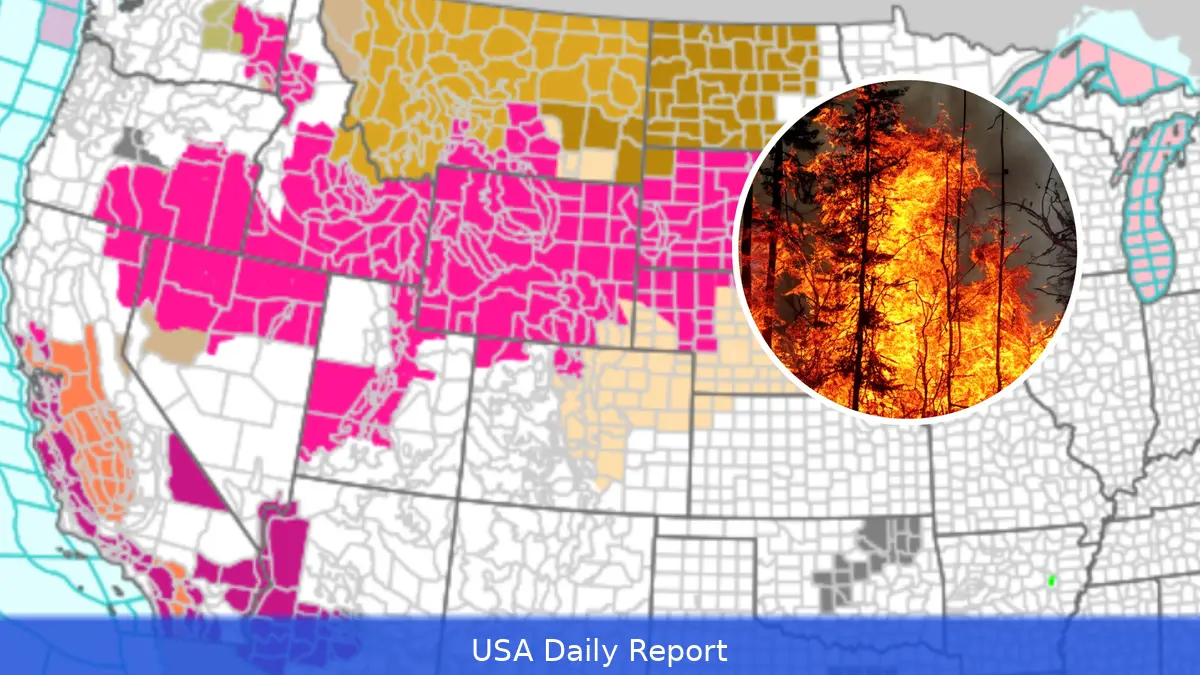
A Red Flag Warning has been issued across parts of Southeast Alabama, Southwest Georgia, and the Florida Panhandle, signaling a dangerous spike in wildfire risk. Dry conditions, strong winds, and low humidity have led authorities to impose burn bans and warn people to be very careful.
What a Red Flag Warning Means
The National Weather Service issues a Red Flag Warning when the weather raises the chance of wildfires starting and spreading fast. It usually involves a mix of warm temperatures, low humidity, and strong winds. Usually, these warnings happen in spring and fall to warn fire teams and the public about increased risks.
For this weekend, the NWS forecast points to a dry frontal passage sweeping through the region, bringing gusty northeast winds between 15 and 20 mph, with gusts hitting 30 mph. Humidity levels are expected to drop as low as 18% in some places, creating the perfect storm for fires to ignite.
Areas Under Threat and Official Response
The warning covers Southeast Alabama’s Wiregrass region, Southwest Georgia, and most of Florida’s Panhandle. Leon County in Florida has gone further by enacting a burn ban that lasts through the warning period. Officials say outdoor burning is strongly discouraged and could lead to legal trouble, like misdemeanor charges if done without permission.
Leon County Commission Chairman Christian Caban emphasized the need for community cooperation to protect lives and property. "Our fire experts are asking all residents to do their part — avoid any outdoor burning, report any signs of fire immediately, and help us look out for the safety of our first responders," he said.
Why Conditions Are So Dangerous
The area is facing one of the worst droughts in decades, which has left grass, brush, and woods very dry and easy to catch fire.
With gusty winds and dry air, even a tiny spark can quickly turn into a spreading wildfire. The NWS warned that fires which develop will likely spread quickly, making containment difficult.
Outdoor equipment that can generate sparks, vehicles driving over dry grass, and open flames are all potential fire starters during this time. Authorities advise people to avoid these activities and have an emergency plan ready in case a fire breaks out.
Heatwave Complications
To make things worse, a recent heatwave has pushed temperatures above 100 degrees in parts of the country. Hot weather dries out vegetation and soil, making it easier for fires to ignite and spread. In some areas, temperatures soared to 111°F, intensifying the fire threat.
Because of high energy costs, some vulnerable people are cutting back on air conditioning, which adds to health and fire risks. Cities like Chicago and New York have opened cooling centers to help residents cope with the heat.
The NWS issued Red Flag Warnings for six states during this period, highlighting that the extreme heat and dry conditions could fuel wildfires across large swaths of the country.
Precautions and What Residents Should Do
Officials urge residents in affected areas to avoid any kind of outdoor burning, including campfires, brush piles, and debris burning. They also recommend steering clear of activities that can create sparks, such as using chainsaws or lawnmowers in dry conditions.
Vehicles should avoid driving on dry grass to prevent igniting fires, and people should stay alert and report any signs of smoke or fire immediately to emergency services.
Preparing an emergency plan is critical. This includes knowing evacuation routes, having a go-bag ready, and staying informed about changing weather and fire conditions.
With dry fuels and weather conditions combining for an extreme fire danger, the threat remains high until conditions improve. Authorities will continue monitoring the situation closely and adjusting restrictions as needed.
These Red Flag Warnings and burn bans remind us how delicate the balance is between weather and wildfire danger. As the region faces dry, windy, and warm conditions, residents must stay vigilant to prevent fires that could quickly threaten homes and natural areas.


