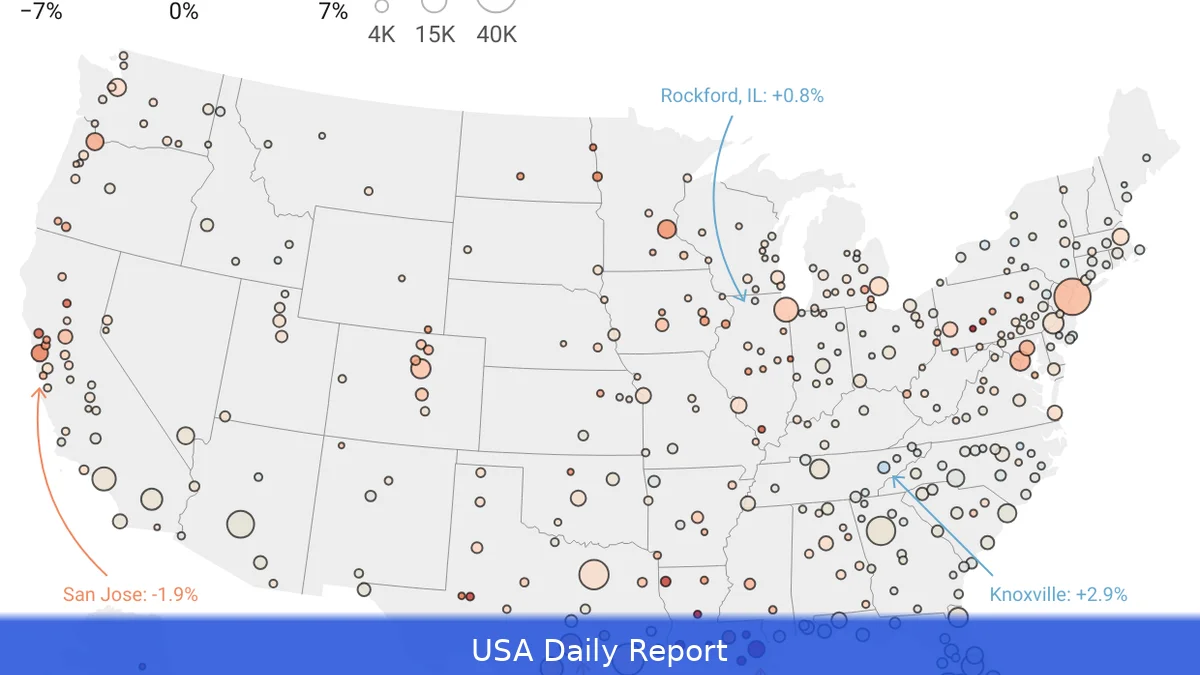
Buffalo tops Zillow’s list of the hottest housing markets for 2025, while California cities mostly lag behind. At the same time, mortgage rates are easing, but a major housing crash in 2026 seems off the table.
Buffalo Leads, California Trails in Housing Competition
Zillow's recent analysis reveals a clear divide in the competitiveness of housing markets across America. Buffalo, New York, grabs the top spot, followed by Indianapolis and Providence, Rhode Island. Strong demand and limited supply in these cities should steadily push prices higher.
California, meanwhile, has just one metro—San Diego—making it into the top 20. Riverside and Los Angeles rank further down the list, while San Francisco and San Jose land near the bottom as some of the coolest markets. Zillow attributes this to weak job growth and flat or declining home values in those areas.
Skylar Olsen, Zillow’s chief economist, said buyers nationwide will find more homes for sale than in recent years, but prices are likely to climb slowly. Plus, mortgage rates are likely to stay unpredictable, adding complexity to the market.
The big challenge remains balancing housing construction with demand—especially in cities like Buffalo, where employment growth outpaces new homebuilding.
Mortgage Rates Ease, But Affordability Remains Tight
In early 2026, mortgage rates stayed near multi-year lows, sparking renewed buyer interest, particularly in the Midwest and South. Zillow forecasts a modest 0.7% increase in national home values by the end of 2026, and a 4.4% jump in existing home sales compared to the previous year.
Still, many homeowners with low locked-in mortgage rates are reluctant to sell, which keeps inventory tight. That dynamic keeps prices relatively stable but still high in many places, limiting affordability.
Realtor.com economist Jake Krimmel explained that local markets tend to “unlock” when current mortgage rates approach the rates homeowners have on their existing loans. This means more listings and activity in those areas as sellers feel less financial pressure.
A Crash in 2026? Experts Say Not So Fast
Some potential buyers remain worried about a housing crash like the one in 2008. However, experts argue that the market is far from that scenario. Michael Ryan, a finance expert, described the current situation as a reset rather than a collapse.
He pointed out that key crisis features—like forced selling, frozen credit, and waves of foreclosures—aren't visible now.
Rather than collapsing, the market appears to be stagnating. Inventory is slowly increasing, mortgage rates stabilized near 6.3%, and price appreciation remains minimal, around 1% nationally according to Zillow and Redfin forecasts.
However, waiting for a major crash might backfire on buyers. If prices continue their slow rise, buyers who hold off might face higher costs and miss the chance to build equity. The market’s tight supply and steady demand keep prices from falling sharply.
What This Means for Buyers and Sellers
For buyers, the message is clear: patience might not pay off with a steep price drop. Instead, the market looks set for slow growth and more options as new construction catches up in some areas. Regions like Buffalo and Indianapolis could offer better opportunities due to strong demand and limited housing supply.
Sellers face a balancing act. While low mortgage rates on existing homes discourage some from listing, those considering a move should watch local market conditions closely. Selling in a competitive market could still fetch a good price, especially where supply remains tight.
Mortgage rates will probably continue to keep both buyers and sellers uncertain. The unpredictability in financing costs adds a layer of uncertainty that could influence decisions over the next few months.
Zillow’s outlook suggests the housing market is evolving but not collapsing. With modest price growth, regional disparities, and fluctuating mortgage rates, 2025 and 2026 will test how buyers and sellers adapt to a market that’s less hot but still very much alive.


